
Dealing with Mold or Mildew on Your North Baltimore Roof Without Damaging the Shingles
Black streaks running down your roof aren’t just dirt. They’re Gloeocapsa magma, a bacteria that thrives in Baltimore’s humid climate and feeds on the limestone filler in asphalt shingles. If you’ve noticed dark patches spreading across your roof in neighborhoods like Homeland or Roland Park, you’re seeing the early stages of shingle deterioration that can cut your roof’s lifespan by years. Asphalt Roofing Manufacturers Association.
The Chesapeake Bay’s moisture combined with North Baltimore’s tree-lined streets creates perfect conditions for mold and algae growth. But before you grab a pressure washer or call a general cleaning service, you need to understand why high-pressure methods destroy shingles and what safe alternatives actually work. Flat Roof Repair for Baltimore Rowhouses — What Every Homeowner in Canton Needs to Know.
Why Baltimore Roofs Are Prone to Mold and Algae
Baltimore’s climate creates a perfect storm for roof contamination. The city averages 42 inches of rain annually with summer humidity often exceeding 80%. When warm air from the Chesapeake Bay meets the cooler temperatures at higher elevations in North Baltimore neighborhoods, condensation forms on roof surfaces. This moisture, combined with airborne spores from mature trees common in areas like Guilford and Tuscany-Canterbury, creates ideal growing conditions for biological growth.
Historic homes in North Baltimore often have complex roof designs with multiple valleys and dormers. These architectural features create shaded areas where moisture lingers, accelerating algae colonization. The problem compounds when attic ventilation is inadequate, a common issue in older homes where original construction didn’t account for modern insulation standards.
The Danger of Gloeocapsa Magma
Those black streaks you see aren’t just cosmetic damage. Gloeocapsa magma is a cyanobacteria that forms a protective sheath as it grows, creating the characteristic dark streaks. As it spreads, it digests the limestone filler in asphalt shingles, weakening the structural integrity of your roofing system. Weekend Roofing Service.
According to the Asphalt Roofing Manufacturers Association (ARMA), untreated algae growth can reduce shingle lifespan by 10-15 years. The bacteria’s digestive process creates microscopic pits in the shingle surface, allowing water infiltration that leads to wood rot in the roof deck. In severe cases, the damage extends to the attic where moisture promotes mold growth on rafters and insulation.
Maryland’s building codes require proper attic ventilation to prevent moisture accumulation, but many older homes in North Baltimore predate these requirements. Homes built before 1980 often lack ridge vents or adequate soffit ventilation, creating the perfect environment for both algae on the exterior and mold in the attic.
Our Baltimore Roof Cleaning Process: Soft Washing vs. Pressure Washing
Pressure washing destroys asphalt shingles by blasting away the protective granules that shield the asphalt from UV rays. Once these granules are gone, your shingles become brittle and prone to cracking. The Asphalt Roofing Manufacturers Association specifically warns against pressure washing, stating it voids most manufacturer warranties.. Read more about Why Pressure Washing Your Pikesville Roof Does More Harm Than Good.
Professional soft washing uses specialized equipment that delivers cleaning solutions at pressures similar to a garden hose. The process involves applying a biodegradable solution containing sodium hypochlorite and surfactants that kill algae at the cellular level. The solution sits for 15-20 minutes, allowing it to penetrate and eliminate the biological growth without damaging the shingle surface.
The cleaning solution we use is EPA-registered and specifically formulated for roofing applications. It contains antimicrobial agents that continue working for months after application, preventing rapid regrowth. The surfactants help the solution cling to vertical surfaces, ensuring complete coverage even on steep roof pitches common in North Baltimore’s historic districts. EPA-registered cleaning solutions.
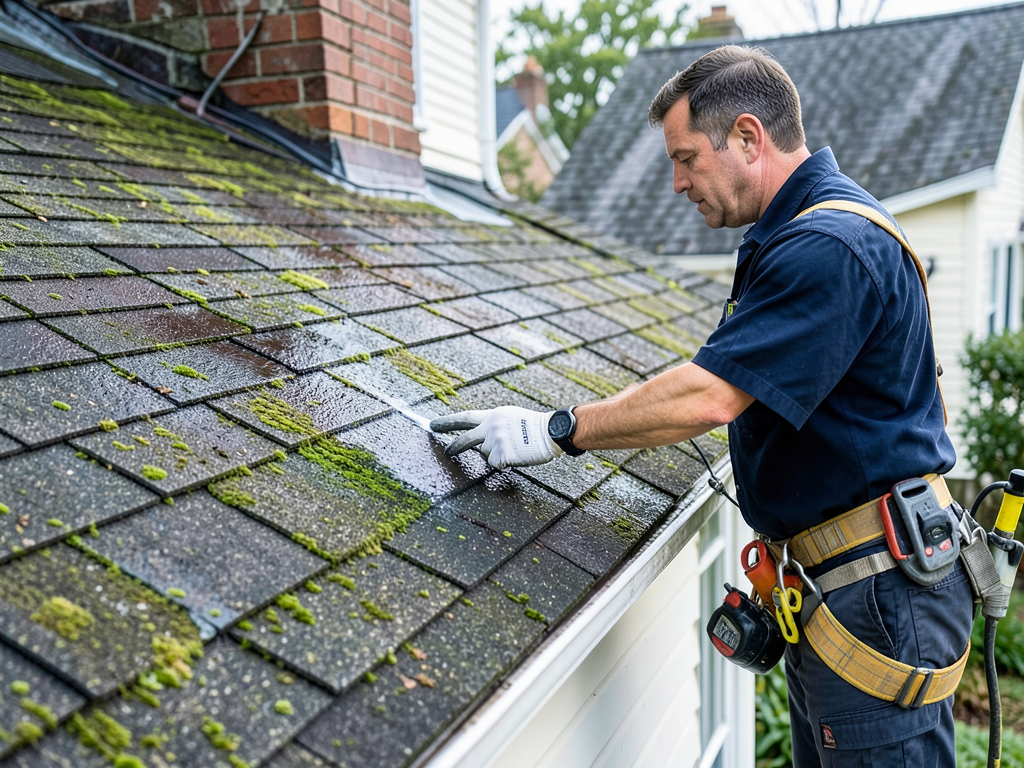
During the soft wash process, technicians wear full protective gear including respirators and chemical-resistant boots. The cleaning solution is applied from the roof using specialized spray wands that allow precise control of application rate and coverage. This method ensures thorough cleaning while protecting surrounding landscaping from chemical exposure.
Local Service Areas
We serve North Baltimore neighborhoods including Roland Park, Homeland, Guilford, and Tuscany-Canterbury. Our service area extends to surrounding communities like Pikesville and Towson where similar architectural styles and climate conditions create comparable roofing challenges. How Much a New Roof Costs in Towson (2026 Estimates).
North Baltimore’s tree canopy, while beautiful, contributes significantly to roof contamination. Mature oaks and maples common in these neighborhoods drop organic debris that traps moisture against the roof surface. Combined with the area’s proximity to the Jones Falls watershed, this creates persistent moisture problems that fuel algae growth.
Cost Factors and Free Inspections
Roof cleaning costs vary based on several factors specific to Baltimore homes. Roof pitch significantly impacts pricing since steeper roofs require additional safety equipment and more time to clean properly. Homes in North Baltimore often feature complex roof designs with multiple levels and architectural details that increase cleaning time.
The severity of contamination also affects cost. Light algae growth might require a single application of cleaning solution, while heavy infestation with moss or lichen could need multiple treatments and manual removal of larger growth. The presence of copper or zinc strips, which naturally inhibit algae growth, can reduce cleaning costs since these areas need less treatment.
We offer free inspections to evaluate your specific situation. During the inspection, we check for signs of wood rot in the roof deck, inspect attic ventilation, and assess the overall condition of your shingles. This comprehensive evaluation helps determine whether cleaning is sufficient or if repairs are needed before cleaning can proceed safely.
Preventing Future Mold Growth
After cleaning, several strategies can help prevent rapid regrowth. Installing copper or zinc strips near the roof peak releases metal ions during rainfall that inhibit algae growth. These strips are particularly effective in Baltimore’s climate and can extend the time between cleanings by several years. Installing a Metal Roof in Columbia — Is It Worth the Investment?.
Improving attic ventilation addresses the root cause of moisture problems. Adding ridge vents or improving soffit ventilation reduces condensation on the roof underside, creating a less hospitable environment for algae. Many North Baltimore homes can benefit from modern ventilation upgrades that weren’t available when the homes were built.
Regular maintenance also plays a crucial role. Keeping gutters clean prevents water backup that can seep under shingles. Trimming tree branches that overhang the roof reduces shade and organic debris accumulation. These simple steps, combined with professional cleaning every 3-5 years, can keep your roof looking new for decades.
Insurance and Warranty Considerations
Most homeowner insurance policies don’t cover routine roof cleaning since it’s considered maintenance. However, if algae growth leads to leaks that cause interior damage, your insurance might cover the resulting repairs. It’s important to document the condition of your roof with photos before and after cleaning, especially if you plan to file a claim.
Roof cleaning, when done properly by certified professionals, doesn’t void manufacturer warranties. In fact, ARMA recommends regular cleaning to maintain warranty coverage. The key is using methods approved by roofing manufacturers and avoiding practices that damage shingles, like pressure washing or using harsh chemicals not designed for roofing applications.
Why Professional Cleaning Matters
DIY roof cleaning poses serious risks. Walking on a wet roof is extremely dangerous, and many homeowners have suffered serious injuries attempting to clean their own roofs. Professional technicians use safety harnesses, roof brackets, and specialized equipment designed for working at heights safely.
Beyond safety concerns, improper cleaning techniques can cause more harm than good. Using the wrong chemicals can discolor shingles or damage surrounding landscaping. Applying too much pressure can strip granules or even tear shingles. Professional cleaners understand the chemistry of cleaning solutions and the physics of roof cleaning to achieve optimal results without damage.
The investment in professional cleaning typically pays for itself through extended roof life. A roof that might need replacement in 15 years due to algae damage can last 25 years or more with proper maintenance. Given that roof replacement costs $8,000-$15,000 for an average Baltimore home, the $500-$1,000 cost of professional cleaning is minimal by comparison. Industrial Roof Replacement.
Call (443) 455-9099 today to schedule your inspection.
Don’t let mold and algae destroy your roof. Our Baltimore-based team understands the unique challenges of cleaning roofs in Maryland’s humid climate. We use EPA-approved methods that kill algae without damaging your shingles. Call (443) 455-9099 today to schedule your free inspection and take the first step toward protecting your home’s most important asset.
Frequently Asked Questions
How often should I have my roof cleaned in Baltimore?
Most Baltimore roofs need professional cleaning every 3-5 years, depending on tree coverage and ventilation. Homes in heavily wooded areas like Roland Park may need cleaning more frequently, while homes with good ventilation and minimal shade might go longer between cleanings.
Will cleaning my roof damage my plants?
Professional soft washing uses biodegradable solutions that won’t harm plants when applied correctly. Technicians take precautions like pre-wetting plants and covering sensitive landscaping. The cleaning solution breaks down quickly in sunlight and doesn’t leave harmful residues.
Can I pressure wash my own roof?
Pressure washing damages asphalt shingles by removing protective granules and can void your warranty. It’s also extremely dangerous to walk on a wet roof. Professional soft washing achieves better results without the risks of pressure washing.
How long does roof cleaning take?
Most residential roof cleanings take 2-4 hours, depending on roof size and complexity. Steep roofs or those with extensive contamination may take longer. The cleaning solution needs 15-20 minutes to work before rinsing, so total time from arrival to completion is typically 3-5 hours.
Will the black streaks come back after cleaning?
Some regrowth is normal, but professional cleaning with antimicrobial solutions significantly slows the return of algae. Installing copper strips and improving ventilation can extend the time between cleanings to 5-7 years or longer.
{
“@context”: “https://schema.org”,
“@type”: “BlogPosting”,
“headline”: “Dealing with Mold or Mildew on Your North Baltimore Roof Without Damaging the Shingles”,
“description”: “Discover safe roof mold removal in North Baltimore. Learn why soft washing beats pressure washing and how Baltimore’s humid climate fuels algae growth on shingles.”,
“wordCount”: 1627,
“datePublished”: “2026-04-01T06:20:00.000Z”,
“dateModified”: “2026-04-01T06:20:00.000Z”,
“inLanguage”: “en-US”,
“mainEntityOfPage”: {
“@type”: “WebPage”,
“@id”: “https://aplusroofingbaltimore.com”
},
“publisher”: {
“@type”: “LocalBusiness”,
“name”: “A Plus Roofing Baltimore”,
“url”: “https://aplusroofingbaltimore.com”
},
“author”: {
“@type”: “Organization”,
“name”: “A Plus Roofing Baltimore”,
“url”: “https://aplusroofingbaltimore.com”
},
“image”: {
“@type”: “ImageObject”,
“url”: “https://aplusroofingbaltimore.com/wp-content/uploads/2026/03/dealing-with-mold-or-mildew-on-your-north-baltimor-1.png”
}
}
{
“@context”: “https://schema.org”,
“@type”: “RoofingContractor”,
“name”: “A Plus Roofing Baltimore”,
“url”: “https://aplusroofingbaltimore.com”,
“address”: {
“@type”: “PostalAddress”,
“addressLocality”: “Baltimore”
},
“areaServed”: {
“@type”: “City”,
“name”: “Baltimore”
}
}
{
“@context”: “https://schema.org”,
“@type”: “FAQPage”,
“mainEntity”: [
{
“@type”: “Question”,
“name”: “How often should I have my roof cleaned in Baltimore?”,
“acceptedAnswer”: {
“@type”: “Answer”,
“text”: “Most Baltimore roofs need professional cleaning every 3-5 years, depending on tree coverage and ventilation. Homes in heavily wooded areas like Roland Park may need cleaning more frequently, while homes with good ventilation and minimal shade might go longer between cleanings.”
}
},
{
“@type”: “Question”,
“name”: “Will cleaning my roof damage my plants?”,
“acceptedAnswer”: {
“@type”: “Answer”,
“text”: “Professional soft washing uses biodegradable solutions that won’t harm plants when applied correctly. Technicians take precautions like pre-wetting plants and covering sensitive landscaping. The cleaning solution breaks down quickly in sunlight and doesn’t leave harmful residues.”
}
},
{
“@type”: “Question”,
“name”: “Can I pressure wash my own roof?”,
“acceptedAnswer”: {
“@type”: “Answer”,
“text”: “Pressure washing damages asphalt shingles by removing protective granules and can void your warranty. It’s also extremely dangerous to walk on a wet roof. Professional soft washing achieves better results without the risks of pressure washing.”
}
},
{
“@type”: “Question”,
“name”: “How long does roof cleaning take?”,
“acceptedAnswer”: {
“@type”: “Answer”,
“text”: “Most residential roof cleanings take 2-4 hours, depending on roof size and complexity. Steep roofs or those with extensive contamination may take longer. The cleaning solution needs 15-20 minutes to work before rinsing, so total time from arrival to completion is typically 3-5 hours.”
}
},
{
“@type”: “Question”,
“name”: “Will the black streaks come back after cleaning?”,
“acceptedAnswer”: {
“@type”: “Answer”,
“text”: “Some regrowth is normal, but professional cleaning with antimicrobial solutions significantly slows the return of algae. Installing copper strips and improving ventilation can extend the time between cleanings to 5-7 years or longer.”
}
}
]
}
{
“@context”: “https://schema.org”,
“@type”: “BreadcrumbList”,
“itemListElement”: [
{
“@type”: “ListItem”,
“position”: 1,
“name”: “Home”,
“item”: “https://aplusroofingbaltimore.com”
},
{
“@type”: “ListItem”,
“position”: 2,
“name”: “Blog”,
“item”: “https://aplusroofingbaltimore.com/blog”
},
{
“@type”: “ListItem”,
“position”: 3,
“name”: “Dealing with Mold or Mildew on Your North Baltimore Roof Without Damaging the Shingles”
}
]
}
{
“@context”: “https://schema.org”,
“@type”: “Service”,
“serviceType”: “Roofing”,
“provider”: {
“@type”: “LocalBusiness”,
“name”: “A Plus Roofing Baltimore”,
“url”: “https://aplusroofingbaltimore.com”
},
“areaServed”: {
“@type”: “City”,
“name”: “Baltimore”
},
“description”: “Discover safe roof mold removal in North Baltimore. Learn why soft washing beats pressure washing and how Baltimore’s humid climate fuels algae growth on shingles.”
}