menu

Flat Roofing Services in Baltimore – Built to Survive Mid-Atlantic Weather Extremes

From commercial TPO installations to residential EPDM repairs, our flat roofing services protect Baltimore buildings against freeze-thaw cycling, ponding water, and Chesapeake humidity using membrane systems engineered for low slope applications.

Slider Image 1
Slider Image 2
Slider Image 3
Slider Image 4
Slider Image 5
Slider Image 7
Slider Image 8
Slider Image 9
Slider Image 10
Slider Image 11

Why Flat Roofs Fail Faster in Baltimore's Climate Zone

Baltimore sits in USDA Hardiness Zone 7a, where winter freeze-thaw cycles crack membrane seams and summer storms dump three inches of rain in an hour. Your flat roof handles every bit of that punishment because water has nowhere to run.

Most flat roofs in Canton, Fells Point, and Federal Hill were built with minimal pitch, sometimes just one-eighth inch per foot. When drainage clogs or membranes age, water pools. That standing water becomes ice in January, expands, and tears the substrate. By March, you have leaks dripping into inventory or electrical systems.

The Chesapeake Bay pushes humid air inland year-round. That moisture condenses under your roof deck when temperatures swing. Without proper vapor barriers, you get mold growth in insulation layers and rotted decking that goes unnoticed until a roof collapses.

Low slope roofing services exist because gravity does not help you. Every seam, every penetration, and every termination bar becomes a potential failure point. Flat roof contractors who understand Baltimore's weather patterns know to specify thicker membranes in high-traffic areas and to oversize scuppers for the kind of cloudbursts we get in August.

If you manage a warehouse in Port Covington or own a rowhouse with a flat roof in Hampden, you need flat roofing solutions designed for our specific conditions. Generic installs fail here because installers do not account for our temperature swings or the clay soil subsidence that shifts building foundations and stresses roof seams.

Why Flat Roofs Fail Faster in Baltimore's Climate Zone
How We Engineer Flat Roof Systems for Longevity

How We Engineer Flat Roof Systems for Longevity

We do not just roll out membrane and call it done. Every flat roofing project starts with deck inspection. We pull core samples to check insulation moisture content and use infrared cameras to map wet spots you cannot see. If the substrate is compromised, we strip to structural decking and rebuild from there.

Membrane selection depends on your building use. For commercial kitchens in Locust Point, we install white TPO with heat-welded seams because grease and foot traffic destroy cheaper materials. For residential applications in Bolton Hill, we use EPDM rubber with mechanically fastened plates that flex when rowhouse foundations settle.

Drainage design separates flat roof specialists from installers who create problems. We calculate roof load, position tapered insulation to eliminate ponding zones, and install oversized scuppers with debris guards. In areas prone to leaf accumulation near Druid Hill Park, we add secondary overflow drains to prevent water backup during storms.

Flashing details matter more on flat roofs than pitched systems. We use prefabricated corner boots at parapet walls, install cant strips to prevent membrane tearing at ninety-degree angles, and mechanically fasten termination bars every six inches. On buildings near the Inner Harbor, we add extra fasteners because wind uplift from waterfront gusts can peel membranes like aluminum foil.

Flat roofing companies that skip these steps give you a roof that leaks in two years. We give you a system that handles Baltimore weather because we build for the worst conditions, not average days.

What Happens During Your Flat Roof Installation

Flat Roofing Services in Baltimore – Built to Survive Mid-Atlantic Weather Extremes
01

Structural Assessment and Planning

We inspect your roof deck for soft spots, standing water, and failed flashings. Infrared scanning maps moisture trapped in insulation layers. We measure drainage slopes and check parapet height to ensure code compliance. You receive a detailed scope identifying which sections need full tearoff and which can take a recover system.
02

Membrane Installation and Sealing

Crews remove damaged sections down to structural decking, install new insulation with vapor barriers, and lay your chosen membrane system. TPO seams get heat-welded to create watertight bonds. EPDM seams get taped with pressure-sensitive adhesive. Modified bitumen gets torched in multiple passes. Every penetration receives custom flashing boots mechanically fastened and sealed.
03

Final Inspection and Testing

We flood-test the roof by damming drains and adding two inches of water, letting it sit for twenty-four hours while checking for leaks inside. Seams get probed with rounded tools to verify adhesion. You receive documentation photos of every flashing detail, drainage component, and membrane lap for your building records and future maintenance planning.

Why Baltimore Building Owners Choose A Plus Roofing Baltimore

We have torn off enough flat roofs in this city to know what kills them. The Modified Bitumen systems installed in the 1990s across South Baltimore are failing now because installers used too few fasteners. The single-ply membranes on Canton warehouses are splitting because nobody accounted for thermal expansion in hundred-degree summers.

A Plus Roofing Baltimore specializes in low slope applications because we understand the engineering. Our crews know Baltimore's building stock, from the century-old rowhouses in Pigtown with deteriorated parapets to the 1960s-era commercial boxes in Mondawmin that need complete insulation upgrades to meet current energy codes.

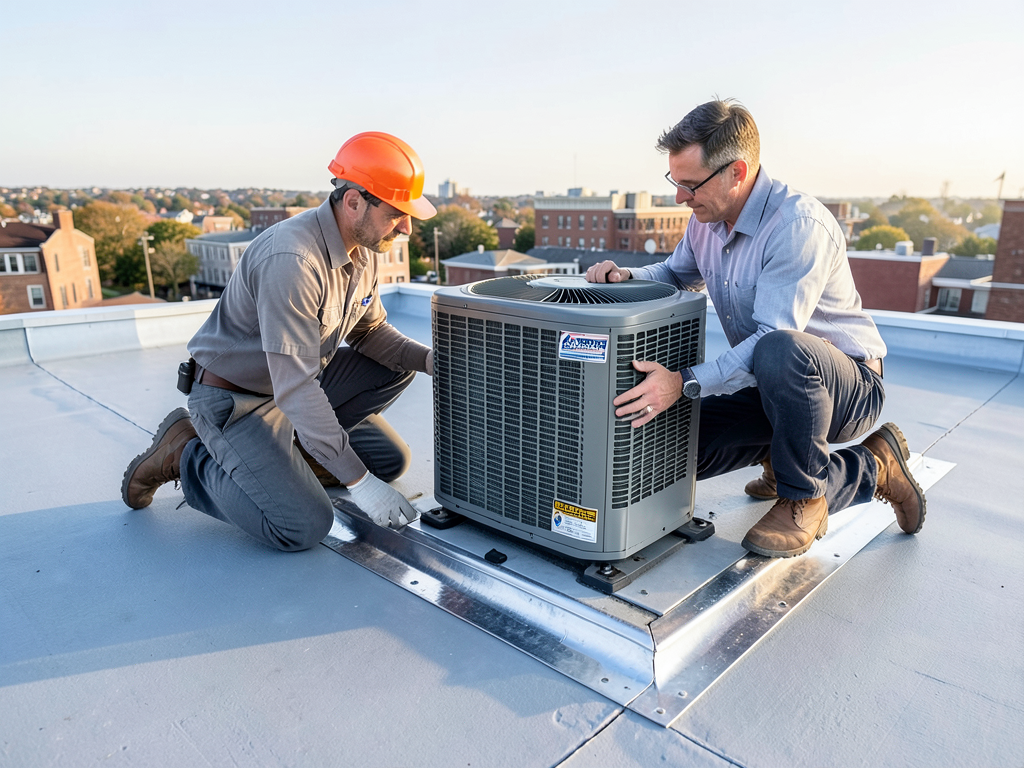
Local building inspectors know our work. We pull permits, schedule inspections, and deliver stamped documentation for your insurance and warranty files. When you need a roof that passes city code and actually keeps water out, you need installers who understand flashing terminations, cricket installations around rooftop units, and proper tie-ins at brick parapets.

We also understand timing. A warehouse manager in Brooklyn cannot afford three weeks of downtime. We phase installations to keep operations running, work night shifts when needed, and coordinate material deliveries to avoid blocking loading docks. Your business continuity matters as much as the roof itself.

Every flat roofing project gets a dedicated supervisor who has installed hundreds of low slope systems in this region. You get someone who knows how to handle the clay soil settlement issues that crack curbs, the wind patterns off the harbor that require extra fastening, and the sudden temperature drops that force us to pause membrane work until conditions stabilize.

What You Get With Our Flat Roofing Services

Project Timeline and Coordination

Most residential flat roof replacements take three to five days depending on size and substrate condition. Commercial projects range from one week for small retail buildings to four weeks for large industrial facilities. We schedule around your business operations, work in phases if needed, and provide daily progress updates. Weather delays happen in Baltimore, so we monitor forecasts and adjust schedules to avoid installing membranes in rain or when temperatures drop below manufacturer minimums.

Comprehensive Roof Evaluation

Initial assessments include deck inspection, insulation moisture testing, and drainage analysis. We check parapet walls for deterioration, examine all penetrations and curbs, and document existing conditions with photos. You receive a written report detailing which components can stay and which need replacement. We identify code violations that could cause permit problems and recommend solutions. This evaluation costs nothing if you proceed with the project.

Quality Installation Standards

Every roof gets built to manufacturer specifications that preserve material warranties. Seams get tested, flashings get mechanically fastened and sealed, and drainage components get installed with proper slope. We use walk pads at high-traffic areas, install edge metal to protect membrane terminations, and add extra reinforcement at corners and penetrations. Your roof passes city inspection the first time because we follow code requirements and industry best practices without shortcuts.

Maintenance and Support

Flat roofs need annual inspections to catch small problems before they become expensive failures. We offer maintenance contracts that include spring and fall inspections, drain cleaning, minor repairs, and detailed condition reports. You get priority scheduling for emergency repairs and discounted rates on future work. We keep records of your roof system, track warranty dates, and remind you when manufacturer inspections are due to maintain coverage.

Frequently Asked Questions

You Have Questions,
We Have Answers

How much does it cost to have a flat roof done? +

Flat roof costs in Baltimore depend on square footage, material choice, and existing damage. Modified bitumen and EPDM rubber membranes are common for Baltimore's freeze-thaw cycles and summer heat. A typical residential flat roof ranges from budget-friendly options to premium systems with better durability. Factors include roof accessibility, the number of penetrations like vents or skylights, and whether you need a complete tear-off or overlay. Baltimore row homes often have unique parapet wall configurations that affect labor costs. Request detailed written estimates that break down material, labor, and disposal fees to compare fairly.

How to tell if a roofer is lying? +

Watch for vague estimates without written breakdowns, pressure to decide immediately, or requests for full payment upfront. A dishonest roofer avoids showing proof of local licensure or insurance certificates. In Baltimore, legitimate contractors pull city permits for major roof work and can reference specific projects in neighborhoods like Canton or Hampden. Red flags include reluctance to provide references, no physical business address, or claims that storm damage requires immediate repairs without a proper inspection. Ask pointed questions about membrane types, fastening methods, and drainage solutions. Evasive answers signal trouble.

What does a new flat roof cost? +

New flat roof costs vary based on material selection and roof size. EPDM rubber membranes offer affordability and proven performance in Baltimore's humid summers and cold winters. TPO and PVC membranes cost more but resist UV damage better. Modified bitumen provides middle-ground pricing with excellent waterproofing. Your total investment includes tear-off of old roofing, deck repairs if needed, new membrane installation, flashing around chimneys and parapets, and proper drainage components. Baltimore's older housing stock sometimes requires additional structural reinforcement. Get three written quotes comparing the same membrane type and warranty coverage to evaluate true value.

How much does it cost to roof a 20x20 garage? +

A 20x20 garage totals 400 square feet. Flat roof pricing for this size depends on material choice and condition of the existing deck. EPDM rubber is budget-friendly and handles Baltimore's temperature swings well. Modified bitumen costs more but offers torch-down durability for detached structures exposed to standing water from snow melt. Factor in new drip edge, fascia repairs, and proper slope correction if water pools. Garages often lack adequate drainage, which accelerates membrane failure. A straightforward replacement with quality materials and proper installation prevents headaches. Material quality matters more than saving a few hundred dollars upfront.

What is the cheapest option for a flat roof? +

EPDM rubber membrane is the most affordable flat roof option that performs well in Baltimore. This single-ply material resists moisture, handles freeze-thaw cycles, and installs quickly to reduce labor costs. Roll roofing is cheaper but fails rapidly under ponding water and UV exposure common on Baltimore roofs. Built-up tar and gravel costs less than premium membranes but requires more maintenance. Avoid bottom-shelf solutions that need replacement within five years. EPDM balances upfront affordability with longevity when installed with proper fastening and seam tape. Cheap installations with poor drainage design cost more long-term through repeated leak repairs.

How much will it cost to roof a 3 bedroom flat? +

A 3 bedroom flat in Baltimore varies widely in roof area depending on building style. Row homes have narrower footprints but longer runs. Detached buildings spread wider. Expect anywhere from 800 to 1,500 square feet of flat roof surface. Cost depends on membrane type, existing damage, parapet wall conditions, and accessibility. Baltimore's older apartments often need deck replacement where water infiltration caused rot. Multi-family buildings may require upgraded drainage systems to handle increased runoff. Fire code compliance for shared structures adds requirements. Get detailed measurements and material specifications in writing before comparing estimates from qualified commercial roofing contractors.

What is the 2 year rule for contractors? +

Maryland's Home Improvement Commission enforces a statute of limitations where contractors maintain liability for defective work. The two year rule often references warranty periods or the timeframe to file complaints for shoddy installation. In Baltimore, property owners have limited time to pursue claims after discovering defects. This makes thorough documentation critical during installation. Take dated photos, keep all contracts and receipts, and document communications. Quality contractors stand behind work beyond minimum legal requirements. The rule protects both parties when expectations are clear upfront. Request written warranties that specify coverage duration and what conditions void protection.

What should you not say to a contractor? +

Never tell a contractor you need work done immediately or have insurance money burning a hole in your pocket. Avoid mentioning you haven't gotten other estimates. Do not say your budget maximum upfront or that price does not matter. Never admit you know nothing about roofing systems. In Baltimore's competitive market, desperation signals invite inflated quotes. Do not ask contractors to skip permits or use leftover materials from other jobs. Avoid requesting work be done off the books for cash discounts. These statements compromise quality, void insurance claims, and eliminate legal recourse. Ask informed questions about membrane types and drainage solutions instead.

What are the red flags for roofing contractors? +

Red flags include no verifiable Baltimore business address, reluctance to provide references from recent local projects, or pressure to sign immediately. Watch for contractors who arrived unsolicited after storms claiming they spotted damage. Avoid anyone requesting large deposits before work starts or full payment upon completion without inspection. Missing proof of liability insurance and workers compensation coverage puts you at risk. Vague contracts without specific material brands, installation methods, or project timelines signal problems. Be wary of prices drastically lower than competitors without clear explanation. Legitimate Baltimore roofers pull city permits, provide detailed written estimates, and welcome questions about their process.

What time of year is the cheapest to replace a roof? +

Late fall and winter offer the lowest flat roof replacement costs in Baltimore. Demand drops after storm season ends and before spring leak emergencies begin. November through February sees fewer projects, so contractors offer better rates to keep crews working. However, cold temperatures limit certain membrane installations. Modified bitumen requires torch application above specific temperatures. EPDG rubber installs year-round but adhesives need proper conditions. Plan replacements during mild fall weather for the best combination of lower pricing and optimal installation conditions. Avoid summer peak season when contractors are booked solid and emergency repairs command premium rates.

How Baltimore's Freeze-Thaw Cycles Destroy Flat Roof Membranes

Baltimore averages thirty freeze-thaw cycles each winter, more than cities just fifty miles south. Water seeps into membrane laps during November rains, freezes in December, expands, and tears the seam. By February, that tiny split becomes a six-inch rip leaking into your building. The Chesapeake Bay amplifies this problem by keeping humidity high even in winter, so membranes never fully dry between storms. Flat roof contractors who understand this cycle use thicker membranes, specify cold-weather adhesives, and add extra plies at vulnerable seams to prevent splitting.

A Plus Roofing Baltimore has installed flat roofing systems on over three hundred commercial buildings and residential properties across the city. We know which membrane manufacturers hold up in our climate and which fail prematurely. Local building inspectors recognize our work because we consistently meet code requirements for insulation R-values, fire ratings, and wind uplift resistance. When you hire flat roofing specialists who live and work in this region, you get someone who understands our weather patterns and builds systems that survive them.
Roofing Services in The Baltimore Area

We are proud to be a locally owned and operated business committed to serving the entire Baltimore community and its surrounding counties. View our office location on the map and see the breadth of our service area. We encourage you to visit our facility or contact us directly to discuss your next roofing project.

Address:
A Plus Roofing Baltimore, 101 N Haven St, Baltimore, MD, 21224

Additional Services We Offer

Our news updates

Latest Articles & News from The Blogs

Finding a Roofer in Westminster Who Actually Knows How to Handle Metal Barn Roofs When your Carroll County barn roof…

Finding a Roofer in Westminster Who Actually Knows How to Handle Metal Barn Roofs

Finding a Roofer in Westminster Who Actually Knows How to Handle Metal Barn Roofs When your Carroll County barn roof…

Upgrading Your Builder-Grade Roof in Severn Before It Starts Leaking

Upgrading Your Builder-Grade Roof in Severn Before It Starts Leaking Your Severn home's builder-grade roof has a ticking clock. Maryland's…

Restoring the Ornamental Roof Details on Victorian Homes in Abell and Waverly

Restoring the Ornamental Roof Details on Victorian Homes in Abell and Waverly Victorian homes in Baltimore's Abell and Waverly neighborhoods…

Contact Us

Do not wait for leaks to force emergency repairs during a rainstorm. Call (443) 455-9099 now for a complete roof evaluation. We identify problems early, provide detailed repair estimates, and schedule installations around your timeline. Your flat roof protects everything inside your building. Make sure it actually works.