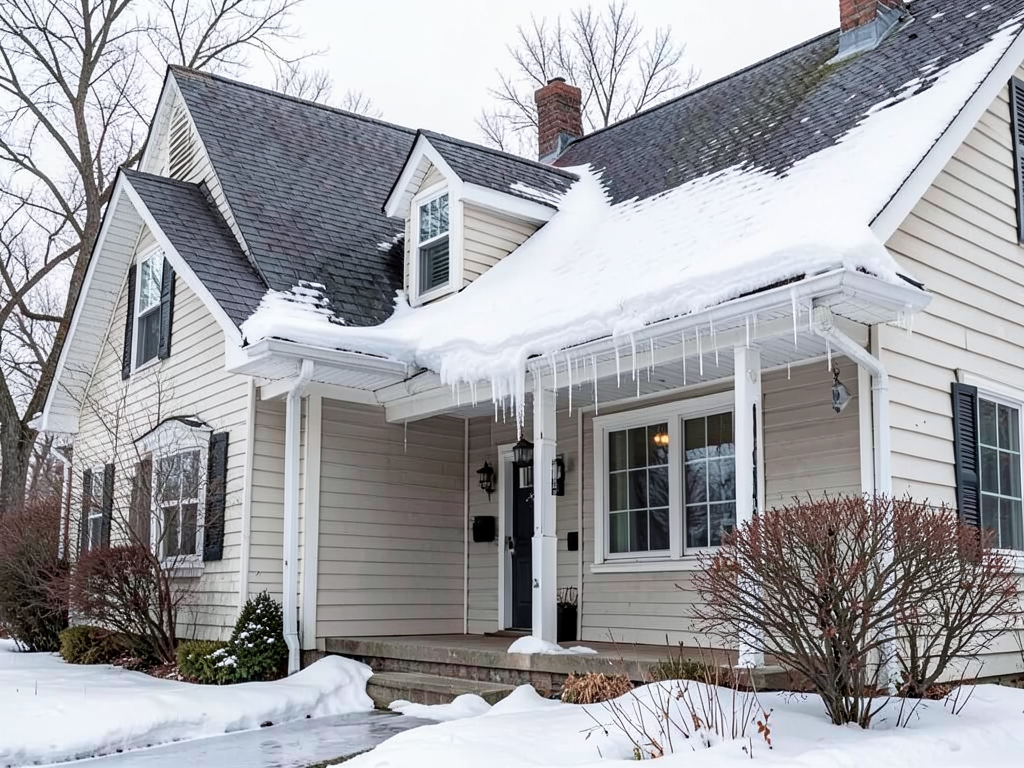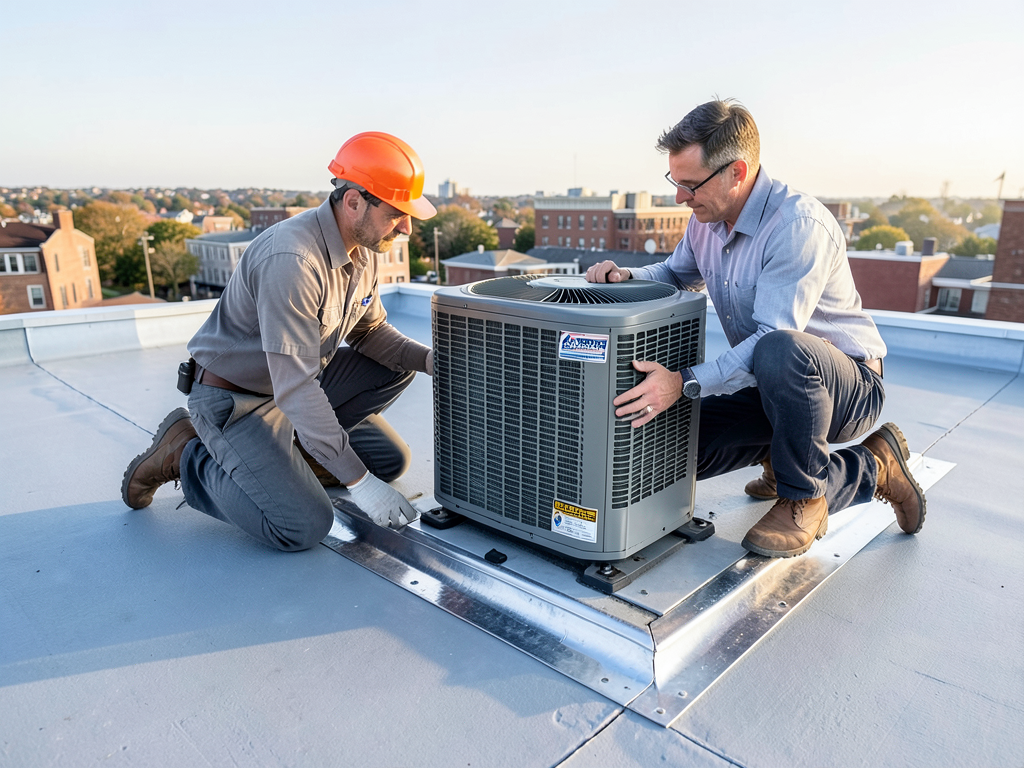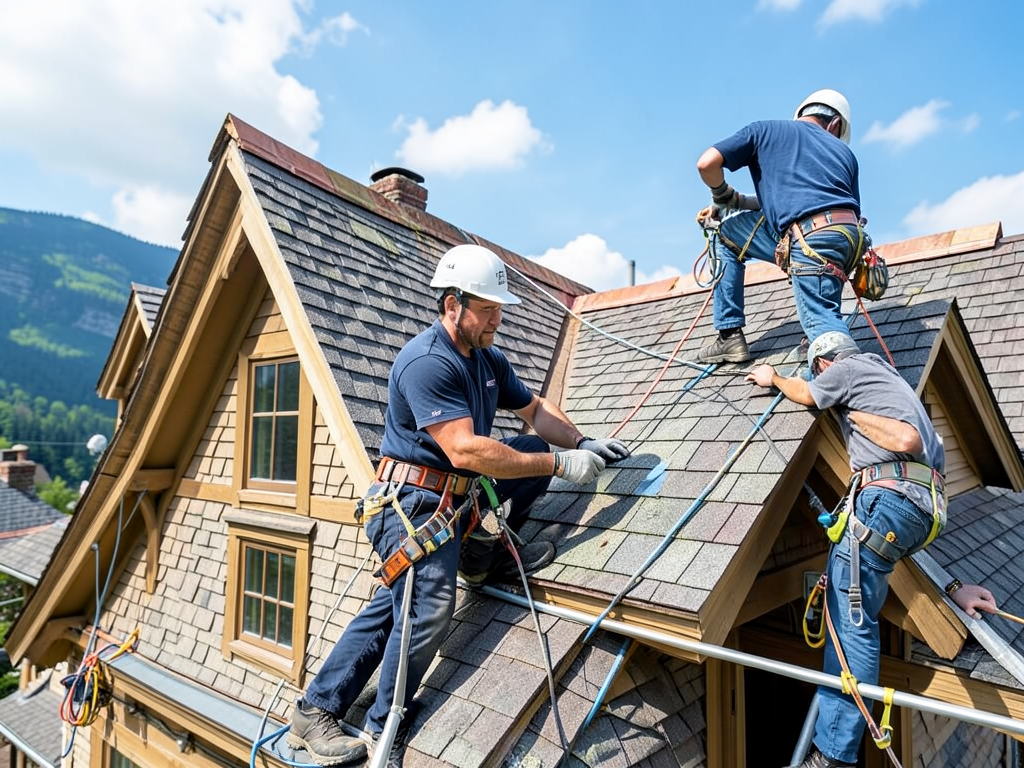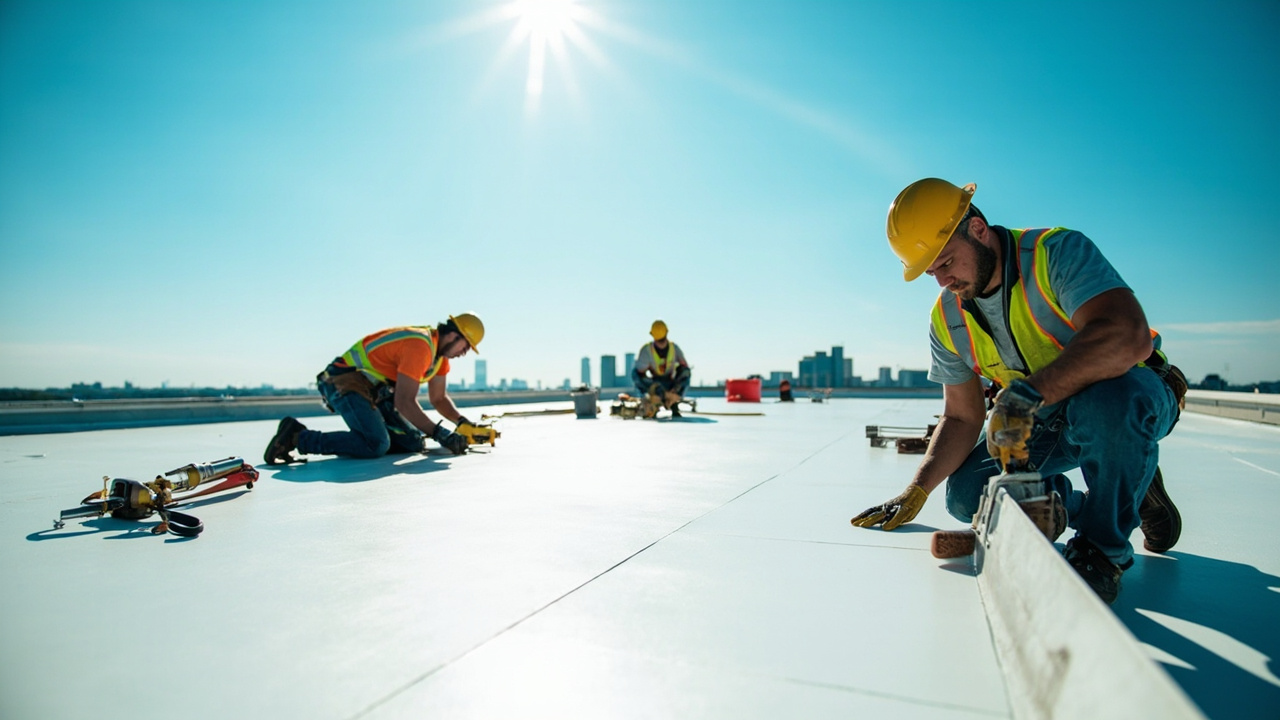

Baltimore's location on the Patapsco River creates microclimate conditions that stress commercial roofing systems. Buildings within three miles of the harbor experience salt air deposition that accelerates metal corrosion and degrades petroleum-based roofing materials. The city's position in the Chesapeake Bay watershed generates humidity levels 15-20% higher than inland areas, promoting mold growth on organic roofing components. Winter freeze-thaw cycles combined with standing water from spring storms create expansion stress that cracks rigid membranes. TPO membrane roofing resists salt air degradation, remains flexible through temperature swings, and reflects solar heat that amplifies UV damage in humid conditions.
Baltimore's commercial building codes require roof systems to meet specific wind uplift ratings and fire resistance standards. The city's Roof Replacement Permit process mandates engineering calculations for fastener patterns on buildings exceeding 40 feet in height. A Plus Roofing Baltimore maintains relationships with local building officials and understands interpretation nuances that vary between inspectors. We specify attachment methods that exceed minimum code requirements, protecting your investment and avoiding reinspection delays. Our familiarity with Baltimore's architectural review processes expedites approvals for historic district properties requiring visible roofing changes.