
Restoring the Ornamental Roof Details on Victorian Homes in Abell and Waverly
Victorian homes in Baltimore’s Abell and Waverly neighborhoods feature intricate rooflines with steep pitches, decorative finials, and elaborate gables that require specialized restoration expertise. These architectural treasures from the late 1800s demand careful preservation of their original character while ensuring modern weather protection. Understanding the unique challenges of restoring ornamental roof details on these historic structures is essential for maintaining both their beauty and structural integrity. Baltimore Commission for Historical and Architectural Preservation.
Victorian architecture in Baltimore encompasses Queen Anne, Second Empire, and Italianate styles, each with distinctive roof characteristics. Queen Anne homes showcase complex roof forms with multiple gables, turrets, and decorative shingles. Second Empire properties feature the iconic mansard roof with its characteristic steep lower slope. Italianate Victorians display low-pitched hip roofs with wide eaves supported by decorative brackets. Each style requires specific restoration approaches that honor the original design while meeting current building standards. Flat Roof Repair for Baltimore Rowhouses — What Every Homeowner in Canton Needs to Know.
The restoration process begins with a thorough assessment of the existing roof structure. Many Victorian homes in Abell and Waverly have endured over a century of Baltimore’s humid summers and freeze-thaw winters, leading to deterioration of original materials. Common issues include rotted fascia boards, failing slate tiles, corroded copper flashing, and damaged decorative elements. A comprehensive inspection identifies these problems and establishes the scope of restoration work needed.
Navigating Baltimore’s historic preservation requirements represents a critical aspect of Victorian roof restoration. The Commission for Historical and Architectural Preservation (CHAP) oversees all exterior modifications in designated historic districts. Property owners must submit detailed restoration plans for CHAP approval before beginning work. This process ensures that repairs maintain the architectural integrity of these significant structures while incorporating modern weatherproofing techniques. Weekend Roofing Service.
Material selection plays a crucial role in authentic Victorian roof restoration. Original materials often included natural slate, cedar shakes, copper flashing, and decorative metal cresting. Today’s restorers must balance historical accuracy with durability and cost considerations. High-quality synthetic slate offers an alternative that mimics the appearance of natural slate while providing superior impact resistance and lighter weight. Cedar shake alternatives made from recycled materials provide similar aesthetic appeal with enhanced longevity. Installing a Metal Roof in Columbia — Is It Worth the Investment?.
Copper flashing remains the gold standard for Victorian roof restoration. This material develops a distinctive patina over time that complements the historic character of these homes. Standing seam copper roofing provides excellent durability for flat sections and low-pitched areas. The material’s natural antimicrobial properties prevent moss and algae growth, common problems on shaded Victorian roof surfaces.
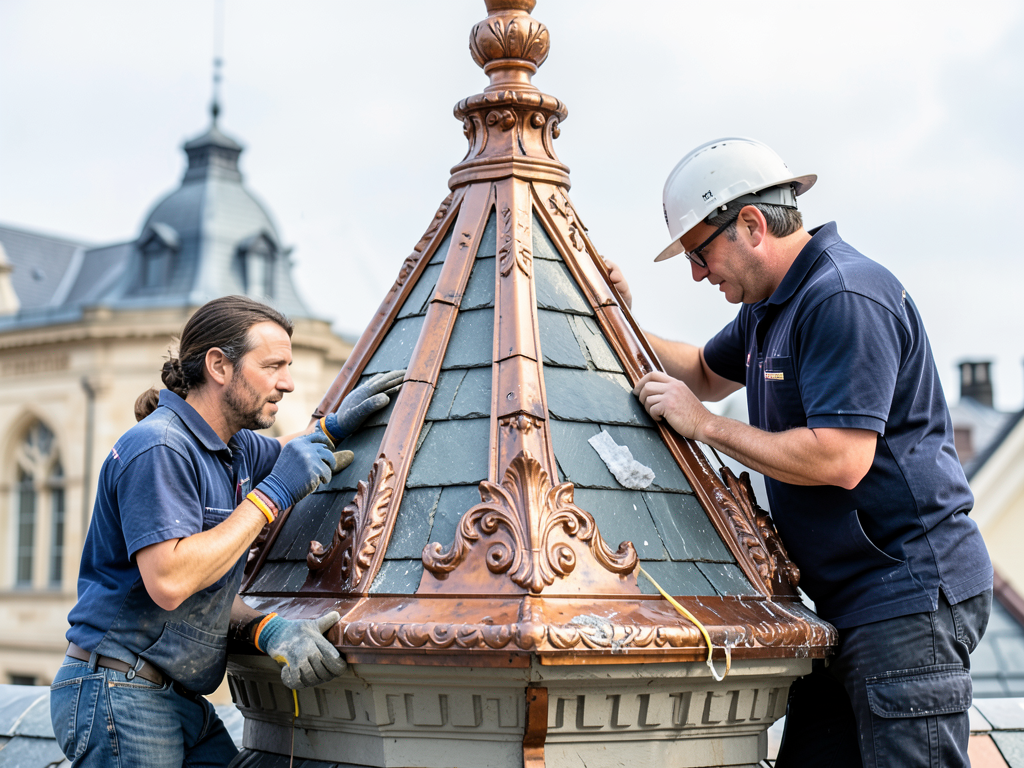
Ornamental details require specialized craftsmanship during restoration. Decorative finials, cresting, and ridge caps often feature intricate designs that must be replicated or repaired. Many Victorian homes in Abell and Waverly include gingerbread trim along eaves and gables. This delicate woodwork requires careful removal, restoration, and reinstallation to preserve its original character.
Box gutters present unique challenges in Victorian roof restoration. These built-in drainage systems, common on historic homes, often require complete reconstruction using modern waterproofing membranes beneath traditional materials. Proper box gutter restoration prevents water infiltration that can damage interior plaster and decorative elements.
Turret restoration demands particular expertise due to their complex geometry. These conical roof structures often feature curved slate or metal roofing that requires precise cutting and fitting. The intersection between turret and main roof creates vulnerable areas that need careful flashing and waterproofing. Metal Retrofit Roofing.
Structural reinforcement may be necessary before beginning ornamental restoration. Many Victorian roof structures were built with lumber dimensions smaller than modern standards. Adding sister joists or installing additional support beams ensures the roof can handle the weight of restoration materials while meeting current building codes.
Weather considerations influence restoration timing in Baltimore. The region’s high humidity can affect material installation and curing times. Spring and fall typically offer the most favorable conditions for extensive roof work. Planning restoration around seasonal weather patterns helps ensure proper material performance and adhesion.
Energy efficiency improvements can be incorporated during restoration. While maintaining historical appearance, modern insulation techniques can be added beneath roofing materials. This approach improves thermal performance without visible alterations to the home’s exterior character.
Lead paint concerns require careful handling during Victorian roof restoration. Many original painted surfaces contain lead-based paint that must be properly contained and disposed of during the restoration process. Certified lead abatement procedures protect both workers and residents.
Documentation proves valuable for future maintenance and historical reference. Before-and-after photographs, material samples, and detailed work records help track the restoration process. This documentation also assists with potential historic tax credit applications and future repair work.
Cost considerations for Victorian roof restoration vary significantly based on the extent of work required. Simple repairs to decorative elements might cost a few thousand dollars, while complete roof system restoration can exceed $50,000. The investment protects these architectural treasures for future generations while potentially qualifying for historic preservation tax incentives.
Professional expertise makes the difference in successful Victorian roof restoration. Specialists familiar with historic building techniques understand how to preserve original materials when possible and replicate them when necessary. Their experience with CHAP requirements streamlines the approval process and ensures compliance with preservation standards.
Community impact extends beyond individual properties. Restored Victorian roofs enhance neighborhood character and property values throughout Abell and Waverly. These visible improvements contribute to the area’s historic charm and attract preservation-minded residents who appreciate architectural heritage.
Maintenance planning helps protect restoration investments. Regular inspections, gutter cleaning, and prompt repairs prevent minor issues from becoming major problems. Establishing a maintenance schedule with a qualified roofing professional ensures the longevity of restoration work.
Modern technology aids in Victorian roof restoration. Thermal imaging helps identify hidden moisture problems, while 3D modeling assists in planning complex ornamental repairs. These tools complement traditional craftsmanship to achieve superior restoration results.
Insurance considerations affect restoration planning. Many insurance companies offer premium discounts for historic preservation work that meets specific standards. Discussing restoration plans with insurance providers helps identify potential coverage benefits and requirements.
Environmental responsibility guides material choices in contemporary restoration. Reclaimed materials from other historic structures often provide authentic options while reducing environmental impact. Sustainable practices in restoration support both preservation and ecological goals.
Community education opportunities arise through restoration projects. Homeowners often share their experiences with neighbors, creating awareness about preservation techniques and CHAP requirements. This knowledge sharing strengthens neighborhood commitment to maintaining architectural heritage.
Future adaptability considerations influence restoration decisions. While maintaining historical accuracy, restorers must anticipate potential climate changes and their impact on roof performance. Choosing materials and techniques that accommodate future modifications helps ensure long-term success.
Professional certification demonstrates expertise in Victorian roof restoration. Organizations like the National Park Service offer specialized training in historic preservation techniques. Working with certified professionals ensures restoration work meets industry standards for historic properties. National Park Service Historic Roofing Preservation.
Project timeline expectations help homeowners plan effectively. Victorian roof restoration often takes longer than standard roofing projects due to the complexity of work and approval processes. Understanding realistic timeframes prevents frustration and allows for proper project management.
Quality control measures ensure restoration success. Regular inspections during the work process, material testing, and adherence to preservation guidelines help achieve superior results. Documentation of quality control procedures provides valuable records for future reference.
Restoration success ultimately depends on balancing historical accuracy with modern performance requirements. The goal is creating a roof system that protects the home while preserving its architectural character. This balance requires expertise, patience, and commitment to preservation principles.
The investment in Victorian roof restoration pays dividends through enhanced property value, improved energy efficiency, and preserved architectural heritage. These beautiful homes in Abell and Waverly continue to showcase Baltimore’s rich architectural history when properly maintained and restored.
Frequently Asked Questions
Do I need CHAP approval for Victorian roof repairs?
Yes, any exterior modifications to properties in Baltimore’s historic districts require CHAP approval. This includes roof repairs, material changes, and ornamental element restoration. The approval process ensures work maintains historical accuracy and architectural integrity.
How long does Victorian roof restoration typically take?
Most Victorian roof restoration projects require 4-8 weeks from start to finish, depending on the scope of work. This timeline includes CHAP approval, material procurement, and the actual restoration work. Complex projects with extensive ornamental details may take longer.
What’s the difference between natural and synthetic slate for Victorian restoration?
Natural slate offers authentic historical appearance but requires stronger roof structures due to weight. Synthetic slate provides similar aesthetics with better impact resistance and lighter weight. Both materials meet CHAP requirements when properly installed and documented.
Victorian Roof Restoration Process
- Initial Assessment
Comprehensive inspection of existing roof structure, materials, and ornamental details to document current condition and identify restoration needs.
- CHAP Planning
Prepare detailed restoration plans including material specifications and installation methods for historic preservation commission approval.
- Structural Preparation
Reinforce roof framing as needed to support restoration materials while maintaining original architectural character.
- Material Installation
Install roofing materials using traditional techniques combined with modern weatherproofing methods for optimal performance.
- Ornamental Restoration
Repair or replicate decorative elements including finials, cresting, and gingerbread trim to match original designs.
- Final Inspection
Complete quality control review and documentation of restoration work for homeowner records and potential tax credit applications.
Comparison of Victorian Roofing Materials
| Material Type | Cost Range | Lifespan | CHAP Approval | Weight Consideration |
|---|---|---|---|---|
| Natural Slate | $15-25/sq ft | 75-100 years | Approved | Heavy – may need reinforcement |
| Synthetic Slate | $8-12/sq ft | 50-75 years | Approved | Light – minimal reinforcement |
| Cedar Shake | $10-18/sq ft | 30-40 years | Approved | Moderate – check structure |
| Standing Seam Copper | $20-30/sq ft | 100+ years | Approved | Moderate – compatible with most structures |
Common Victorian Roof Problems in Baltimore
- Water damage from failing flashing around chimneys and turrets
- Rotted fascia boards and soffits due to poor ventilation
- Cracked or missing slate tiles from freeze-thaw cycles
- Corroded copper flashing and gutters
- Damaged ornamental elements from weather exposure
Call (443) 455-9099 for Victorian Roof Restoration in Abell and Waverly
Restoring the ornamental roof details on your Victorian home requires specialized expertise and attention to historic preservation requirements. Our team understands the unique challenges of working on these architectural treasures in Baltimore’s Abell and Waverly neighborhoods. From CHAP compliance to authentic material selection, we handle every aspect of Victorian roof restoration with the care these historic homes deserve.
Don’t let roof problems compromise your home’s historic character. Call (443) 455-9099 today to schedule your Victorian roof assessment. We’ll help you navigate the restoration process while preserving the architectural integrity that makes your home special.
Pick up the phone and call (443) 455-9099 before the next storm hits. Your Victorian home deserves expert care from professionals who understand historic preservation requirements and can deliver results that last for generations.
{
“@context”: “https://schema.org”,
“@type”: “BlogPosting”,
“headline”: “Restoring the Ornamental Roof Details on Victorian Homes in Abell and Waverly”,
“description”: “Expert Victorian roof restoration in Baltimore’s Abell and Waverly neighborhoods. Learn CHAP compliance, authentic materials, and specialized techniques for preserving historic architecture.”,
“wordCount”: 1796,
“datePublished”: “2026-04-19T06:13:00.000Z”,
“dateModified”: “2026-04-19T06:13:00.000Z”,
“inLanguage”: “en-US”,
“mainEntityOfPage”: {
“@type”: “WebPage”,
“@id”: “https://aplusroofingbaltimore.com”
},
“publisher”: {
“@type”: “LocalBusiness”,
“name”: “A Plus Roofing Baltimore”,
“url”: “https://aplusroofingbaltimore.com”
},
“author”: {
“@type”: “Organization”,
“name”: “A Plus Roofing Baltimore”,
“url”: “https://aplusroofingbaltimore.com”
},
“image”: {
“@type”: “ImageObject”,
“url”: “https://aplusroofingbaltimore.com/wp-content/uploads/2026/03/restoring-the-ornamental-roof-details-on-victorian-1.png”
}
}
{
“@context”: “https://schema.org”,
“@type”: “RoofingContractor”,
“name”: “A Plus Roofing Baltimore”,
“url”: “https://aplusroofingbaltimore.com”,
“address”: {
“@type”: “PostalAddress”,
“addressLocality”: “Baltimore”
},
“areaServed”: {
“@type”: “City”,
“name”: “Baltimore”
}
}
{
“@context”: “https://schema.org”,
“@type”: “FAQPage”,
“mainEntity”: [
{
“@type”: “Question”,
“name”: “Do I need CHAP approval for Victorian roof repairs?”,
“acceptedAnswer”: {
“@type”: “Answer”,
“text”: “Yes, any exterior modifications to properties in Baltimore’s historic districts require CHAP approval. This includes roof repairs, material changes, and ornamental element restoration. The approval process ensures work maintains historical accuracy and architectural integrity.”
}
},
{
“@type”: “Question”,
“name”: “How long does Victorian roof restoration typically take?”,
“acceptedAnswer”: {
“@type”: “Answer”,
“text”: “Most Victorian roof restoration projects require 4-8 weeks from start to finish, depending on the scope of work. This timeline includes CHAP approval, material procurement, and the actual restoration work. Complex projects with extensive ornamental details may take longer.”
}
},
{
“@type”: “Question”,
“name”: “What’s the difference between natural and synthetic slate for Victorian restoration?”,
“acceptedAnswer”: {
“@type”: “Answer”,
“text”: “Natural slate offers authentic historical appearance but requires stronger roof structures due to weight. Synthetic slate provides similar aesthetics with better impact resistance and lighter weight. Both materials meet CHAP requirements when properly installed and documented.”
}
}
]
}
{
“@context”: “https://schema.org”,
“@type”: “HowTo”,
“name”: “Victorian Roof Restoration Process”,
“step”: [
{
“@type”: “HowToStep”,
“position”: 1,
“name”: “Initial Assessment”,
“text”: “Comprehensive inspection of existing roof structure, materials, and ornamental details to document current condition and identify restoration needs.”
},
{
“@type”: “HowToStep”,
“position”: 2,
“name”: “CHAP Planning”,
“text”: “Prepare detailed restoration plans including material specifications and installation methods for historic preservation commission approval.”
},
{
“@type”: “HowToStep”,
“position”: 3,
“name”: “Structural Preparation”,
“text”: “Reinforce roof framing as needed to support restoration materials while maintaining original architectural character.”
},
{
“@type”: “HowToStep”,
“position”: 4,
“name”: “Material Installation”,
“text”: “Install roofing materials using traditional techniques combined with modern weatherproofing methods for optimal performance.”
},
{
“@type”: “HowToStep”,
“position”: 5,
“name”: “Ornamental Restoration”,
“text”: “Repair or replicate decorative elements including finials, cresting, and gingerbread trim to match original designs.”
},
{
“@type”: “HowToStep”,
“position”: 6,
“name”: “Final Inspection”,
“text”: “Complete quality control review and documentation of restoration work for homeowner records and potential tax credit applications.”
}
],
“image”: “https://aplusroofingbaltimore.com/wp-content/uploads/2026/03/restoring-the-ornamental-roof-details-on-victorian-1.png”
}
{
“@context”: “https://schema.org”,
“@type”: “BreadcrumbList”,
“itemListElement”: [
{
“@type”: “ListItem”,
“position”: 1,
“name”: “Home”,
“item”: “https://aplusroofingbaltimore.com”
},
{
“@type”: “ListItem”,
“position”: 2,
“name”: “Blog”,
“item”: “https://aplusroofingbaltimore.com/blog”
},
{
“@type”: “ListItem”,
“position”: 3,
“name”: “Restoring the Ornamental Roof Details on Victorian Homes in Abell and Waverly”
}
]
}
{
“@context”: “https://schema.org”,
“@type”: “Service”,
“serviceType”: “Roofing”,
“provider”: {
“@type”: “LocalBusiness”,
“name”: “A Plus Roofing Baltimore”,
“url”: “https://aplusroofingbaltimore.com”
},
“areaServed”: {
“@type”: “City”,
“name”: “Baltimore”
},
“description”: “Expert Victorian roof restoration in Baltimore’s Abell and Waverly neighborhoods. Learn CHAP compliance, authentic materials, and specialized techniques for preserving historic architecture.”
}