
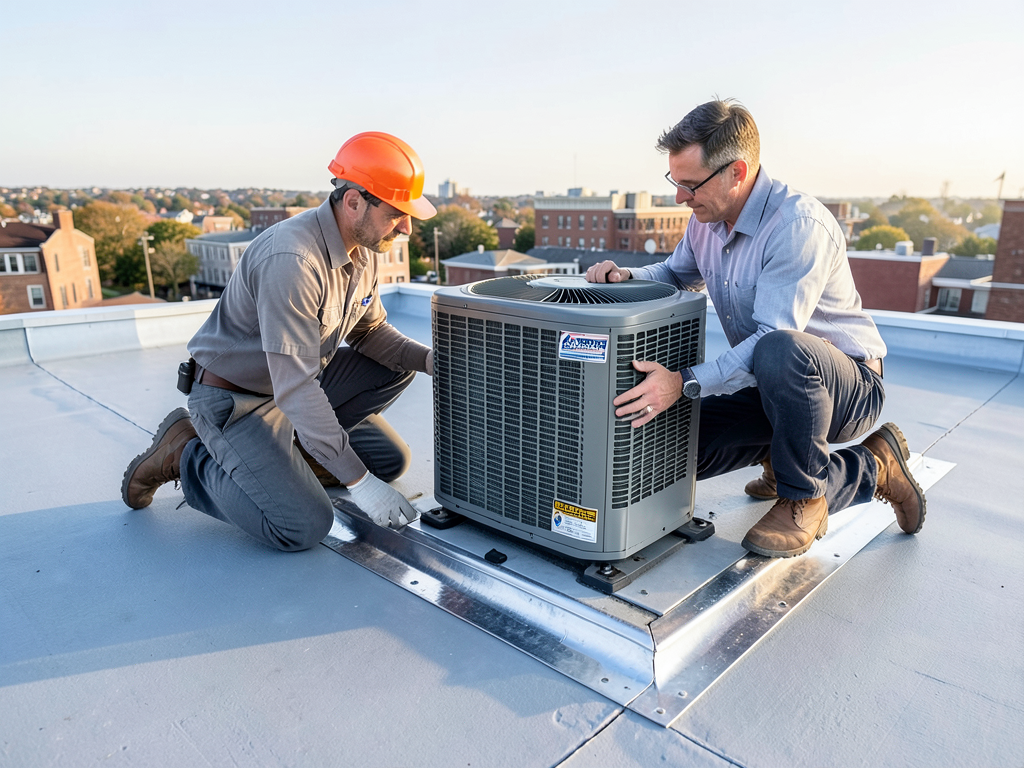
Your rooftop AC unit could be silently destroying your Federal Hill flat roof. The heavy equipment creates vibration stress and improper drainage that leads to leaks and costly repairs. Federal Hill’s high humidity and freeze-thaw cycles accelerate this damage. EPA Urban Heat Island Information.
Flat roofs in Baltimore’s Federal Hill neighborhood face unique challenges. The area’s historic rowhouses and commercial buildings often place HVAC units directly on the roof surface. This creates multiple failure points that most property owners never see until water drips through their ceiling. Flat Roof Repair for Baltimore Rowhouses — What Every Homeowner in Canton Needs to Know.
Understanding how your AC unit affects your roof is the first step to preventing expensive damage. Let’s examine the specific ways rooftop equipment damages Federal Hill roofs and what you can do about it. Why Your Federal Hill Flat Roof is Leaking and How to Fix It for Good.
Common Ways Rooftop AC Units Damage Federal Hill Flat Roofs
Most rooftop HVAC damage happens slowly over months or years. The weight of the unit alone creates stress on the roof membrane. Add in vibration, heat, and water damage, and you have a recipe for failure.. Read more about The Best Flat Roof Membranes for High Traffic Rooftop Decks in Canton.
Federal Hill’s climate makes these problems worse. The area experiences more freeze-thaw cycles than surrounding suburbs due to its proximity to the harbor. When water gets under the flashing around your AC unit, it expands when frozen and breaks seals.
Improper Curb Flashing Creates Entry Points
The most common cause of HVAC-related roof leaks is failed flashing around the equipment curb. The curb is the raised platform that supports your AC unit. When installed incorrectly, gaps form between the curb and the roof membrane.
Federal Hill’s historic buildings often have older flashing that wasn’t designed for modern HVAC units. The expansion and contraction of metal flashing in Baltimore’s temperature swings creates cracks that water exploits. Installing a Metal Roof in Columbia — Is It Worth the Investment?.
During heavy rain events common to Baltimore, water pools around the base of the unit. Without proper flashing, this water seeps under the membrane and into your building.
Condensate Drainage Problems Cause Standing Water
Your AC unit produces water through condensation. This condensate should drain through dedicated lines away from the roof surface. When these lines fail or aren’t installed properly, water pools around the unit.
Federal Hill’s flat roofs have minimal slope for drainage. Combined with condensate overflow, this creates perfect conditions for ponding water. Standing water breaks down roofing materials and creates leaks.
The condensate problem gets worse in Baltimore’s humid summers. More moisture in the air means more condensation. A properly functioning drain line can produce gallons of water on a hot day.
Vibration and Foot Traffic Create Weak Points
Every time your AC unit starts, it vibrates. Over time, these vibrations cause the roofing membrane to wear thin directly under the unit. The constant movement also loosens screws and fasteners that hold flashing in place.
Federal Hill’s dense urban environment means HVAC technicians frequently access rooftop units. Each service visit brings foot traffic that can puncture or tear the membrane. Without proper walkway pads, technicians walk directly on vulnerable roofing material.
The vibration issue is particularly severe in Federal Hill’s older buildings. Historic structures weren’t designed to support the weight and movement of modern rooftop equipment.
Refrigerant and Oil Leaks Damage Membrane Materials
Refrigerant leaks from AC units can chemically damage certain roofing membranes. TPO and EPDM materials are particularly vulnerable to petroleum-based substances. Even small oil leaks create weak spots that eventually fail.. Read more about Upgrading Your Small Business with Aluminum Fiber Roof Coatings in Brooklyn.
Federal Hill’s industrial past means some buildings have older HVAC systems more prone to leaks. The combination of age and Baltimore’s harsh climate accelerates refrigerant line deterioration.
Oil and refrigerant damage often looks like random staining or bubbling on the roof surface. By the time you see visible damage, the membrane integrity is already compromised.
Federal Hill Climate Impact on Rooftop Equipment
Baltimore’s climate creates specific challenges for rooftop HVAC systems. Federal Hill’s location near the harbor intensifies these effects. The area experiences higher humidity and more frequent freeze-thaw cycles than surrounding areas.
According to the Maryland Building Performance Standards, commercial buildings in Baltimore must account for wind loads of up to 115 mph. This affects how HVAC equipment is secured to rooftops. Maryland Building Performance Standards.
Federal Hill’s proximity to the harbor also means salt air exposure. Salt accelerates corrosion of metal components and flashing. This is why many local buildings show premature aging of rooftop equipment. Metal Retrofit Roofing.
Freeze-Thaw Cycles Weaken Roof Seals
Baltimore experiences 30-40 freeze-thaw cycles per year on average. Each cycle stresses the seals around your HVAC unit. Water enters tiny gaps, freezes, expands, and breaks the seal further.
Federal Hill’s older buildings are particularly vulnerable. Many were built before modern roofing materials existed. The original construction methods don’t account for today’s HVAC equipment.
During winter months, ice dams can form around the base of HVAC units. These ice formations force water under flashing and into the building envelope.
High Humidity Accelerates Material Breakdown
Baltimore’s average relative humidity exceeds 70% during summer months. This constant moisture exposure breaks down roofing adhesives and sealants faster than in drier climates.
Federal Hill’s urban heat island effect compounds this problem. The area’s dense building concentration traps heat and moisture, creating a more severe environment for roofing materials.
High humidity also promotes mold and algae growth on roof surfaces. While not directly damaging, this growth traps moisture against the membrane and accelerates deterioration.
Diagnostic Checklist for Federal Hill Property Owners
Regular inspection of your rooftop HVAC unit can prevent costly damage. Here’s what to look for during your monthly checks.
- Check for Ponding Water
Walk the area around your AC unit after rain. Look for water that remains more than 48 hours after precipitation ends. Standing water indicates drainage problems.
- Inspect Flashing and Seals
Examine all visible flashing around the curb and refrigerant lines. Look for cracks, gaps, or separation from the roof surface. Pay special attention to corners and seams.
- Test Condensate Drainage
Pour a bucket of water into the condensate pan. Verify it drains completely within 5 minutes. Slow drainage indicates clogs or improper slope.
- Look for Membrane Damage
Check the roof surface within 5 feet of the unit for blistering, cracking, or thinning. These are signs of heat damage or chemical exposure.
- Verify Walkway Protection
Ensure any walkway pads or designated paths are in place and undamaged. Missing pads force technicians to walk on vulnerable membrane.
Federal Hill’s building density means many properties share walls or have limited roof access. This makes regular inspection even more critical. A small problem can quickly affect multiple units in a building.
Preventative Maintenance and Professional Solutions
Preventing HVAC-related roof damage requires a coordinated approach between roofing and HVAC professionals. Many Federal Hill property owners don’t realize their roof warranty may be void if HVAC work isn’t done properly.
The International Building Code requires proper load calculations for rooftop equipment. Many Federal Hill buildings need structural reinforcement to safely support modern HVAC units.
Professional maintenance should include annual inspections of both the HVAC system and the roof membrane around the unit. This dual approach catches problems before they cause interior damage.
Proper Curb Installation and Flashing
Correct curb installation is critical for preventing leaks. The curb must be properly anchored to the roof structure and sealed to prevent water infiltration.
Federal Hill’s older buildings often need custom curbs designed for their specific roof construction. Standard pre-fabricated curbs may not work with historic masonry or wood deck structures.
High-quality flashing should extend at least 6 inches up the curb and 6 inches onto the roof surface. All seams should be heat-welded or chemically bonded, never simply overlapped and sealed.
Vibration Isolation and Structural Support
Vibration isolation mounts prevent the constant shaking from damaging your roof. These rubber or spring mounts absorb the movement from the compressor and fan motors.
Federal Hill’s older buildings may need additional structural support for rooftop units. The original roof decks weren’t designed for today’s heavier equipment. Without proper support, the roof can sag under the weight.
Structural engineers should evaluate any building over 50 years old before installing new rooftop HVAC equipment. This prevents catastrophic failures and extends roof life.
Condensate Management Systems
Proper condensate management prevents standing water on your roof. This includes correctly sized drain lines, secondary overflow pans, and proper routing away from the roof surface.
Federal Hill’s flat roofs need positive drainage design. Even a slight slope toward drains can prevent ponding. Many local buildings lack this basic feature, leading to chronic water problems.
Condensate pumps may be necessary for units installed in low spots or areas far from roof drains. These pumps automatically remove water when gravity drainage isn’t sufficient.
Walkway Pads and Access Protection
Designated walkway pads protect the roof membrane from foot traffic damage. These pads should be installed along all paths technicians use to access the HVAC unit.. Read more about How to Repair and Protect Decorative Roof Cornices on Baltimore City Rowhomes.
Federal Hill’s dense urban environment means HVAC technicians may access your roof at any hour. Without proper protection, each service call risks new damage.
Walkway pads should be made from materials compatible with your specific roofing system. Some membranes require special padding to prevent chemical reactions or heat damage.
Cost Analysis: Repair vs Prevention
Understanding the cost difference between repairing damage and preventing it can help you make smart decisions. Most HVAC-related roof repairs cost 3-5 times more than preventative measures.
A typical curb flashing repair in Federal Hill ranges from $800 to $2,500 depending on the extent of damage and accessibility. This doesn’t include repairing any interior damage from the leak.
Installing proper walkway pads and vibration isolation mounts costs $500 to $1,500 but can extend your roof life by 5-10 years. How Much a New Roof Costs in Towson (2026 Estimates).
The most expensive scenario is ignoring problems until they cause interior damage. Water damage repairs can easily exceed $10,000 when you factor in ceiling repair, painting, and potential mold remediation.
Local Case Studies: Federal Hill Success Stories
Several Federal Hill properties have successfully addressed HVAC-related roof damage through comprehensive approaches. These examples show what’s possible with proper planning.
A historic rowhouse on Charles Street experienced chronic leaks around a rooftop AC unit. The original flashing had failed, and the roof membrane was damaged from foot traffic. After a complete assessment, the property owner installed a new raised curb, updated flashing, and protective walkway pads. The total investment of $3,200 prevented an estimated $15,000 in potential damage.
A commercial building on Light Street had multiple rooftop units causing widespread membrane damage. The property management company implemented a quarterly inspection program and installed vibration isolation on all units. This proactive approach reduced roof maintenance costs by 60% over three years.. Read more about Using Cool Roof Technology to Fight the Urban Heat Island Effect in Mount Vernon.
Choosing the Right Contractor in Federal Hill
Not all roofing contractors understand the specific challenges of Federal Hill’s historic buildings and urban environment. Look for contractors with experience in both commercial roofing and historic preservation.
The best contractors will coordinate with your HVAC company to ensure all work meets both roof warranty requirements and HVAC manufacturer specifications. This coordination prevents warranty voids and ensures proper installation.
Federal Hill’s building density means many contractors need special permits for rooftop work. Choose a contractor familiar with Baltimore City permitting requirements for historic districts.
Ask potential contractors about their experience with similar buildings in the area. Have they worked on Federal Hill rowhouses? Do they understand the specific challenges of your building type?
Frequently Asked Questions
How often should I inspect my rooftop AC unit?
Monthly visual inspections and professional inspections twice yearly are recommended. Federal Hill’s climate makes more frequent checks worthwhile, especially after severe weather events.
Can I install a new AC unit on my existing roof?
Possibly, but your roof may need reinforcement. Federal Hill’s older buildings often require structural evaluation before adding new rooftop equipment. Always consult both a structural engineer and roofing contractor.
What’s the average lifespan of a flat roof with rooftop HVAC?
With proper maintenance, 15-20 years. Without it, you might see problems in as little as 5-7 years. Federal Hill’s climate and building density make maintenance even more critical.
Does my roof warranty cover HVAC-related damage?
Usually not. Most roof warranties exclude damage from equipment installation or maintenance. Always verify warranty terms before allowing HVAC work on your roof.
How can I tell if my roof is already damaged by my AC unit?
Look for water stains on ceilings, mold growth, or visible membrane damage near the unit. Also check for unusual AC performance, which might indicate condensate drainage problems.
Should I replace my roof when replacing my AC unit?
Not necessarily, but consider it if your roof is over 10 years old. The cost of removing and reinstalling the new unit on an old roof often makes replacement more economical long-term.
Take Action Before the Next Storm
Federal Hill’s weather patterns mean the next heavy rain or freeze-thaw cycle could cause serious damage to your roof through your AC unit. Don’t wait until you see water stains on your ceiling.
A simple inspection now can prevent thousands in repair costs later. Our team understands the unique challenges of Federal Hill’s historic buildings and urban environment.
We’ve helped dozens of Federal Hill property owners protect their investments through proper HVAC and roofing coordination. Our experience with local building codes and historic preservation requirements means we can work within your specific constraints.
Call (443) 455-9099 today to schedule your inspection. We’ll assess your current setup and recommend solutions that protect your roof and extend your equipment life.
Don’t let a small problem become a major expense. Federal Hill’s weather waits for no one, and the next storm could be the one that causes catastrophic damage.
Pick up the phone and call (443) 455-9099 before the next storm hits. Your roof, your ceiling, and your wallet will thank you.
You may also find this helpful. Choosing the Right Grease Resistant Roof for Your Restaurant in Canton or Fells Point.
{
“@context”: “https://schema.org”,
“@type”: “BlogPosting”,
“headline”: “How Your Rooftop AC Unit Might Be Damaging Your Flat Roof in Federal Hill”,
“description”: “Is your rooftop AC unit causing flat roof leaks in Federal Hill? Learn the common causes, local climate impacts, and how to prevent costly damage.”,
“wordCount”: 2323,
“datePublished”: “2026-06-11T08:06:00.000Z”,
“dateModified”: “2026-06-11T08:06:00.000Z”,
“inLanguage”: “en-US”,
“mainEntityOfPage”: {
“@type”: “WebPage”,
“@id”: “https://aplusroofingbaltimore.com”
},
“publisher”: {
“@type”: “LocalBusiness”,
“name”: “A Plus Roofing Baltimore”,
“url”: “https://aplusroofingbaltimore.com”
},
“author”: {
“@type”: “Organization”,
“name”: “A Plus Roofing Baltimore”,
“url”: “https://aplusroofingbaltimore.com”
},
“image”: {
“@type”: “ImageObject”,
“url”: “https://aplusroofingbaltimore.com/wp-content/uploads/2026/03/how-your-rooftop-ac-unit-might-be-damaging-your-fl-1.png”
}
}
{
“@context”: “https://schema.org”,
“@type”: “RoofingContractor”,
“name”: “A Plus Roofing Baltimore”,
“url”: “https://aplusroofingbaltimore.com”,
“address”: {
“@type”: “PostalAddress”,
“addressLocality”: “Baltimore”
},
“areaServed”: {
“@type”: “City”,
“name”: “Baltimore”
}
}
{
“@context”: “https://schema.org”,
“@type”: “FAQPage”,
“mainEntity”: [
{
“@type”: “Question”,
“name”: “How often should I inspect my rooftop AC unit?”,
“acceptedAnswer”: {
“@type”: “Answer”,
“text”: “Monthly visual inspections and professional inspections twice yearly are recommended. Federal Hill’s climate makes more frequent checks worthwhile, especially after severe weather events.”
}
},
{
“@type”: “Question”,
“name”: “Can I install a new AC unit on my existing roof?”,
“acceptedAnswer”: {
“@type”: “Answer”,
“text”: “Possibly, but your roof may need reinforcement. Federal Hill’s older buildings often require structural evaluation before adding new rooftop equipment. Always consult both a structural engineer and roofing contractor.”
}
},
{
“@type”: “Question”,
“name”: “What’s the average lifespan of a flat roof with rooftop HVAC?”,
“acceptedAnswer”: {
“@type”: “Answer”,
“text”: “With proper maintenance, 15-20 years. Without it, you might see problems in as little as 5-7 years. Federal Hill’s climate and building density make maintenance even more critical.”
}
},
{
“@type”: “Question”,
“name”: “Does my roof warranty cover HVAC-related damage?”,
“acceptedAnswer”: {
“@type”: “Answer”,
“text”: “Usually not. Most roof warranties exclude damage from equipment installation or maintenance. Always verify warranty terms before allowing HVAC work on your roof.”
}
},
{
“@type”: “Question”,
“name”: “How can I tell if my roof is already damaged by my AC unit?”,
“acceptedAnswer”: {
“@type”: “Answer”,
“text”: “Look for water stains on ceilings, mold growth, or visible membrane damage near the unit. Also check for unusual AC performance, which might indicate condensate drainage problems.”
}
},
{
“@type”: “Question”,
“name”: “Should I replace my roof when replacing my AC unit?”,
“acceptedAnswer”: {
“@type”: “Answer”,
“text”: “Not necessarily, but consider it if your roof is over 10 years old. The cost of removing and reinstalling the new unit on an old roof often makes replacement more economical long-term.”
}
}
]
}
{
“@context”: “https://schema.org”,
“@type”: “HowTo”,
“name”: “How to Inspect Your Rooftop HVAC Unit”,
“step”: [
{
“@type”: “HowToStep”,
“position”: 1,
“name”: “Check for Ponding Water”,
“text”: “Walk the area around your AC unit after rain. Look for water that remains more than 48 hours after precipitation ends. Standing water indicates drainage problems.”
},
{
“@type”: “HowToStep”,
“position”: 2,
“name”: “Inspect Flashing and Seals”,
“text”: “Examine all visible flashing around the curb and refrigerant lines. Look for cracks, gaps, or separation from the roof surface. Pay special attention to corners and seams.”
},
{
“@type”: “HowToStep”,
“position”: 3,
“name”: “Test Condensate Drainage”,
“text”: “Pour a bucket of water into the condensate pan. Verify it drains completely within 5 minutes. Slow drainage indicates clogs or improper slope.”
},
{
“@type”: “HowToStep”,
“position”: 4,
“name”: “Look for Membrane Damage”,
“text”: “Check the roof surface within 5 feet of the unit for blistering, cracking, or thinning. These are signs of heat damage or chemical exposure.”
},
{
“@type”: “HowToStep”,
“position”: 5,
“name”: “Verify Walkway Protection”,
“text”: “Ensure any walkway pads or designated paths are in place and undamaged. Missing pads force technicians to walk on vulnerable membrane.”
}
],
“image”: “https://aplusroofingbaltimore.com/wp-content/uploads/2026/03/how-your-rooftop-ac-unit-might-be-damaging-your-fl-1.png”
}
{
“@context”: “https://schema.org”,
“@type”: “BreadcrumbList”,
“itemListElement”: [
{
“@type”: “ListItem”,
“position”: 1,
“name”: “Home”,
“item”: “https://aplusroofingbaltimore.com”
},
{
“@type”: “ListItem”,
“position”: 2,
“name”: “Blog”,
“item”: “https://aplusroofingbaltimore.com/blog”
},
{
“@type”: “ListItem”,
“position”: 3,
“name”: “How Your Rooftop AC Unit Might Be Damaging Your Flat Roof in Federal Hill”
}
]
}
{
“@context”: “https://schema.org”,
“@type”: “Service”,
“serviceType”: “Roofing”,
“provider”: {
“@type”: “LocalBusiness”,
“name”: “A Plus Roofing Baltimore”,
“url”: “https://aplusroofingbaltimore.com”
},
“areaServed”: {
“@type”: “City”,
“name”: “Baltimore”
},
“description”: “Is your rooftop AC unit causing flat roof leaks in Federal Hill? Learn the common causes, local climate impacts, and how to prevent costly damage.”
}