
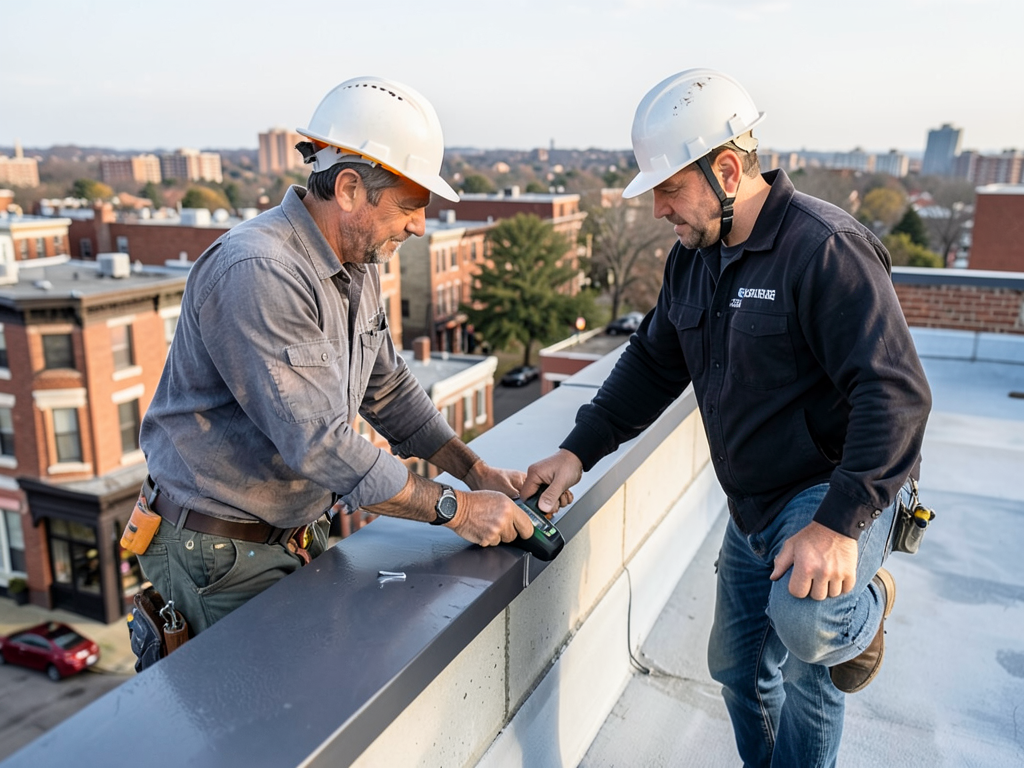
Why Your Federal Hill Flat Roof is Leaking and How to Fix It for Good
Your Federal Hill flat roof is leaking because Baltimore’s historic rowhouses face unique challenges. The combination of aging modified bitumen membranes, clogged parapet wall scuppers, and the freeze-thaw cycles common to Maryland’s climate creates perfect conditions for water infiltration. The good news is that most Federal Hill flat roof leaks follow predictable patterns and can be permanently fixed with the right diagnostic approach and repair materials. Baltimore City Historic Preservation.
Federal Hill’s rowhouses built in the early 1900s typically feature low-slope or flat roofs with parapet walls and internal drainage systems. These systems were designed for a different era and often struggle with today’s heavier rainfall patterns and the weight of modern rooftop decks. When water cannot drain properly, it ponds on the roof surface, accelerates membrane deterioration, and eventually finds its way through even the smallest imperfections.
The most common leak points in Federal Hill flat roofs include failed flashing at parapet walls, deteriorated seams in EPDM or TPO membranes, and compromised modified bitumen at expansion joints. Many of these issues stem from poor original installation or decades of deferred maintenance. The historic nature of these buildings also means repairs must comply with CHAP guidelines while addressing modern performance requirements. EPA Roofing Best Practices.
Understanding why your Federal Hill flat roof is leaking is the first step toward a permanent solution. The next sections break down the specific causes, diagnostic methods, and repair options that work best for Baltimore’s unique rowhouse architecture.
Common Causes of Federal Hill Flat Roof Leaks
Federal Hill flat roofs leak for specific reasons tied to their age, design, and Baltimore’s climate. Understanding these causes helps target repairs effectively and prevents repeat problems.
Parapet Wall Flashing Failures
Parapet walls create vertical surfaces where flat roofs meet building edges. In Federal Hill rowhouses, original flashing often consists of aged metal or modified bitumen that has lost flexibility. Temperature swings cause expansion and contraction, breaking seals at corners and seams. Water then travels down the parapet wall and into interior spaces.
The problem intensifies when parapet walls lack proper counter-flashing or when original installations used incompatible materials. Modern repairs require removing old flashing, installing new PVC or TPO counter-flashing, and sealing with compatible adhesives that move with the building.
Clogged Scuppers and Internal Drains
Federal Hill rowhouses typically use scuppers or internal drains to channel water off flat roof surfaces. Leaves, debris, and even nesting animals can block these drainage paths. When water cannot escape, it ponds on the roof surface, creating hydrostatic pressure that forces moisture through membrane seams and flashings.
During Baltimore’s heavy rainstorms, even partially blocked scuppers can cause ponding that lasts for days. The weight of standing water also stresses the roof structure and accelerates membrane aging. Regular scupper cleaning and installing debris guards prevents this common failure mode.
Ponding Water on Aging Membranes
Modified bitumen and older EPDM membranes lose flexibility and develop surface cracks over time. When ponding water sits on these compromised surfaces, it seeps through microscopic openings. Baltimore’s freeze-thaw cycles worsen this problem as water expands when frozen, widening cracks and creating new leak paths.
Roofs with slopes less than 1/4 inch per foot are particularly vulnerable. Even small depressions from settling or original construction can trap water. Infrared moisture scanning often reveals extensive wet insulation beneath ponding areas that appear dry on the surface.
Failed Roof Deck Penetrations
Many Federal Hill homeowners add rooftop decks, HVAC equipment, or skylights to their flat roofs. Each penetration requires flashing and sealing that can fail over time. Pipe boots crack, skylight seals deteriorate, and deck mounting hardware creates holes that compromise the waterproof membrane.
Deck installations are especially problematic when they were added without proper waterproofing consultation. The added weight can also cause slight roof deformations that create new ponding areas. Professional deck removal and reinstallation with proper waterproofing often resolves persistent leaks in these cases.. Read more about Commercial Roofing Services for Warehouse Owners in the Inner Harbor.
How to Diagnose Your Federal Hill Flat Roof Leak
Finding the exact source of a flat roof leak requires systematic investigation. Water often travels along structural members before appearing inside, making the visible leak point misleading. Professional diagnosis uses multiple techniques to pinpoint failure locations.. Read more about Getting Your Roof Inspected Before Buying a Home in Locust Point.
Visual Inspection Techniques
Start with a thorough visual examination of the roof surface during daylight. Look for standing water, membrane blisters, cracks, or areas where the surface appears uneven. Pay special attention to parapet wall intersections, scupper locations, and around any roof penetrations.
Check interior ceilings and walls directly below the roof for water stains, mold growth, or peeling paint. These signs indicate leak duration and severity. In Federal Hill rowhouses, leaks often travel along party walls before emerging, so the visible damage may not align with the actual roof failure point.
Moisture Scanning and Thermal Imaging
Infrared cameras detect temperature differences caused by moisture beneath roof surfaces. Wet insulation retains heat differently than dry materials, creating visible patterns on thermal scans. This technology reveals hidden moisture that visual inspection cannot detect, especially in Federal Hill’s older buildings with multiple roof layers.
Moisture meters provide quantitative data about water content in roofing materials. Technicians take readings at various depths to map the extent of water damage. Areas with readings above 20% moisture content typically require removal and replacement rather than simple patching.
Water Testing Procedures
Controlled water testing helps confirm leak sources when visual and thermal methods provide inconclusive results. Technicians systematically apply water to specific roof areas while monitoring interior spaces for water entry. This methodical approach isolates problem areas without causing additional damage.
Water testing works best when performed with a partner inside the building to observe water entry points immediately. Start at the lowest roof areas and work upward, as water follows gravity. This process can take several hours but provides definitive answers about leak locations.
Repair Options for Federal Hill Flat Roofs
Once you identify the leak source, several repair approaches can provide permanent solutions. The best option depends on your roof’s age, the extent of damage, and your long-term plans for the property.
Spot Repairs for Minor Damage
Small leaks affecting limited areas often respond well to spot repairs. This approach involves cleaning the damaged area, removing compromised materials, and installing new membrane sections with compatible adhesives. Spot repairs work best for isolated flashing failures or small membrane punctures.
Success requires matching repair materials to existing roof systems. Using incompatible adhesives or membranes creates new failure points. Professional roofers carry material samples to ensure proper compatibility with your specific roof system.
Modified Bitumen Torch-Down Repairs
Many Federal Hill rowhouses feature modified bitumen roofs installed using torch-down methods. This system uses asphalt-based sheets reinforced with polyester or fiberglass. When properly installed and maintained, modified bitumen provides excellent waterproofing for flat applications.
Torch-down repairs involve heating the back of new membrane sheets and adhering them to cleaned existing surfaces. This creates monolithic seams that resist water infiltration. The process requires careful temperature control to avoid damaging underlying materials or creating fire hazards.
TPO and EPDM Membrane Replacement
Single-ply membranes like TPO and EPDM offer superior longevity and easier installation than modified bitumen. TPO provides excellent UV resistance and energy efficiency, while EPDM offers superior flexibility in temperature extremes. Both systems install as large sheets with heat-welded seams that create continuous waterproofing.
Full membrane replacement becomes necessary when leaks affect large areas or when existing materials have exceeded their service life. This option allows upgrading to modern materials while addressing underlying structural issues discovered during removal.
Silicone Roof Coatings for Ponding Areas
Silicone coatings provide an economical solution for roofs with extensive ponding but structurally sound membranes. These liquid-applied systems create seamless waterproofing that moves with the building and resists UV degradation. Silicone excels in areas where traditional sheet membranes struggle with standing water.
Coating systems require thorough surface preparation and often include reinforcement fabrics at seams and penetrations. While less expensive than full replacement, coatings typically last 10-15 years compared to 20-30 years for new membrane systems.
Navigating CHAP Requirements in Federal Hill
Federal Hill’s historic district status means roof repairs must comply with CHAP (Commission for Historical and Architectural Preservation) guidelines. These requirements protect the neighborhood’s architectural character while allowing necessary building system upgrades.
CHAP approval is required for roof replacements that alter visible building elements or involve significant structural changes. This includes changing roofing materials, adding skylights, or modifying parapet wall heights. Spot repairs and maintenance typically do not require CHAP review, but it’s wise to confirm before starting work.
Working with contractors experienced in CHAP compliance ensures your project meets both preservation standards and modern performance requirements. These professionals understand which materials and techniques satisfy CHAP reviewers while providing the waterproofing your Federal Hill rowhouse needs.
Preventing Future Flat Roof Leaks
Once you repair your Federal Hill flat roof, prevention becomes the key to avoiding repeat problems. Regular maintenance and proactive measures can extend your roof’s life and protect your investment.
Scheduled Maintenance Programs
Professional roof inspections twice yearly catch small problems before they become major leaks. Spring inspections identify winter damage, while fall inspections prepare roofs for harsh weather. These inspections should include drainage system cleaning, flashing examination, and membrane condition assessment.
Many Federal Hill homeowners schedule maintenance with their HVAC service to combine appointments and reduce costs. This approach ensures both critical building systems receive regular attention from qualified professionals.
Drainage System Improvements
Enhancing your roof’s drainage capacity prevents ponding and reduces leak risk. This might involve enlarging scuppers, adding internal drains, or installing tapered insulation to create positive drainage slopes. Even small improvements in water removal can significantly extend roof life.
Consider installing overflow scuppers that activate when primary drains clog. These secondary drainage paths prevent catastrophic water accumulation during heavy storms or when debris blocks main drainage systems.
Roof Deck Considerations
Rooftop decks add valuable living space but create waterproofing challenges. Proper deck installation requires removing existing roofing, installing new waterproofing systems, and then constructing the deck structure. This approach ensures the deck does not compromise roof integrity.
Deck pedestals that elevate walking surfaces above the waterproof membrane prevent wear and allow easy access for maintenance. These systems also facilitate drainage and reduce the risk of punctures from furniture legs or other deck accessories.
Cost Factors for Federal Hill Flat Roof Repairs
Repair costs vary based on damage extent, roof accessibility, and material choices. Understanding these factors helps budget appropriately and avoid surprises during the repair process.
Simple flashing repairs might cost $500-1,500, while full membrane replacement for a typical Federal Hill rowhouse ranges from $8,000-15,000. Factors affecting cost include roof size, number of penetrations, accessibility challenges, and whether CHAP approval is required.
Emergency repairs during active leaks typically cost 20-30% more than scheduled work due to after-hours labor and expedited material delivery. Planning repairs during off-peak seasons can reduce costs while ensuring thorough, unhurried work.. Read more about Finding a Reliable Emergency Roofer in Dundalk After a Major Storm.
Why Professional Repair Matters in Federal Hill
Federal Hill’s unique building characteristics make professional repair essential. The neighborhood’s historic construction methods, party wall considerations, and CHAP requirements create complexities that DIY approaches cannot address safely or effectively.
Professional roofers understand how to work with Federal Hill’s structural systems, navigate narrow rowhouse access, and coordinate with neighboring properties when repairs affect shared walls or drainage paths. They also carry insurance that protects you from liability during work on your historic property.
Attempting DIY repairs on Federal Hill flat roofs often leads to bigger problems. Incorrect material selection, improper installation techniques, or failure to address underlying issues can void warranties, violate building codes, and create costly secondary damage.
Emergency Leak Response Steps
When your Federal Hill flat roof starts leaking during a storm, quick action can minimize interior damage while you wait for professional help. These emergency steps provide temporary protection without risking personal safety.
Move valuables away from leak areas and place buckets or containers to catch dripping water. If water is pooling on the ceiling, carefully puncture the lowest point with a screwdriver to release water in a controlled manner. This prevents ceiling collapse and directs water to collection points.
Document leak locations with photos and notes about when and where water appears. This information helps technicians diagnose problems more efficiently when they arrive. Avoid climbing on wet roofs or attempting repairs during active storms.
Frequently Asked Questions
How long do Federal Hill flat roof repairs typically take?
Most spot repairs complete in one day, while full replacements take 2-4 days depending on weather and roof size. CHAP approval for major work can add 2-4 weeks to project timelines.
Will my homeowner’s insurance cover flat roof repairs?
Insurance typically covers sudden damage from storms or falling trees but not gradual deterioration from age or lack of maintenance. Check your policy for specific coverage details and deductible amounts.
Can I install a new roof over my existing Federal Hill flat roof?
Roof recover is possible in some cases but often violates CHAP guidelines and building codes. Most Federal Hill rowhouses require complete removal to address underlying issues and ensure proper installation of new systems.
How can I tell if my flat roof needs replacement versus repair?
Roofs over 20 years old with multiple leak locations, extensive ponding, or visible membrane deterioration typically need replacement. Single leak areas in otherwise sound roofs usually respond to targeted repairs.
Do I need permits for flat roof repairs in Federal Hill?
Minor repairs don’t require permits, but replacements and structural modifications need building permits. CHAP approval is required for visible changes to historic properties regardless of permit requirements.
What’s the best time of year for flat roof repairs in Baltimore?
Late spring through early fall offers the most reliable weather for roof work. However, emergency leaks require immediate attention regardless of season. Professional roofers work year-round with appropriate materials and techniques for cold weather applications.
Call (443) 455-9099 for Federal Hill Flat Roof Expertise
Don’t let a leaking flat roof damage your Federal Hill rowhouse. Our team understands the unique challenges of Baltimore’s historic architecture and provides lasting solutions that protect your investment. We handle everything from emergency leak response to complete roof replacements with CHAP compliance.
Call (443) 455-9099 today to schedule your inspection. We offer 24/7 emergency service for active leaks and provide detailed assessments that identify both immediate problems and long-term solutions. Your Federal Hill home deserves expert care from professionals who understand local building systems and historic preservation requirements.
Pick up the phone and call (443) 455-9099 before the next storm hits. Quick action prevents costly interior damage and ensures your Federal Hill rowhouse stays dry and protected for years to come.
{
“@context”: “https://schema.org”,
“@type”: “BlogPosting”,
“headline”: “Why Your Federal Hill Flat Roof is Leaking and How to Fix It for Good”,
“description”: “Flat roof leaking in Federal Hill? Learn the specific causes affecting Baltimore rowhouses and get expert repair solutions. Call (443) 455-9099 for 24/7 emergency service.”,
“wordCount”: 2434,
“datePublished”: “2026-02-18T12:52:00.000Z”,
“dateModified”: “2026-02-18T12:52:00.000Z”,
“inLanguage”: “en-US”,
“mainEntityOfPage”: {
“@type”: “WebPage”,
“@id”: “https://aplusroofingbaltimore.com”
},
“publisher”: {
“@type”: “LocalBusiness”,
“name”: “A Plus Roofing Baltimore”,
“url”: “https://aplusroofingbaltimore.com”
},
“author”: {
“@type”: “Organization”,
“name”: “A Plus Roofing Baltimore”,
“url”: “https://aplusroofingbaltimore.com”
},
“image”: {
“@type”: “ImageObject”,
“url”: “https://aplusroofingbaltimore.com/wp-content/uploads/2026/03/why-your-federal-hill-flat-roof-is-leaking-and-how-1.png”
}
}
{
“@context”: “https://schema.org”,
“@type”: “RoofingContractor”,
“name”: “A Plus Roofing Baltimore”,
“url”: “https://aplusroofingbaltimore.com”,
“address”: {
“@type”: “PostalAddress”,
“addressLocality”: “Baltimore”
},
“areaServed”: {
“@type”: “City”,
“name”: “Baltimore”
}
}
{
“@context”: “https://schema.org”,
“@type”: “FAQPage”,
“mainEntity”: [
{
“@type”: “Question”,
“name”: “How long do Federal Hill flat roof repairs typically take?”,
“acceptedAnswer”: {
“@type”: “Answer”,
“text”: “Most spot repairs complete in one day, while full replacements take 2-4 days depending on weather and roof size. CHAP approval for major work can add 2-4 weeks to project timelines.”
}
},
{
“@type”: “Question”,
“name”: “Will my homeowner’s insurance cover flat roof repairs?”,
“acceptedAnswer”: {
“@type”: “Answer”,
“text”: “Insurance typically covers sudden damage from storms or falling trees but not gradual deterioration from age or lack of maintenance. Check your policy for specific coverage details and deductible amounts.”
}
},
{
“@type”: “Question”,
“name”: “Can I install a new roof over my existing Federal Hill flat roof?”,
“acceptedAnswer”: {
“@type”: “Answer”,
“text”: “Roof recover is possible in some cases but often violates CHAP guidelines and building codes. Most Federal Hill rowhouses require complete removal to address underlying issues and ensure proper installation of new systems.”
}
},
{
“@type”: “Question”,
“name”: “How can I tell if my flat roof needs replacement versus repair?”,
“acceptedAnswer”: {
“@type”: “Answer”,
“text”: “Roofs over 20 years old with multiple leak locations, extensive ponding, or visible membrane deterioration typically need replacement. Single leak areas in otherwise sound roofs usually respond to targeted repairs.”
}
},
{
“@type”: “Question”,
“name”: “Do I need permits for flat roof repairs in Federal Hill?”,
“acceptedAnswer”: {
“@type”: “Answer”,
“text”: “Minor repairs don’t require permits, but replacements and structural modifications need building permits. CHAP approval is required for visible changes to historic properties regardless of permit requirements.”
}
},
{
“@type”: “Question”,
“name”: “What’s the best time of year for flat roof repairs in Baltimore?”,
“acceptedAnswer”: {
“@type”: “Answer”,
“text”: “Late spring through early fall offers the most reliable weather for roof work. However, emergency leaks require immediate attention regardless of season. Professional roofers work year-round with appropriate materials and techniques for cold weather applications.”
}
}
]
}
{
“@context”: “https://schema.org”,
“@type”: “BreadcrumbList”,
“itemListElement”: [
{
“@type”: “ListItem”,
“position”: 1,
“name”: “Home”,
“item”: “https://aplusroofingbaltimore.com”
},
{
“@type”: “ListItem”,
“position”: 2,
“name”: “Blog”,
“item”: “https://aplusroofingbaltimore.com/blog”
},
{
“@type”: “ListItem”,
“position”: 3,
“name”: “Why Your Federal Hill Flat Roof is Leaking and How to Fix It for Good”
}
]
}
{
“@context”: “https://schema.org”,
“@type”: “Service”,
“serviceType”: “Roofing”,
“provider”: {
“@type”: “LocalBusiness”,
“name”: “A Plus Roofing Baltimore”,
“url”: “https://aplusroofingbaltimore.com”
},
“areaServed”: {
“@type”: “City”,
“name”: “Baltimore”
},
“description”: “Flat roof leaking in Federal Hill? Learn the specific causes affecting Baltimore rowhouses and get expert repair solutions. Call (443) 455-9099 for 24/7 emergency service.”
}