
Solving Ventilation Challenges for Hip Roofs on Ranch Style Homes in Parkville
Living in Parkville means dealing with Maryland’s intense humidity and seasonal temperature swings. For homeowners with ranch-style homes featuring hip roofs, these climate conditions create unique ventilation challenges. Hip roofs lack the gable ends found on traditional roofs, which limits natural airflow pathways and makes achieving proper attic ventilation more complex. Without adequate ventilation, your attic becomes a breeding ground for moisture, mold, and energy inefficiency.. Read more about Why Steep Gabled Roofs in Mount Washington Require Special Safety Equipment and Labor.
The stack effect—where hot air rises and escapes through upper vents while drawing cooler air through lower intakes—works differently on hip roofs. The limited ridge space and multiple roof planes create pressure imbalances that trap heat and moisture. In Parkville’s climate, where summer humidity regularly exceeds 80%, this trapped moisture can lead to wood rot, insulation degradation, and significantly higher cooling costs. Understanding these challenges is the first step toward solving them. How Much a New Roof Costs in Towson (2026 Estimates).
Why Hip Roofs Create Ventilation Problems
Hip roofs feature four sloping sides that meet at a ridge, creating a pyramid-like structure. This design eliminates the large triangular gable ends that provide natural ventilation in traditional roof designs. The result is a compact attic space with minimal ridge length relative to the home’s footprint.
In Parkville ranch homes, typical hip roof designs leave only 10-15 feet of ridge line for a 1,500-2,000 square foot home. This creates a severe imbalance between the attic’s volume and the available exhaust area. The Maryland Building Performance Institute recommends 1 square foot of net free area ventilation for every 300 square feet of attic floor space under ideal conditions. For hip roofs, achieving this ratio becomes geometrically challenging.
The problem compounds with Parkville’s clay-rich soil conditions. As the ground expands and contracts with moisture changes, it can cause subtle shifts in your home’s foundation. These shifts create gaps in the roof structure over time, allowing outside air to bypass your ventilation system entirely. The result is uneven airflow patterns that leave some attic areas stagnant while others receive too much ventilation.
Top Ventilation Solutions for Hip Roof Ranch Homes
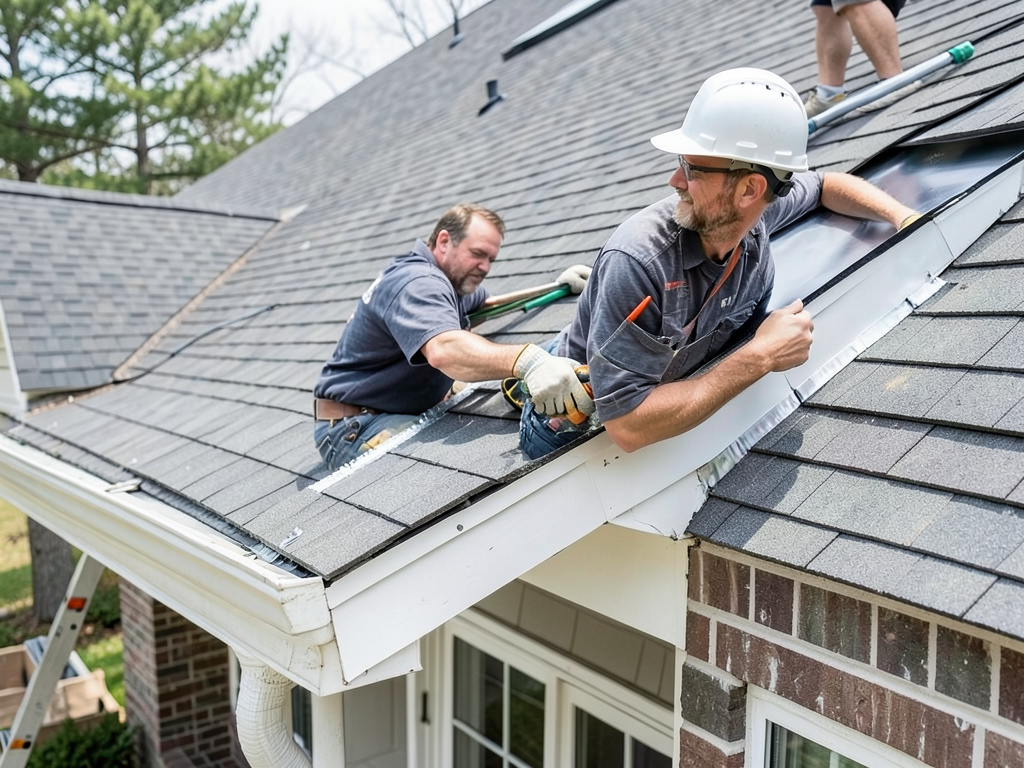
Solving hip roof ventilation requires a multi-faceted approach. Here are the most effective solutions we’ve implemented for Parkville homeowners:
- Continuous Hip Ridge Vents
These low-profile vents run along the entire hip ridge, maximizing exhaust area. Unlike traditional ridge vents that only cover the peak, hip ridge vents follow the angled ridge lines, providing 30-40% more exhaust capacity. Installation requires removing the ridge cap shingles and cutting a slot along the ridge, then securing the vent with roofing cement and fasteners. Weekend Roofing Service.
- Solar-Powered Attic Fans
For homes with extremely limited ridge space, solar attic fans provide active ventilation. A 20-30 watt solar panel powers a thermostatically controlled fan that moves 800-1,200 cubic feet of air per minute. These fans work best when paired with adequate soffit intake vents. The initial investment ranges from $300-600 per fan, but they reduce cooling costs by 10-15% in Maryland’s climate.
- Power Inducted Vents
These electrically powered vents activate when attic temperatures exceed 95°F. They mount on the roof surface and can move up to 1,500 cubic feet per minute. While more expensive to operate than solar options, they provide consistent ventilation regardless of sunlight conditions. Installation typically takes 2-3 hours and costs $400-700 per unit.
- Off-Ridge and Box Vents
Strategically placed off-ridge vents near the hip ridge provide additional exhaust capacity. These mushroom-shaped vents install quickly and cost $75-150 each. For a typical Parkville ranch, we recommend 4-6 off-ridge vents supplemented by 2-3 box vents on the rear roof plane where they’re less visible from the street.
The Critical Role of Intake Ventilation
Many Parkville homeowners focus solely on exhaust vents, but proper ventilation requires balanced airflow. The intake system draws fresh air into the attic, creating the pressure differential that drives exhaust. Without adequate intake, your exhaust vents become ineffective.
Soffit vents are the primary intake source for hip roofs. Continuous soffit vents along the eaves provide the most consistent airflow. However, Parkville’s older ranch homes often have solid soffits with minimal venting. In these cases, we install baffled soffit vents that maintain the home’s exterior appearance while dramatically improving airflow.
Drip edge vents offer another solution for homes with minimal soffit space. These vents install under the roof edge and provide 9 square inches of net free area per linear foot. For a typical Parkville ranch with 60 feet of eaves, drip edge vents add 540 square inches of intake capacity—enough to balance a single solar attic fan.
During installation, we use a smoke pencil to verify airflow patterns. This diagnostic tool reveals whether air moves uniformly across the attic or creates dead zones. In Parkville’s humid climate, even small airflow disruptions can lead to condensation and mold growth within months.
Baltimore Weather Considerations for Hip Roof Ventilation
Maryland’s climate creates specific challenges for hip roof ventilation. Parkville experiences an average of 44 inches of annual rainfall—significantly higher than the national average. This moisture, combined with summer humidity levels that often exceed 85%, creates perfect conditions for attic mold growth.
Winter brings additional concerns. Parkville’s average January temperature of 30°F means frequent freeze-thaw cycles. These cycles cause ice dam formation when warm attic air melts snow on the roof surface. The water refreezes at the eaves, creating ice dams that force water under shingles. Proper ventilation keeps the roof deck cold, preventing this melt-freeze cycle.
Wind patterns in Baltimore County also affect ventilation performance. Prevailing winds from the west create positive pressure on the windward side of hip roofs while creating negative pressure on the leeward side. This pressure differential can enhance ventilation when properly designed but may cause backdrafting if intake vents are insufficient. Flat Roof Repair for Baltimore Rowhouses — What Every Homeowner in Canton Needs to Know.
The Maryland Energy Administration’s 2026 guidelines recommend minimum R-49 insulation in attic floors. However, excessive insulation can block soffit vents if not properly installed. We use vent chutes—plastic or foam channels that maintain a clear path from soffit to attic—to ensure insulation doesn’t compromise ventilation.
Calculating Your Ventilation Needs
Proper ventilation requires calculating your attic’s net free area requirements. Here’s how we determine the right system for your Parkville home:
| Calculation Factor | Measurement Method | Result for Typical Parkville Ranch |
|---|---|---|
| Attic Floor Area | Length × Width | 1,500-2,000 sq ft |
| Required Net Free Area | Floor Area ÷ 300 | 5-6.6 sq ft |
| Intake Vent Requirement | 50% of total NFA | 2.5-3.3 sq ft |
| Exhaust Vent Requirement | 50% of total NFA | 2.5-3.3 sq ft |
For hip roofs, we typically exceed these minimums by 20-30% to compensate for the geometric inefficiencies. A 1,800 square foot attic requires 6 square feet of net free area, but we often install 7.5-8 square feet of combined intake and exhaust.
The International Residential Code (IRC) Section R806.2 mandates minimum ventilation requirements for all residential buildings. In Baltimore County, the local amendment requires documentation of ventilation calculations for any roof replacement exceeding 50% of the total roof area. This documentation must show how the system achieves the 1/300 ratio or demonstrate compliance with the 1/150 ratio for homes with high-efficiency vapor barriers. Industrial Roof Replacement.
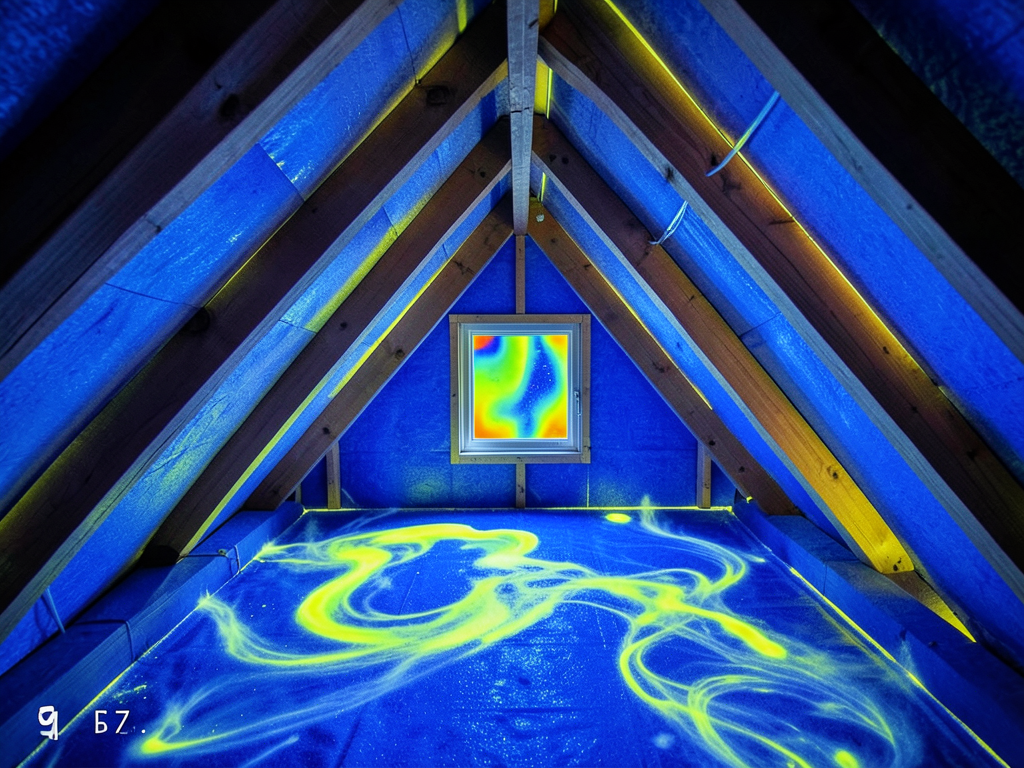
We use an infrared camera during our diagnostic process to identify temperature variations in your attic. Hot spots indicate poor airflow, while cold spots near vents confirm proper ventilation. This thermal imaging costs $150-200 but provides concrete evidence of your current system’s performance.
Installation Best Practices for Hip Roof Ventilation
Proper installation makes the difference between a ventilation system that works and one that fails. Here are the critical steps we follow for every Parkville project:
- Attic Preparation
Remove all existing insulation from the perimeter 2 feet to access soffit areas. Check for existing mold or moisture damage. In Parkville’s older homes, we often find water stains from ice damming that require repair before installation. - Soffit Vent Installation
Install baffled vents to maintain a clear airflow channel. Each baffle prevents insulation from blocking the vent while keeping out wind-driven rain. We use UV-resistant polymer baffles that last 25+ years compared to cardboard versions that deteriorate within a decade. - Ridge Vent Preparation
Cut a 4-inch slot along each ridge line, removing the minimum amount of sheathing necessary. For hip roofs, this often means creating multiple shorter slots rather than one continuous opening. Seal all cuts with galvanized metal flashing to prevent water infiltration. - Vent Installation
Install the ridge vent system with a minimum 2-inch overlap at all joints. Secure with corrosion-resistant fasteners every 6 inches. Apply roofing cement under the vent edges and at all fastener heads. For solar fans, mount the panel at a 30-35 degree angle facing south for maximum efficiency. - System Testing
After installation, we use an anemometer to measure airflow at multiple attic locations. Target airflow should be 3-5 feet per second at the ridge and 1-2 feet per second near the eaves. We also verify that indoor humidity remains below 60% during peak summer conditions.
The entire installation process typically takes 1-2 days for a standard Parkville ranch. We schedule work during dry weather to ensure proper sealing and prevent water damage during the vulnerable installation period.
Cost-Benefit Analysis for Parkville Homeowners
Investing in proper hip roof ventilation delivers measurable returns. Here’s what Parkville homeowners can expect:
Immediate Benefits
– Reduced cooling costs: 10-15% savings during summer months
– Extended roof life: 5-8 years longer before replacement needed
– Improved indoor air quality: elimination of musty odors and allergens
Long-term Returns
– Prevention of costly mold remediation: $2,000-5,000 potential savings
– Reduced insurance premiums: some carriers offer 5-10% discounts for certified ventilation systems
– Increased home value: proper ventilation is a selling point in Parkville’s competitive market
The average investment for a complete hip roof ventilation system in Parkville ranges from $2,500-4,500. This includes intake vents, exhaust vents, baffles, and professional installation. When you factor in energy savings and extended roof life, most systems pay for themselves within 5-7 years.
Baltimore Gas and Electric offers rebates through their Smart Energy Savers Program for homes that achieve specific energy efficiency improvements. A properly ventilated attic can qualify for $150-300 in rebates, reducing your net investment significantly.
Maintenance and Troubleshooting
Even the best ventilation systems require occasional maintenance. Parkville’s seasonal weather creates specific challenges:
- Spring: Check for winter damage to ridge vents. Ice can crack vent seams, allowing water infiltration. Look for displaced shingles around vent edges.
- Summer: Clear debris from soffit vents. Parkville’s mature trees shed leaves and seeds that can block airflow. Use a leaf blower on low setting to clear vents without damaging them.
- Fall: Inspect attic for signs of rodent entry. Small animals often nest in warm attics during cooling weather. Check for droppings, nesting materials, or chewed wiring.
- Winter: Monitor for ice dam formation. If icicles form along eaves, your ventilation may need adjustment. Add more insulation or increase exhaust capacity.
Common issues we encounter in Parkville include:
| Problem | Symptoms | Solution |
|---|---|---|
| Blocked Soffit Vents | High attic temperatures, moisture stains | Clean vents, install baffles |
| Insufficient Exhaust | Stagnant air, mold growth | Add ridge vents or powered fans |
| Improper Balance | Negative pressure, backdrafting | Increase intake capacity |
| Damaged Seals | Water stains, drafts | Replace flashing, reseal joints |
Annual inspections cost $150-250 and can identify problems before they cause damage. We recommend scheduling inspections in early spring before summer heat arrives.
Frequently Asked Questions
Can I install ventilation myself?
DIY ventilation installation is possible but risky. Cutting into your roof’s ridge compromises its water-shedding ability. Improper installation can create leaks that cause thousands in damage. Professional installation includes proper flashing, sealing, and warranty protection that DIY cannot match.
How do I know if my current ventilation is working?
Signs of poor ventilation include: attic temperatures exceeding 130°F in summer, moisture or frost on underside of roof deck, musty odors in upper rooms, and ice dam formation in winter. A professional inspection with thermal imaging can definitively diagnose ventilation problems.
Will ventilation work with my existing insulation?
Yes, but the insulation must be properly installed. Baffles maintain a clear path from soffit to attic, preventing insulation from blocking airflow. If your insulation is blocking vents, we can retrofit baffles without removing all the insulation. Metal Retrofit Roofing.
How long does installation take?
Most hip roof ventilation installations in Parkville require 1-2 days. Weather conditions, roof complexity, and existing damage can extend this timeline. We provide specific scheduling estimates after your initial inspection.
Get Your Free Hip Roof Ventilation Assessment
Don’t let poor ventilation damage your Parkville home. Our team has solved ventilation problems for hundreds of local homeowners, using proven systems designed specifically for Maryland’s climate and hip roof architecture.
We offer a free, no-obligation assessment that includes thermal imaging of your attic, airflow measurements, and a detailed report with specific recommendations. Our technicians live and work in Baltimore County, so we understand the unique challenges Parkville homeowners face.
Call (443) 455-9099 today to schedule your inspection. We’ll show you exactly how your current system performs and provide clear options for improvement. Our work comes with a 10-year workmanship warranty, and we’re fully licensed and insured for work in Baltimore County.. Read more about Comparing Manufacturer vs Workmanship Warranties for New Roofs in Parkville.
Pick up the phone and call (443) 455-9099 before the next heat wave hits. Your home deserves better than trapped heat and moisture. Let us solve your ventilation problems for good.
Service Areas: Parkville, Carney, Towson, Perry Hall, White Marsh, and all of Baltimore County. Weekend appointments available for urgent situations. For more information, visit U.S. Department of Energy ventilation guidelines. For more information, visit EPA indoor air quality ventilation standards.
You may also find this helpful. Fixing Persistent Roof Valley Leaks on Homes in Catonsville and Arbutus.
{
“@context”: “https://schema.org”,
“@type”: “BlogPosting”,
“headline”: “Solving Ventilation Challenges for Hip Roofs on Ranch Style Homes in Parkville”,
“description”: “Struggling with hip roof ventilation in Parkville? Learn how to solve airflow issues with proven systems designed for Maryland’s humid climate. Call (443) 455-9099 for expert help.”,
“wordCount”: 2270,
“datePublished”: “2026-05-01T09:47:00.000Z”,
“dateModified”: “2026-05-01T09:47:00.000Z”,
“inLanguage”: “en-US”,
“mainEntityOfPage”: {
“@type”: “WebPage”,
“@id”: “https://aplusroofingbaltimore.com”
},
“publisher”: {
“@type”: “LocalBusiness”,
“name”: “A Plus Roofing Baltimore”,
“url”: “https://aplusroofingbaltimore.com”
},
“author”: {
“@type”: “Organization”,
“name”: “A Plus Roofing Baltimore”,
“url”: “https://aplusroofingbaltimore.com”
},
“image”: {
“@type”: “ImageObject”,
“url”: “https://aplusroofingbaltimore.com/wp-content/uploads/2026/03/solving-ventilation-challenges-for-hip-roofs-on-ra-1.png”
}
}
{
“@context”: “https://schema.org”,
“@type”: “RoofingContractor”,
“name”: “A Plus Roofing Baltimore”,
“url”: “https://aplusroofingbaltimore.com”,
“address”: {
“@type”: “PostalAddress”,
“addressLocality”: “Baltimore”
},
“areaServed”: {
“@type”: “City”,
“name”: “Baltimore”
}
}
{
“@context”: “https://schema.org”,
“@type”: “FAQPage”,
“mainEntity”: [
{
“@type”: “Question”,
“name”: “Can I install ventilation myself?”,
“acceptedAnswer”: {
“@type”: “Answer”,
“text”: “DIY ventilation installation is possible but risky. Cutting into your roof’s ridge compromises its water-shedding ability. Improper installation can create leaks that cause thousands in damage. Professional installation includes proper flashing, sealing, and warranty protection that DIY cannot match.”
}
},
{
“@type”: “Question”,
“name”: “How do I know if my current ventilation is working?”,
“acceptedAnswer”: {
“@type”: “Answer”,
“text”: “Signs of poor ventilation include: attic temperatures exceeding 130°F in summer, moisture or frost on underside of roof deck, musty odors in upper rooms, and ice dam formation in winter. A professional inspection with thermal imaging can definitively diagnose ventilation problems.”
}
},
{
“@type”: “Question”,
“name”: “Will ventilation work with my existing insulation?”,
“acceptedAnswer”: {
“@type”: “Answer”,
“text”: “Yes, but the insulation must be properly installed. Baffles maintain a clear path from soffit to attic, preventing insulation from blocking airflow. If your insulation is blocking vents, we can retrofit baffles without removing all the insulation. Metal Retrofit Roofing.”
}
},
{
“@type”: “Question”,
“name”: “How long does installation take?”,
“acceptedAnswer”: {
“@type”: “Answer”,
“text”: “Most hip roof ventilation installations in Parkville require 1-2 days. Weather conditions, roof complexity, and existing damage can extend this timeline. We provide specific scheduling estimates after your initial inspection.”
}
}
]
}
{
“@context”: “https://schema.org”,
“@type”: “HowTo”,
“name”: “Hip Roof Ventilation Solutions”,
“step”: [
{
“@type”: “HowToStep”,
“position”: 1,
“name”: “Continuous Hip Ridge Vents”,
“text”: “These low-profile vents run along the entire hip ridge, maximizing exhaust area. Unlike traditional ridge vents that only cover the peak, hip ridge vents follow the angled ridge lines, providing 30-40% more exhaust capacity. Installation requires removing the ridge cap shingles and cutting a slot along the ridge, then securing the vent with roofing cement and fasteners. Weekend Roofing Service.”
},
{
“@type”: “HowToStep”,
“position”: 2,
“name”: “Solar-Powered Attic Fans”,
“text”: “For homes with extremely limited ridge space, solar attic fans provide active ventilation. A 20-30 watt solar panel powers a thermostatically controlled fan that moves 800-1,200 cubic feet of air per minute. These fans work best when paired with adequate soffit intake vents. The initial investment ranges from $300-600 per fan, but they reduce cooling costs by 10-15% in Maryland’s climate.”
},
{
“@type”: “HowToStep”,
“position”: 3,
“name”: “Power Inducted Vents”,
“text”: “These electrically powered vents activate when attic temperatures exceed 95°F. They mount on the roof surface and can move up to 1,500 cubic feet per minute. While more expensive to operate than solar options, they provide consistent ventilation regardless of sunlight conditions. Installation typically takes 2-3 hours and costs $400-700 per unit.”
},
{
“@type”: “HowToStep”,
“position”: 4,
“name”: “Off-Ridge and Box Vents”,
“text”: “Strategically placed off-ridge vents near the hip ridge provide additional exhaust capacity. These mushroom-shaped vents install quickly and cost $75-150 each. For a typical Parkville ranch, we recommend 4-6 off-ridge vents supplemented by 2-3 box vents on the rear roof plane where they’re less visible from the street.”
}
],
“image”: “https://aplusroofingbaltimore.com/wp-content/uploads/2026/03/solving-ventilation-challenges-for-hip-roofs-on-ra-1.png”
}
{
“@context”: “https://schema.org”,
“@type”: “BreadcrumbList”,
“itemListElement”: [
{
“@type”: “ListItem”,
“position”: 1,
“name”: “Home”,
“item”: “https://aplusroofingbaltimore.com”
},
{
“@type”: “ListItem”,
“position”: 2,
“name”: “Blog”,
“item”: “https://aplusroofingbaltimore.com/blog”
},
{
“@type”: “ListItem”,
“position”: 3,
“name”: “Solving Ventilation Challenges for Hip Roofs on Ranch Style Homes in Parkville”
}
]
}
{
“@context”: “https://schema.org”,
“@type”: “Service”,
“serviceType”: “Roofing”,
“provider”: {
“@type”: “LocalBusiness”,
“name”: “A Plus Roofing Baltimore”,
“url”: “https://aplusroofingbaltimore.com”
},
“areaServed”: {
“@type”: “City”,
“name”: “Baltimore”
},
“description”: “Struggling with hip roof ventilation in Parkville? Learn how to solve airflow issues with proven systems designed for Maryland’s humid climate. Call (443) 455-9099 for expert help.”
}