
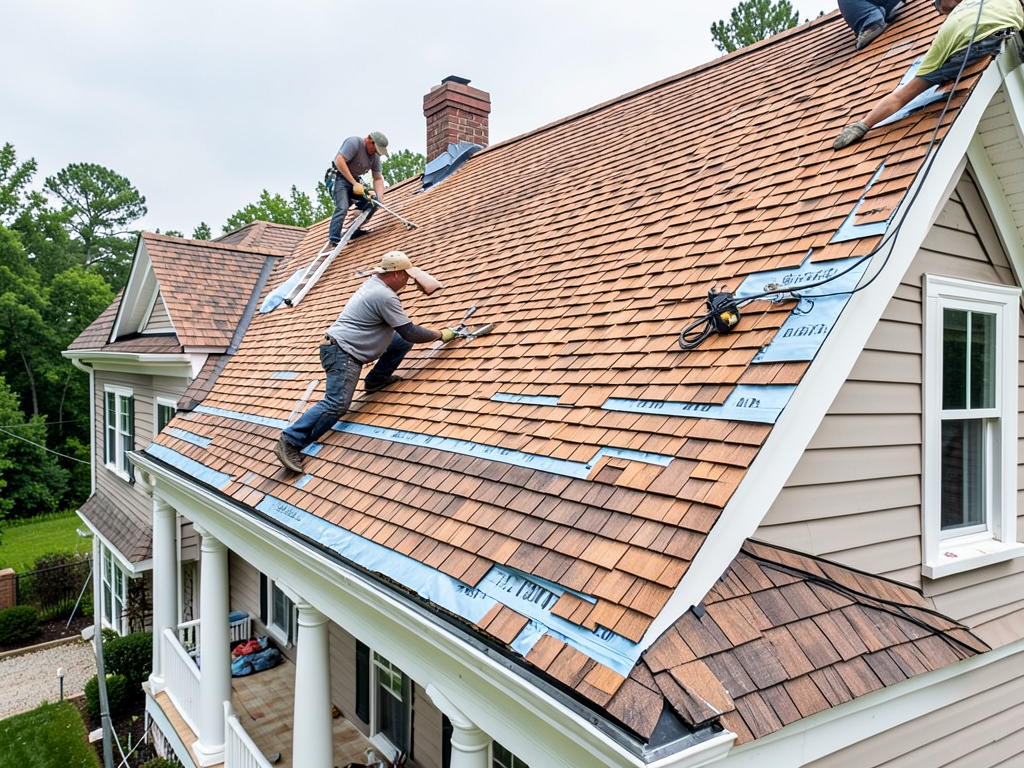
Why Real Wood Shakes Often Fail in Bel Air (And the Best Synthetic Alternatives)
Bel Air homeowners love the natural beauty of wood shake roofing but often discover too late that Maryland’s humid climate and frequent storms create the perfect conditions for rapid deterioration. Real cedar shakes absorb moisture like a sponge during our wet springs and summers then crack and split during winter freeze-thaw cycles. This article explains exactly why wood fails in Harford County and shows you the modern synthetic alternatives that deliver the same aesthetic without the constant maintenance headaches. Weekend Roofing Service.
Why Wood Shakes Struggle in Maryland’s Climate
Natural cedar shakes face a triple threat in Bel Air: relentless moisture, aggressive pests, and extreme temperature swings. Our region receives over 40 inches of rain annually plus high humidity that keeps roof decks damp for extended periods. This creates ideal conditions for algae growth, moss colonization, and wood rot that can destroy a shake roof within 15-20 years even with regular maintenance.
The freeze-thaw cycle proves particularly devastating for wood shakes. When temperatures drop below freezing, any moisture trapped in the wood expands and causes internal cracking. Maryland experiences dozens of these cycles each winter, gradually weakening the shake structure. By contrast, synthetic materials maintain dimensional stability regardless of temperature fluctuations.
Pest damage represents another major failure point. Termites and carpenter ants find cedar shakes irresistible, especially when the wood becomes damp and begins to decay. Once pests establish colonies in a roof, structural integrity rapidly declines. Synthetic materials contain no organic matter for insects to consume, eliminating this vulnerability entirely.
Fire resistance presents perhaps the most critical safety concern. Natural wood shakes offer minimal protection against embers from nearby wildfires or lightning strikes. Harford County building codes now require Class A fire ratings for new roof installations, which natural cedar cannot achieve without expensive chemical treatments that wash away over time.
UV radiation from Maryland’s abundant sunshine also degrades wood shakes. The sun breaks down lignin, the natural binder in wood, causing shakes to become brittle and lose their protective oils. This accelerates water absorption and makes the roof more susceptible to wind damage during our frequent coastal storms.
The Best Synthetic Cedar Shake Options for Bel Air Homes
Modern synthetic cedar shakes use advanced polymer and composite materials engineered specifically to withstand Maryland’s challenging climate. These products deliver authentic wood appearance while providing superior durability and performance. Here are the top synthetic options available for Harford County homeowners.
DaVinci Roofscapes polymer shakes represent the premium choice for luxury homes in neighborhoods like Todd Lakes and Saddle Ridge. These products use virgin polymer resins molded from actual cedar pieces, creating remarkably realistic texture and grain patterns. DaVinci shakes carry a 50-year limited warranty and achieve Class A fire ratings without chemical treatments.
Brava Roof Tile composite shakes combine recycled materials with advanced UV inhibitors to create environmentally friendly roofing that resists fading and weathering. Their products feature a Class 4 impact rating, meaning they can withstand hail up to two inches in diameter. This level of protection proves valuable during severe thunderstorms that frequently impact northern Harford County.
CeDUR synthetic shakes use a unique polyurethane formula that provides exceptional impact resistance and color retention. Their manufacturing process includes UV stabilizers that prevent the yellowing common in lesser synthetic products after just a few Maryland summers. CeDUR shakes maintain their dimensional stability even during the most extreme temperature swings.
EcoStar synthetic slate and shake products offer Class A fire ratings and Class 4 impact resistance as standard features. Their polymer construction includes additives that resist algae and moss growth, a common problem on natural wood in Bel Air’s humid conditions. EcoStar products qualify for LEED credits, making them attractive for environmentally conscious homeowners.
Performance comparisons reveal significant advantages for synthetic materials. While natural cedar typically lasts 15-25 years with diligent maintenance, quality synthetic shakes often exceed 50 years of service life. Synthetic products also require minimal maintenance beyond occasional cleaning, while wood shakes need regular treatments, repairs, and eventual replacement of damaged sections. EPA Cool Roof Requirements.
Technical Specifications That Matter in Harford County
Understanding the technical ratings helps homeowners make informed decisions about synthetic shake roofing. Class A fire ratings indicate the highest level of fire resistance, crucial for protecting homes during dry seasons when wildfire risk increases. All quality synthetic shakes achieve this rating through inherent material properties rather than surface treatments.
Class 4 impact resistance represents the highest rating for hail and debris resistance. This matters in Bel Air where severe thunderstorms can produce golf ball-sized hail. Synthetic shakes with Class 4 ratings maintain their integrity while natural wood often splits or cracks under similar impact conditions.
Wind resistance ratings of 110-130 mph prove essential for Harford County homes. Our region experiences frequent high-wind events from both summer thunderstorms and winter nor’easters. Quality synthetic shakes use interlocking designs and reinforced nailing zones to maintain secure attachment even in extreme wind conditions.
Moisture absorption rates below 0.1% ensure synthetic shakes won’t swell, warp, or delaminate when exposed to Maryland’s heavy rainfall. This compares to natural cedar’s absorption rates of 15-25%, which explains why wood shakes often cup and curl after just a few wet seasons.
UV stability ratings indicate how well materials resist color fading and degradation from sun exposure. Premium synthetic shakes use UV inhibitors that maintain color integrity for decades, while natural wood gradually loses its rich tones and develops a weathered gray appearance that many homeowners find undesirable.
HOA Considerations for Bel Air Neighborhoods
Many Bel Air neighborhoods maintain strict architectural guidelines that initially seem to require natural materials. However, most HOAs now recognize high-quality synthetic shakes as acceptable alternatives since they closely mimic natural wood appearance while providing superior performance. Neighborhoods like Bel Air Acres and Homestead have updated their guidelines to specifically include approved synthetic products.
The approval process typically requires submitting product specifications and samples to the architectural review board. Most boards appreciate documentation showing Class A fire ratings, impact resistance, and warranty coverage. Some synthetic manufacturers provide HOA approval letters and sample boards to streamline the approval process.
Color selection becomes particularly important for HOA compliance. Most synthetic shake manufacturers offer color palettes that match traditional cedar tones while providing enhanced fade resistance. Earth tones and weathered gray options prove most popular in Bel Air’s traditional and colonial-style homes.
Installation requirements often specify particular nailing patterns, underlayment types, and flashing details. Quality synthetic shake installations follow manufacturer specifications precisely to ensure warranty coverage and optimal performance. Professional installers familiar with local HOA requirements can help navigate the approval process.
Long-term maintenance agreements sometimes factor into HOA considerations. Some associations appreciate that synthetic shakes eliminate the need for periodic chemical treatments, reducing both homeowner burden and potential environmental impacts from treatment runoff.
Cost Analysis Over 30 Years
Initial cost comparisons between natural and synthetic shakes often show natural wood as the less expensive option. However, total cost of ownership analysis over 30 years reveals synthetic products as the more economical choice. Natural cedar shakes typically cost $8,000-$12,000 for a standard Bel Air home, while premium synthetic options range from $15,000-$22,000.
Maintenance costs for natural wood accumulate rapidly. Annual treatments with preservatives and fungicides cost $300-$500 per year. Repair costs for split or damaged shakes average $500-$1,000 every 3-5 years. Complete replacement becomes necessary every 15-20 years at a cost of $10,000-$15,000. How Much a New Roof Costs in Towson (2026 Estimates).
Synthetic shakes require minimal maintenance beyond occasional cleaning with mild detergent and water. Annual inspection costs run $100-$200, with no treatment or repair costs during the product’s lifespan. The 50-year warranty coverage eliminates replacement concerns for multiple decades. Flat Roof Repair for Baltimore Rowhouses — What Every Homeowner in Canton Needs to Know.
Insurance considerations also favor synthetic materials. Many insurers offer premium discounts for Class A fire-rated roofs, potentially saving $200-$400 annually. The impact resistance of Class 4 rated synthetic shakes may also reduce claims from hail damage, further lowering insurance costs over time.
Energy efficiency represents another cost factor. Synthetic shakes often provide better insulation than natural wood, potentially reducing heating and cooling costs by 5-10% annually. In Bel Air’s climate with hot summers and cold winters, these savings accumulate significantly over decades.
When factoring all costs over 30 years, natural cedar shakes typically cost $25,000-$35,000 including maintenance and replacement, while synthetic options average $18,000-$22,000 total. The synthetic investment often pays for itself within 12-15 years through reduced maintenance and energy savings. Industrial Roof Replacement.
Installation Process for Synthetic Shakes
Professional installation of synthetic cedar shakes requires specific expertise and follows a detailed process to ensure optimal performance. The first step involves complete removal of existing roofing materials down to the deck, allowing inspection for any underlying damage that needs repair before installation.
Deck preparation proves critical for synthetic shake performance. Installers apply synthetic underlayment that provides additional moisture protection and creates a smooth surface for shake installation. This underlayment typically includes self-sealing properties around fasteners to prevent water infiltration.
Starter courses establish the proper alignment and exposure for the entire roof. Installers use chalk lines and gauges to ensure consistent spacing and straight courses. The starter course includes special pieces designed to prevent wind uplift at the roof edges.
Main shake installation follows manufacturer specifications for nailing patterns, exposure, and overlap. Quality installers use pneumatic nailers with adjustable depth controls to ensure proper fastener penetration without damaging the shake material. Each course overlaps the previous one according to specific measurements that vary by product and roof pitch.
Flashing installation around chimneys, valleys, and roof penetrations requires particular attention. Synthetic shake systems include compatible flashing components designed to work with the specific material. Proper flashing prevents water infiltration at the most vulnerable roof areas.
Ventilation integration ensures proper attic airflow, which extends roof life and improves energy efficiency. Installers incorporate ridge vents, soffit vents, or other ventilation systems according to local building codes and manufacturer recommendations.
Quality control inspections verify that installation meets all specifications before final payment. This includes checking fastener patterns, exposure consistency, and flashing details. Professional installers provide documentation of the installation for warranty purposes.
Environmental Impact and Sustainability
Synthetic cedar shakes offer significant environmental advantages over natural wood in several key areas. Manufacturing processes for quality synthetic products often incorporate recycled materials, reducing landfill waste while creating durable roofing products. Many synthetic shakes contain 50-80% recycled content by weight.
Forest conservation represents a major benefit of synthetic materials. Natural cedar shakes require harvesting mature trees, often from old-growth forests. Synthetic alternatives eliminate this demand while providing superior durability, meaning fewer replacement cycles and less overall material consumption.
Manufacturing energy requirements for synthetic shakes continue to improve through advanced production techniques. Modern facilities use energy-efficient processes and often generate power from renewable sources. The long service life of synthetic products means the energy invested in manufacturing is amortized over many decades.
End-of-life considerations favor synthetic materials in many cases. Quality synthetic shakes are fully recyclable at the end of their service life, while natural wood shakes contaminated with preservatives and treatments often cannot be recycled and may require special disposal procedures.
Transportation impacts vary by product and manufacturer location. Some synthetic shake manufacturers operate regional facilities to reduce shipping distances, while others import products from overseas. Local sourcing of natural cedar shakes may reduce transportation impacts but doesn’t address the other environmental concerns.
Volatile organic compound emissions during manufacturing and installation remain minimal for quality synthetic products. Unlike some treated wood products that off-gas chemicals for years after installation, synthetic shakes contain no harmful chemicals that affect indoor air quality or the environment.
Common Installation Mistakes to Avoid
Even high-quality synthetic shakes can fail prematurely if installed incorrectly. One common mistake involves inadequate underlayment installation, which allows moisture to reach the roof deck and cause damage. Quality installers use synthetic underlayment with proper overlap and sealing at all penetrations.
Improper nailing represents another frequent error. Fasteners that are too long can penetrate the roof deck and cause leaks, while those that are too short may not provide adequate holding power. Professional installers use nail guns with depth adjustments and follow manufacturer specifications precisely.
Incorrect exposure settings can lead to both aesthetic and performance issues. Shakes installed with too much exposure may not shed water properly, while those with too little exposure create an unnatural appearance and waste material. Manufacturer guidelines specify exact exposure measurements based on roof pitch and product design.
Flashing details often receive insufficient attention during installation. Improperly installed flashing around chimneys, valleys, and roof penetrations creates entry points for water. Quality installations use compatible flashing materials and follow specific detailing requirements for each roof penetration type.
Ventilation integration frequently gets overlooked or improperly executed. Inadequate attic ventilation causes heat and moisture buildup that can damage both the roof and the home’s interior. Professional installers assess existing ventilation and recommend improvements as part of the roofing project.
Color matching between different product lots can create visible inconsistencies across large roof areas. Quality manufacturers provide lot numbers and color consistency guarantees. Professional installers order all materials from the same production run to ensure uniform appearance.
Maintenance Requirements for Long-Term Performance
Synthetic cedar shakes require minimal maintenance compared to natural wood, but certain practices ensure optimal long-term performance. Annual visual inspections identify any damage from severe weather or debris accumulation before problems develop. Look for cracked or damaged shakes, loose fasteners, or compromised flashing details.
Gutter cleaning prevents water backup that could damage the roof edge. Remove leaves, twigs, and other debris from gutters and downspouts each fall after leaves drop and again in spring. Ensure downspouts direct water away from the foundation to prevent basement moisture issues.
Debris removal from the roof surface prevents moisture retention and algae growth. Use a leaf blower or soft-bristle broom to remove leaves and pine needles that accumulate in valleys and behind chimneys. Avoid pressure washing, which can damage the shake surface and force water under the edges.
Moss and algae prevention involves keeping the roof surface clean and ensuring proper drainage. In Bel Air’s humid climate, some algae growth may occur naturally. Mild cleaning solutions specifically designed for synthetic roofing can remove these growths without damaging the material.
Fastener inspection every few years ensures all shakes remain securely attached. High winds can occasionally loosen fasteners, particularly along roof edges and ridges. Replace any missing or corroded fasteners with the type specified by the manufacturer.
Sealant inspection around roof penetrations prevents water infiltration at vulnerable points. Check the condition of sealants around vents, skylights, and other roof penetrations annually. Replace any cracked or deteriorated sealant with compatible products recommended by the manufacturer.
Professional maintenance inspections every 3-5 years provide expert assessment of roof condition. Professional inspectors can identify potential issues before they become major problems and verify that ventilation systems continue to function properly.
Frequently Asked Questions
How long do synthetic cedar shakes last compared to natural wood?
Quality synthetic cedar shakes typically last 40-50 years or more, while natural wood shakes generally need replacement every 15-25 years even with regular maintenance. The superior durability of synthetic materials makes them more cost-effective over the long term despite higher initial costs.
Can synthetic shakes handle Maryland’s severe weather?
Yes, premium synthetic shakes are engineered specifically for challenging climates like Maryland’s. They achieve Class 4 impact ratings for hail resistance, Class A fire ratings for safety, and wind ratings of 110-130 mph. These ratings exceed what natural cedar can provide without expensive treatments.
Will my HOA approve synthetic materials?
Most Bel Air HOAs now accept high-quality synthetic shakes as alternatives to natural wood. The key is selecting products that closely mimic natural cedar appearance and providing documentation of fire ratings and warranty coverage. Many manufacturers offer HOA approval assistance and sample boards.
What maintenance do synthetic shakes require?
Synthetic shakes need minimal maintenance beyond annual visual inspections and occasional cleaning to remove debris. Unlike natural wood, they don’t require chemical treatments, sealing, or frequent repairs. Professional inspections every 3-5 years help ensure optimal performance.
Are synthetic shakes environmentally friendly?
Yes, synthetic shakes often incorporate recycled materials and eliminate the need for harvesting mature trees. Their long lifespan reduces replacement frequency, and most are fully recyclable at end of life. They also provide better insulation than natural wood, potentially reducing energy costs.
Making the Right Choice for Your Bel Air Home
Selecting between natural and synthetic cedar shakes ultimately depends on your priorities regarding appearance, maintenance, budget, and long-term value. If you love the authentic wood look but hate the constant upkeep, synthetic options provide an ideal compromise that delivers decades of worry-free performance.
Consider your home’s architectural style when choosing synthetic shakes. Traditional and colonial homes in Bel Air often look best with weathered gray or medium brown tones that complement the area’s historic character. Modern homes may benefit from darker, more dramatic color options.
Evaluate your long-term plans for the property. If you plan to stay in your home for many years, the superior durability and low maintenance of synthetic shakes provide significant advantages. If you’re preparing to sell, the premium appearance and warranty coverage of synthetic materials can enhance resale value.
Factor in local climate conditions specific to your neighborhood. Homes in areas of Harford County that experience more severe weather may benefit more from the enhanced impact and wind resistance of synthetic materials. Properties surrounded by mature trees might prioritize the Class 4 impact rating.
Consult with roofing professionals who have experience with both natural and synthetic materials. They can provide specific recommendations based on your home’s structure, local building codes, and aesthetic preferences. Quality installers will also help navigate HOA requirements if applicable to your property.
Request samples and view installed projects before making your final decision. Seeing and touching the materials in person helps you appreciate the realistic appearance of quality synthetic shakes. Visiting homes with installed synthetic roofing provides insight into how the materials age and perform over time.
Consider the total investment including installation, maintenance, and eventual replacement costs. While synthetic shakes require higher upfront investment, their superior durability and minimal maintenance often make them more economical over a 20-30 year period compared to natural wood.
Ready to upgrade your Bel Air home with beautiful, durable synthetic cedar shake roofing? Call (443) 455-9099 today to schedule your free consultation and see samples of the premium synthetic options available for your home. Our experienced team will help you choose the perfect material for your style and budget while ensuring compliance with all local requirements.
- Assess Your Current Roof Condition
Have a professional inspect your existing roof to determine if replacement is needed and identify any underlying structural issues that require attention before installing new materials. Installing a Metal Roof in Columbia — Is It Worth the Investment?.
- Research Synthetic Shake Options
Learn about different synthetic shake brands and their specific features, warranties, and performance ratings. Focus on products designed for Mid-Atlantic climates like Maryland’s.
- Check HOA Requirements
If you live in a neighborhood with architectural guidelines, review the specific requirements and begin the approval process early in your planning stage.
- Get Multiple Quotes
Obtain detailed quotes from qualified roofing contractors who specialize in synthetic shake installation. Compare not just price but also experience, warranty offerings, and customer reviews.
- Review Sample Materials
Request physical samples of your top synthetic shake choices to see how they look in different lighting conditions and compare their texture and color to natural cedar.
- Verify Contractor Credentials
Ensure your chosen contractor is properly licensed, insured, and experienced with synthetic shake installation. Ask for references and examples of previous synthetic shake projects. For more information, visit FEMA Building Code Resources.
{
“@context”: “https://schema.org”,
“@type”: “BlogPosting”,
“headline”: “Why Real Wood Shakes Often Fail in Bel Air (And the Best Synthetic Alternatives)”,
“description”: “Real wood shakes in Bel Air struggle with Maryland humidity and pests. Discover durable synthetic cedar shake roofing that looks authentic and lasts decades.”,
“wordCount”: 3289,
“datePublished”: “2026-03-16T12:44:00.000Z”,
“dateModified”: “2026-03-16T12:44:00.000Z”,
“inLanguage”: “en-US”,
“mainEntityOfPage”: {
“@type”: “WebPage”,
“@id”: “https://aplusroofingbaltimore.com”
},
“publisher”: {
“@type”: “LocalBusiness”,
“name”: “A Plus Roofing Baltimore”,
“url”: “https://aplusroofingbaltimore.com”
},
“author”: {
“@type”: “Organization”,
“name”: “A Plus Roofing Baltimore”,
“url”: “https://aplusroofingbaltimore.com”
},
“image”: {
“@type”: “ImageObject”,
“url”: “https://aplusroofingbaltimore.com/wp-content/uploads/2026/03/why-real-wood-shakes-often-fail-in-bel-air-and-the-1.png”
}
}
{
“@context”: “https://schema.org”,
“@type”: “RoofingContractor”,
“name”: “A Plus Roofing Baltimore”,
“url”: “https://aplusroofingbaltimore.com”,
“address”: {
“@type”: “PostalAddress”,
“addressLocality”: “Baltimore”
},
“areaServed”: {
“@type”: “City”,
“name”: “Baltimore”
}
}
{
“@context”: “https://schema.org”,
“@type”: “FAQPage”,
“mainEntity”: [
{
“@type”: “Question”,
“name”: “How long do synthetic cedar shakes last compared to natural wood?”,
“acceptedAnswer”: {
“@type”: “Answer”,
“text”: “Quality synthetic cedar shakes typically last 40-50 years or more, while natural wood shakes generally need replacement every 15-25 years even with regular maintenance. The superior durability of synthetic materials makes them more cost-effective over the long term despite higher initial costs.”
}
},
{
“@type”: “Question”,
“name”: “Can synthetic shakes handle Maryland’s severe weather?”,
“acceptedAnswer”: {
“@type”: “Answer”,
“text”: “Yes, premium synthetic shakes are engineered specifically for challenging climates like Maryland’s. They achieve Class 4 impact ratings for hail resistance, Class A fire ratings for safety, and wind ratings of 110-130 mph. These ratings exceed what natural cedar can provide without expensive treatments.”
}
},
{
“@type”: “Question”,
“name”: “Will my HOA approve synthetic materials?”,
“acceptedAnswer”: {
“@type”: “Answer”,
“text”: “Most Bel Air HOAs now accept high-quality synthetic shakes as alternatives to natural wood. The key is selecting products that closely mimic natural cedar appearance and providing documentation of fire ratings and warranty coverage. Many manufacturers offer HOA approval assistance and sample boards.”
}
},
{
“@type”: “Question”,
“name”: “What maintenance do synthetic shakes require?”,
“acceptedAnswer”: {
“@type”: “Answer”,
“text”: “Synthetic shakes need minimal maintenance beyond annual visual inspections and occasional cleaning to remove debris. Unlike natural wood, they don’t require chemical treatments, sealing, or frequent repairs. Professional inspections every 3-5 years help ensure optimal performance.”
}
},
{
“@type”: “Question”,
“name”: “Are synthetic shakes environmentally friendly?”,
“acceptedAnswer”: {
“@type”: “Answer”,
“text”: “Yes, synthetic shakes often incorporate recycled materials and eliminate the need for harvesting mature trees. Their long lifespan reduces replacement frequency, and most are fully recyclable at end of life. They also provide better insulation than natural wood, potentially reducing energy costs.”
}
}
]
}
{
“@context”: “https://schema.org”,
“@type”: “HowTo”,
“name”: “How to Choose Synthetic Cedar Shake Roofing”,
“step”: [
{
“@type”: “HowToStep”,
“position”: 1,
“name”: “Assess Your Current Roof Condition”,
“text”: “Have a professional inspect your existing roof to determine if replacement is needed and identify any underlying structural issues that require attention before installing new materials. Installing a Metal Roof in Columbia — Is It Worth the Investment?.”
},
{
“@type”: “HowToStep”,
“position”: 2,
“name”: “Research Synthetic Shake Options”,
“text”: “Learn about different synthetic shake brands and their specific features, warranties, and performance ratings. Focus on products designed for Mid-Atlantic climates like Maryland’s.”
},
{
“@type”: “HowToStep”,
“position”: 3,
“name”: “Check HOA Requirements”,
“text”: “If you live in a neighborhood with architectural guidelines, review the specific requirements and begin the approval process early in your planning stage.”
},
{
“@type”: “HowToStep”,
“position”: 4,
“name”: “Get Multiple Quotes”,
“text”: “Obtain detailed quotes from qualified roofing contractors who specialize in synthetic shake installation. Compare not just price but also experience, warranty offerings, and customer reviews.”
},
{
“@type”: “HowToStep”,
“position”: 5,
“name”: “Review Sample Materials”,
“text”: “Request physical samples of your top synthetic shake choices to see how they look in different lighting conditions and compare their texture and color to natural cedar.”
},
{
“@type”: “HowToStep”,
“position”: 6,
“name”: “Verify Contractor Credentials”,
“text”: “Ensure your chosen contractor is properly licensed, insured, and experienced with synthetic shake installation. Ask for references and examples of previous synthetic shake projects. For more information, visit FEMA Building Code Resources.”
}
],
“image”: “https://aplusroofingbaltimore.com/wp-content/uploads/2026/03/why-real-wood-shakes-often-fail-in-bel-air-and-the-1.png”
}
{
“@context”: “https://schema.org”,
“@type”: “BreadcrumbList”,
“itemListElement”: [
{
“@type”: “ListItem”,
“position”: 1,
“name”: “Home”,
“item”: “https://aplusroofingbaltimore.com”
},
{
“@type”: “ListItem”,
“position”: 2,
“name”: “Blog”,
“item”: “https://aplusroofingbaltimore.com/blog”
},
{
“@type”: “ListItem”,
“position”: 3,
“name”: “Why Real Wood Shakes Often Fail in Bel Air (And the Best Synthetic Alternatives)”
}
]
}
{
“@context”: “https://schema.org”,
“@type”: “Service”,
“serviceType”: “Roofing”,
“provider”: {
“@type”: “LocalBusiness”,
“name”: “A Plus Roofing Baltimore”,
“url”: “https://aplusroofingbaltimore.com”
},
“areaServed”: {
“@type”: “City”,
“name”: “Baltimore”
},
“description”: “Real wood shakes in Bel Air struggle with Maryland humidity and pests. Discover durable synthetic cedar shake roofing that looks authentic and lasts decades.”
}