
Common Causes of Chimney Flashing Leaks for Homeowners in Butchers Hill
If you notice water stains on your ceiling near the fireplace or damp spots inside your chimney in Butchers Hill, you are likely dealing with flashing failure. Chimney flashing creates the waterproof seal between your chimney and roofline. When that seal breaks down, water seeps into your home causing wood rot, mold growth, and expensive structural damage. Baltimore’s humid subtropical climate with heavy rains and freeze-thaw cycles puts extra stress on flashing materials making regular inspection critical for Butchers Hill rowhomes. Flat Roof Repair for Baltimore Rowhouses — What Every Homeowner in Canton Needs to Know.
How Baltimore’s Weather Accelerates Chimney Flashing Deterioration
Baltimore sits in a humid subtropical climate zone with annual rainfall averaging 42 inches. The combination of heavy summer thunderstorms and winter freeze-thaw cycles creates perfect conditions for flashing failure. When temperatures drop below freezing moisture trapped in small gaps expands creating larger cracks. Summer humidity accelerates corrosion of metal flashing while wind-driven rain finds every weakness in the seal. Historic Butchers Hill rowhomes built before modern building codes often have original flashing that has exceeded its 20 to 30 year lifespan. Installing a Metal Roof in Columbia — Is It Worth the Investment?.
Top Five Causes of Chimney Flashing Leaks in Butchers Hill Homes
Understanding why flashing fails helps you spot problems early. Here are the most common failure points we see in Baltimore rowhomes.
1. Improper Installation or Missing Counter-Flashing
Many older Butchers Hill homes lack proper counter-flashing. Step flashing gets woven into the shingles but without counter-flashing embedded into the chimney mortar water runs behind the step flashing during heavy rains. This creates a direct path for water into your attic space.
2. Deteriorated Sealant Around the Flashing
Roof sealant around flashing joints dries out and cracks within 5 to 7 years in Baltimore’s UV exposure. Once the sealant fails water penetrates through the gaps. You might notice small holes or cracks in the caulking during a visual inspection.
3. Rust and Corrosion of Metal Flashing
Galvanized steel flashing commonly used in older homes corrodes when exposed to Baltimore’s salty air and acidic rainwater. Rust creates holes that grow larger over time. Copper flashing resists corrosion better but costs more upfront. How Much a New Roof Costs in Towson (2026 Estimates).
4. Chimney Settlement and Mortar Deterioration
Brick chimneys settle over decades causing gaps between the chimney and roof. Deteriorated mortar joints allow water to penetrate behind the flashing. Butchers Hill’s clay soil combined with moisture creates foundation movement that affects chimney alignment.
5. Ice Dam Formation at Roof Valleys
Ice dams form when snow melts and refreezes at roof edges. Water backs up under shingles and forces its way through flashing gaps. Baltimore’s occasional heavy snowfalls create this problem especially on north-facing slopes.
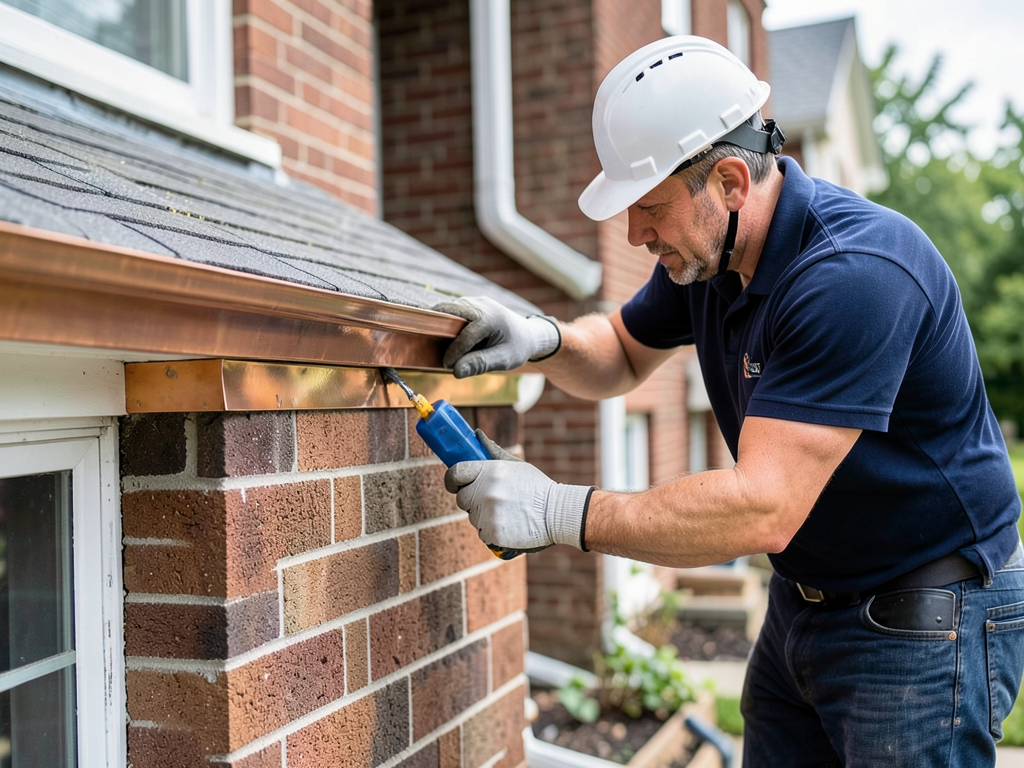
Diagram showing proper step flashing and counter-flashing installation with water flow patterns
Warning Signs of Chimney Flashing Leaks
Early detection prevents costly repairs. Watch for these indicators around your chimney. EPA mold prevention guidelines.
- Water stains on ceiling or walls near the fireplace
- Damp or musty smell in the fireplace during or after rain
- Visible rust spots or holes in metal flashing
- Cracked or missing sealant around flashing joints
- Peeling paint or wallpaper near the chimney interior
- Moss or algae growth on exterior chimney bricks
Professional Chimney Flashing Repair Process
Proper repair requires removing old materials and installing new flashing that meets current Baltimore building codes. Here is what a complete repair involves.
- Inspection and Assessment
Technician examines flashing condition, checks for wood rot, and identifies water entry points using moisture meters and thermal imaging.
- Removal of Old Flashing
Carefully remove step flashing, counter-flashing, and deteriorated sealant without damaging surrounding roofing materials. Weekend Roofing Service.
- Repair of Underlying Damage
Replace rotted wood sheathing, repair mortar joints, and ensure chimney structure is sound before installing new flashing.
- Installation of New Flashing
Install new step flashing woven into shingles and counter-flashing cut into chimney mortar joints. Use copper or high-grade aluminum for longevity.
- Sealing and Waterproofing
Apply industrial-grade sealant compatible with flashing material and roofing system. Install cricket if needed to divert water. Industrial Roof Replacement.
Material Options for Chimney Flashing in Baltimore
Choosing the right flashing material affects longevity and performance. Here is a comparison of common options.
| Material | Lifespan in Baltimore Climate | Cost Range | Best For |
|---|---|---|---|
| Galvanized Steel | 15 to 20 years | $$ | Budget repairs on older homes |
| Aluminum | 20 to 25 years | $$ | Most residential applications |
| Copper | 40 to 50 years | $$$ | Historic preservation and premium installations |
| Lead | 30 to 40 years | $$ | Masonry applications requiring flexibility |
Building Code Requirements for Chimney Flashing in Baltimore
Baltimore County and City enforce the International Residential Code with local amendments. Current standards require step flashing extend at least 4 inches up the chimney and counter-flashing extend 1.5 inches into mortar joints. Flashing must be corrosion-resistant material with a minimum thickness of 0.019 inches for aluminum. The code also mandates proper cricket installation on chimneys wider than 30 inches to prevent water pooling. International Residential Code flashing requirements.
Why Butchers Hill Homes Face Unique Challenges
Butchers Hill’s historic rowhomes built in the late 1800s and early 1900s present specific flashing challenges. Many have shared party walls with adjacent homes making exterior access difficult. Original flashing often consists of lead or early galvanized steel that has corroded beyond repair. The neighborhood’s elevation changes and mature tree canopy create varying sun exposure affecting material deterioration rates. Additionally, many homes have converted fireplaces to gas inserts changing the chimney’s heat profile and moisture characteristics.
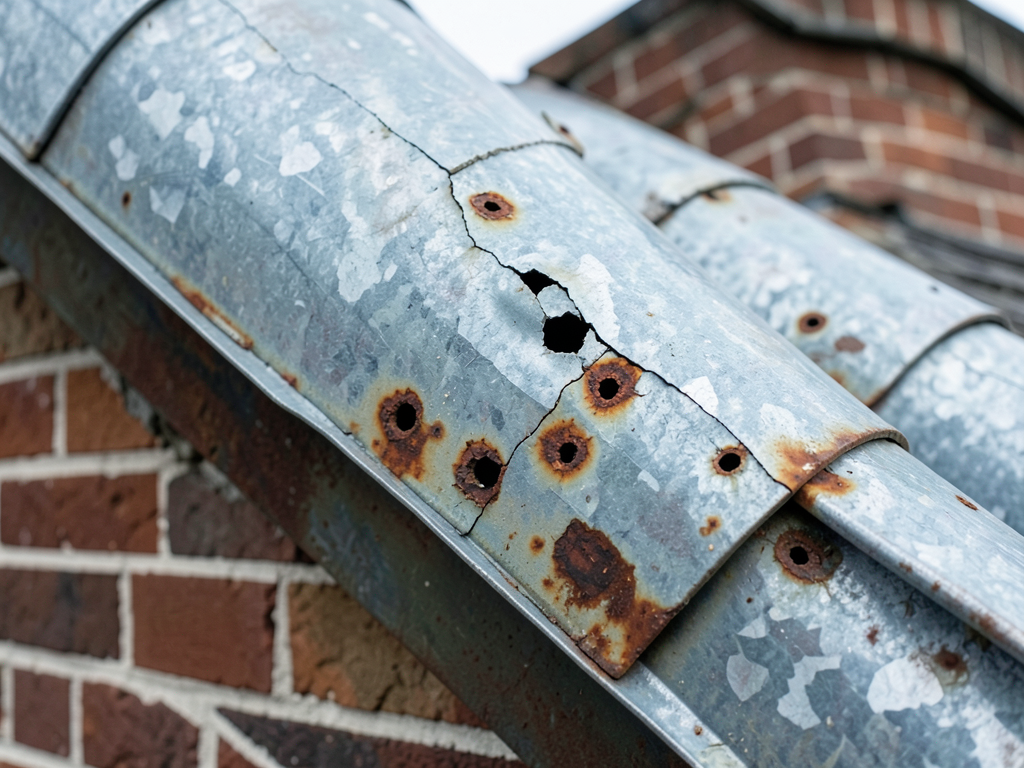
Photo showing deteriorated flashing on a historic Baltimore rowhome chimney with rust holes and missing sealant
Preventive Maintenance for Chimney Flashing
Regular maintenance extends flashing life and prevents leaks. Schedule these tasks annually.
- Visual inspection of flashing condition from ground level
- Check interior ceiling and walls for water stains
- Clean gutters and downspouts to prevent ice dam formation
- Trim tree branches that could damage flashing during storms
- Professional inspection every two years for homes over 20 years old
Cost Factors for Chimney Flashing Repair in Baltimore
Repair costs vary based on several factors specific to Baltimore rowhomes. Accessibility affects labor time especially in dense neighborhoods like Butchers Hill where parking and equipment staging present challenges. Material selection impacts total cost with copper flashing costing three times more than galvanized steel but lasting four times longer. The extent of underlying damage such as rotted wood sheathing or deteriorated mortar joints adds to repair complexity. Most chimney flashing repairs in Baltimore range from $800 to $2500 depending on these variables.
When to Call a Professional
DIY flashing repair often creates bigger problems. Call a professional if you notice active leaks, extensive rust damage, or if your home is in a historic district requiring preservation compliance. Professional roofers have the tools to diagnose hidden damage using moisture meters and thermal imaging. They also understand Baltimore’s building codes and can obtain necessary permits for major repairs.
Emergency Steps if You Discover a Leak
Water entering your home requires immediate action to prevent further damage. Follow these steps while waiting for professional help.
- Place buckets under active leaks to catch water
- Move furniture and valuables away from affected areas
- Document damage with photos for insurance purposes
- Cover the fireplace opening with plastic to contain water
- Call (443) 455-9099 for emergency flashing repair service
Frequently Asked Questions
How long should chimney flashing last in Baltimore?
Quality flashing materials typically last 20 to 30 years in Baltimore’s climate. Harsh weather conditions and poor maintenance can reduce lifespan to 10 to 15 years. Annual inspections help identify deterioration before leaks occur.
Can I repair chimney flashing myself?
Minor sealant replacement might be possible for handy homeowners but proper flashing repair requires specialized tools and knowledge of building codes. Incorrect installation often causes more damage than the original problem.
What causes chimney flashing to fail prematurely?
Improper installation, poor quality materials, Baltimore’s freeze-thaw cycles, and lack of maintenance are primary causes. Trees overhanging the chimney can also damage flashing during storms.
How do I know if my flashing needs replacement vs repair?
Minor cracks in sealant or small rust spots might be repairable. Extensive corrosion, missing counter-flashing, or active leaks usually require complete replacement to properly address the problem.
Does homeowners insurance cover chimney flashing repair?
Standard policies typically cover sudden damage from storms but not gradual deterioration from age or lack of maintenance. Check your specific policy and document damage thoroughly if filing a claim.
Photo of a properly installed chimney cricket diverting water away from the chimney base on a steep roof
Protect Your Butchers Hill Home from Water Damage
Chimney flashing failure can lead to thousands of dollars in water damage repairs if left unaddressed. The humid Baltimore climate and age of many Butchers Hill rowhomes make regular flashing inspection essential. Don’t wait for water stains to appear on your ceiling. Early detection and professional repair save money and prevent structural damage to your home.
Call (443) 455-9099 today to schedule your chimney flashing inspection. Our Baltimore-based team understands the unique challenges of historic rowhome flashing and provides lasting solutions backed by warranty protection. Don’t let the next storm turn a small flashing gap into a major water damage disaster.
Pick up the phone and call (443) 455-9099 before the next storm hits. Water damage waits for no one and neither should you when it comes to protecting your home investment.
{
“@context”: “https://schema.org”,
“@type”: “BlogPosting”,
“headline”: “Common Causes of Chimney Flashing Leaks for Homeowners in Butchers Hill”,
“description”: “Discover why chimney flashing fails in Butchers Hill rowhomes and how Baltimore’s humid climate accelerates leaks. Learn warning signs and get expert repair.”,
“wordCount”: 1581,
“datePublished”: “2026-03-10T08:26:00.000Z”,
“dateModified”: “2026-03-10T08:26:00.000Z”,
“inLanguage”: “en-US”,
“mainEntityOfPage”: {
“@type”: “WebPage”,
“@id”: “https://aplusroofingbaltimore.com”
},
“publisher”: {
“@type”: “LocalBusiness”,
“name”: “A Plus Roofing Baltimore”,
“url”: “https://aplusroofingbaltimore.com”
},
“author”: {
“@type”: “Organization”,
“name”: “A Plus Roofing Baltimore”,
“url”: “https://aplusroofingbaltimore.com”
},
“image”: {
“@type”: “ImageObject”,
“url”: “https://aplusroofingbaltimore.com/wp-content/uploads/2026/03/common-causes-of-chimney-flashing-leaks-for-homeow-1.png”
}
}
{
“@context”: “https://schema.org”,
“@type”: “RoofingContractor”,
“name”: “A Plus Roofing Baltimore”,
“url”: “https://aplusroofingbaltimore.com”,
“address”: {
“@type”: “PostalAddress”,
“addressLocality”: “Baltimore”
},
“areaServed”: {
“@type”: “City”,
“name”: “Baltimore”
}
}
{
“@context”: “https://schema.org”,
“@type”: “FAQPage”,
“mainEntity”: [
{
“@type”: “Question”,
“name”: “How long should chimney flashing last in Baltimore?”,
“acceptedAnswer”: {
“@type”: “Answer”,
“text”: “Quality flashing materials typically last 20 to 30 years in Baltimore’s climate. Harsh weather conditions and poor maintenance can reduce lifespan to 10 to 15 years. Annual inspections help identify deterioration before leaks occur.”
}
},
{
“@type”: “Question”,
“name”: “Can I repair chimney flashing myself?”,
“acceptedAnswer”: {
“@type”: “Answer”,
“text”: “Minor sealant replacement might be possible for handy homeowners but proper flashing repair requires specialized tools and knowledge of building codes. Incorrect installation often causes more damage than the original problem.”
}
},
{
“@type”: “Question”,
“name”: “What causes chimney flashing to fail prematurely?”,
“acceptedAnswer”: {
“@type”: “Answer”,
“text”: “Improper installation, poor quality materials, Baltimore’s freeze-thaw cycles, and lack of maintenance are primary causes. Trees overhanging the chimney can also damage flashing during storms.”
}
},
{
“@type”: “Question”,
“name”: “How do I know if my flashing needs replacement vs repair?”,
“acceptedAnswer”: {
“@type”: “Answer”,
“text”: “Minor cracks in sealant or small rust spots might be repairable. Extensive corrosion, missing counter-flashing, or active leaks usually require complete replacement to properly address the problem.”
}
},
{
“@type”: “Question”,
“name”: “Does homeowners insurance cover chimney flashing repair?”,
“acceptedAnswer”: {
“@type”: “Answer”,
“text”: “Standard policies typically cover sudden damage from storms but not gradual deterioration from age or lack of maintenance. Check your specific policy and document damage thoroughly if filing a claim.”
}
}
]
}
{
“@context”: “https://schema.org”,
“@type”: “HowTo”,
“name”: “Chimney Flashing Repair Process”,
“step”: [
{
“@type”: “HowToStep”,
“position”: 1,
“name”: “Inspection and Assessment”,
“text”: “Technician examines flashing condition, checks for wood rot, and identifies water entry points using moisture meters and thermal imaging.”
},
{
“@type”: “HowToStep”,
“position”: 2,
“name”: “Removal of Old Flashing”,
“text”: “Carefully remove step flashing, counter-flashing, and deteriorated sealant without damaging surrounding roofing materials. Weekend Roofing Service.”
},
{
“@type”: “HowToStep”,
“position”: 3,
“name”: “Repair of Underlying Damage”,
“text”: “Replace rotted wood sheathing, repair mortar joints, and ensure chimney structure is sound before installing new flashing.”
},
{
“@type”: “HowToStep”,
“position”: 4,
“name”: “Installation of New Flashing”,
“text”: “Install new step flashing woven into shingles and counter-flashing cut into chimney mortar joints. Use copper or high-grade aluminum for longevity.”
},
{
“@type”: “HowToStep”,
“position”: 5,
“name”: “Sealing and Waterproofing”,
“text”: “Apply industrial-grade sealant compatible with flashing material and roofing system. Install cricket if needed to divert water. Industrial Roof Replacement.”
}
],
“image”: “https://aplusroofingbaltimore.com/wp-content/uploads/2026/03/common-causes-of-chimney-flashing-leaks-for-homeow-1.png”
}
{
“@context”: “https://schema.org”,
“@type”: “BreadcrumbList”,
“itemListElement”: [
{
“@type”: “ListItem”,
“position”: 1,
“name”: “Home”,
“item”: “https://aplusroofingbaltimore.com”
},
{
“@type”: “ListItem”,
“position”: 2,
“name”: “Blog”,
“item”: “https://aplusroofingbaltimore.com/blog”
},
{
“@type”: “ListItem”,
“position”: 3,
“name”: “Common Causes of Chimney Flashing Leaks for Homeowners in Butchers Hill”
}
]
}
{
“@context”: “https://schema.org”,
“@type”: “Service”,
“serviceType”: “Roofing”,
“provider”: {
“@type”: “LocalBusiness”,
“name”: “A Plus Roofing Baltimore”,
“url”: “https://aplusroofingbaltimore.com”
},
“areaServed”: {
“@type”: “City”,
“name”: “Baltimore”
},
“description”: “Discover why chimney flashing fails in Butchers Hill rowhomes and how Baltimore’s humid climate accelerates leaks. Learn warning signs and get expert repair.”
}