
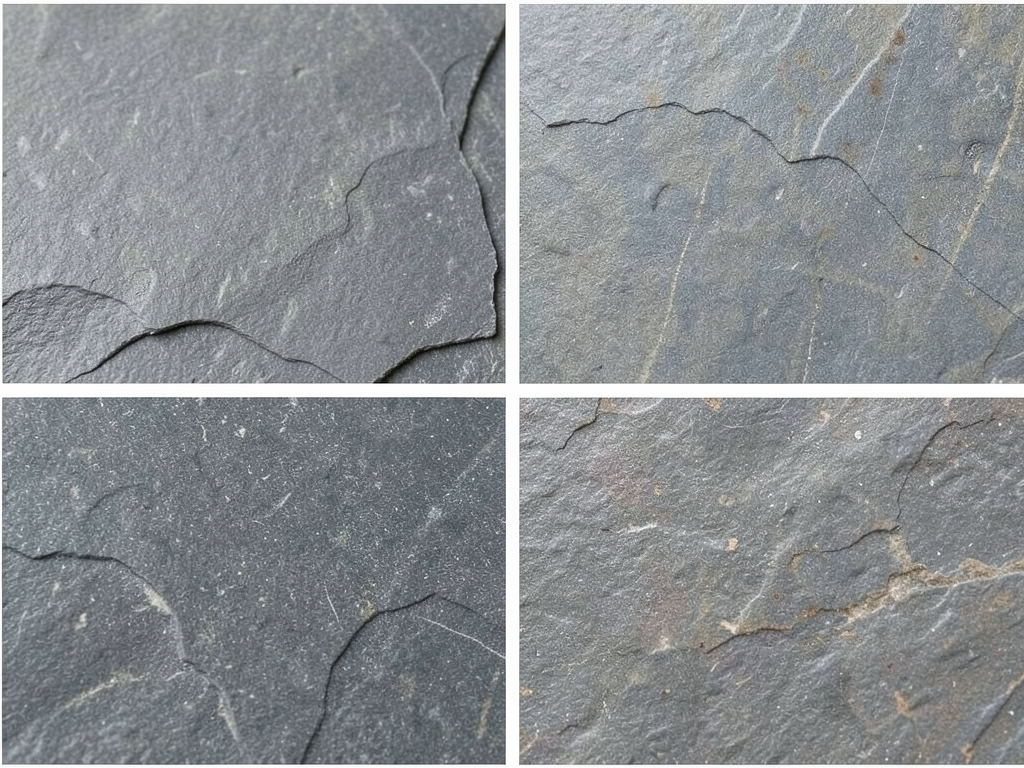
DaVinci Roofscapes vs Natural Slate for Historic Homes in Lutherville
Choosing between DaVinci synthetic slate and natural slate for your Lutherville historic home means weighing 100-year longevity against modern polymer durability. Natural slate offers unmatched authenticity and fire resistance but weighs over 1,000 pounds per square and costs $1,500 to $2,500 in materials alone. DaVinci synthetic slate weighs just 250 to 350 pounds per square, costs $600 to $900 in materials, and resists Maryland’s freeze-thaw cycles without the structural reinforcement older Lutherville homes often need. Both materials deliver Class A fire ratings and Class 4 impact resistance, but only synthetic slate avoids the CHAP approval hurdles that can delay historic district projects by months. DaVinci Roofscapes.
At a Glance: Comparison Table
| Feature | Natural Slate | DaVinci Synthetic Slate |
|---|---|---|
| Material Cost per Square | $1,500 – $2,500 | $600 – $900 |
| Installation Cost per Square | $800 – $1,200 | $400 – $600 |
| Total Cost per Square | $2,300 – $3,700 | $1,000 – $1,500 |
| Weight per Square | 1,000+ lbs | 250 – 350 lbs |
| Lifespan | 75 – 100+ years | 40 – 50 years |
| CHAP Approval | Often Required | Typically Approved |
| Freeze-Thaw Durability | Excellent | Excellent |
| Structural Reinforcement Needed | Often Yes | No |
Real Slate Roofing: The Gold Standard of Longevity
Natural slate quarried from Vermont or Spanish deposits has protected Baltimore’s historic homes since the 1800s. The metamorphic stone splits into uniform sheets that resist water absorption rates below 0.05 percent. A 100-year-old slate roof still sheds water perfectly when fasteners remain intact. The material weighs between 800 and 1,500 pounds per square depending on thickness and density. Older Lutherville homes built before 1940 often lack the engineered roof trusses needed to support this load safely. Baltimore Commission for Historical and Architectural Preservation.
Installation requires certified slaters who hand-nail each piece with copper or stainless steel fasteners. The process takes seven to ten days for an average Lutherville colonial and generates significant waste from trimming and splitting. Disposal fees for old roofing materials add $500 to $800 to project costs. Natural slate carries a Class A fire rating and withstands Maryland’s coastal storms when properly flashed and underlayed. Maryland Historic Tax Credit.
The biggest advantage remains authenticity. CHAP guidelines for Baltimore’s historic districts often require natural materials to maintain architectural integrity. Synthetic alternatives must prove visual indistinguishability before approval. Natural slate also appreciates property values in neighborhoods like Anneslie and Seminary Park where historic preservation drives real estate premiums. Flat Roof Repair for Baltimore Rowhouses — What Every Homeowner in Canton Needs to Know.
Synthetic Slate: The Modern Alternative for Maryland Weather
DaVinci Roofscapes produces polymer composite tiles engineered to mimic natural slate’s dimensional appearance. The material combines virgin polymers with mineral fillers to achieve Class 4 impact resistance and Class A fire ratings identical to natural stone. Manufacturing occurs in Kansas under ISO 9001 quality standards with UV inhibitors preventing the yellowing common in cheaper composites.
Weight reduction from 1,000 pounds to 300 pounds per square eliminates the need for structural engineers in most cases. This matters for Lutherville homes where foundation settling has already compromised load-bearing capacity. The lighter material also reduces staging equipment needs and allows faster installation. A two-person crew completes most installations in four to six days versus the week-long process for natural slate.
Maryland’s freeze-thaw cycles stress roofing materials through expansion and contraction. DaVinci’s engineered polymers flex slightly without cracking, while natural slate can delaminate along bedding planes when water penetrates microscopic fissures. The synthetic material carries a 50-year limited warranty covering manufacturing defects and color fading. Natural slate warranties typically cover only material defects for twenty years. Weekend Roofing Service.
Cost savings extend beyond materials. Installation labor runs $400 to $600 per square for synthetic versus $800 to $1,200 for natural slate. The reduced weight means fewer safety precautions and faster tear-off of existing roofing. Total project costs often come in 40 to 50 percent below natural slate installations. How Much a New Roof Costs in Towson (2026 Estimates).
Key Differences: A Deep Dive
Cost Analysis
Natural slate material costs $1,500 to $2,500 per square with premium Vermont grades commanding top prices. Installation adds $800 to $1,200 per square for specialized labor. Total investment reaches $2,300 to $3,700 per square before structural upgrades. A typical Lutherville home needs 25 to 30 squares, pushing total costs toward $75,000 to $110,000.
Synthetic DaVinci materials cost $600 to $900 per square with installation at $400 to $600. Total investment ranges $1,000 to $1,500 per square. The same Lutherville home costs $25,000 to $45,000 for complete replacement. Savings fund other home improvements or historic restoration work. Industrial Roof Replacement.
Weight and Structural Impact
Older Baltimore homes often feature 2×6 rafters spaced twenty-four inches on center. These structures cannot safely support 1,000 pounds per square without reinforcement. Engineers must inspect roof framing, calculate load distribution, and specify sistering or beam additions. This process adds $3,000 to $8,000 and delays projects by weeks.
Synthetic slate’s 300-pound load per square works within existing structural parameters. No engineering review required in most cases. Installation proceeds immediately after tear-off. The weight difference also reduces staging requirements and allows use of smaller cranes or lifts in tight Lutherville neighborhoods.
Maintenance Requirements
Natural slate demands periodic inspection every five years. Copper flashing corrodes over decades, requiring replacement. Individual tiles crack from impact or freeze-thaw stress. Repairs require matching existing slate color and thickness, often necessitating salvage from reclamation yards. Annual cleaning removes moss and algae that retain moisture against stone surfaces.
Synthetic slate needs minimal maintenance beyond gutter cleaning and occasional washing. The polymer surface resists biological growth. Impact damage creates visible cracks but rarely compromises waterproofing. Individual replacement requires matching color lots, though DaVinci maintains records for exact matches years later.
Aesthetic Considerations
Natural slate develops patina over decades. Color deepens, surface texture weathers, and edges soften. This aging creates the authentic character CHAP boards seek in historic districts. Synthetic materials maintain factory-fresh appearance longer but lack the subtle variations of hand-split stone.
DaVinci offers fifty-two color options with random blends mimicking natural variation. Advanced molding captures surface textures impossible to distinguish from natural slate at street level. Close inspection reveals polymer sheen absent in natural stone. Most Lutherville homeowners find the difference acceptable given cost savings and CHAP approval likelihood.
Baltimore Climate Considerations: Snow Loads and Humidity
Maryland’s climate stresses roofing materials through multiple mechanisms. Winter nor’easters dump wet snow creating concentrated loads on roof planes. Spring freeze-thaw cycles force water into microscopic cracks, expanding upon freezing. Summer humidity promotes algae and moss growth on north-facing slopes.
Natural slate handles snow loads through mass and rigidity. A properly installed slate roof sheds snow gradually, preventing ice dam formation when attic ventilation maintains consistent roof temperatures. The material’s low water absorption prevents freeze-thaw damage in most cases. Spanish slate performs better than Vermont grades in Maryland’s humidity due to tighter grain structure.
Synthetic slate resists algae growth through smooth polymer surfaces that shed water quickly. The material’s engineered flexibility prevents cracking from thermal expansion. DaVinci’s Cool Roof Collection reflects solar radiation, reducing attic heat gain by up to 20 percent. This matters in Lutherville’s older homes where insulation often lacks modern R-values.
Coastal storms test roofing systems with wind-driven rain and debris impact. Both materials achieve Class 4 impact ratings, surviving two-inch steel ball drops from twenty feet. Wind ratings depend on fastening patterns rather than material properties. Natural slate requires six nails per piece minimum. Synthetic slate uses four nails with enhanced head designs preventing pull-through.
Historic District Regulations in Baltimore (CHAP Requirements)
The Baltimore Commission for Historical and Architectural Preservation governs exterior modifications in designated historic districts. CHAP guidelines prioritize material authenticity and visual compatibility. Natural slate typically receives automatic approval for historic applications. Synthetic alternatives face scrutiny requiring detailed submissions.
Application process begins with preliminary review meeting. Applicants submit material samples, installation details, and photographs of existing conditions. CHAP staff evaluates synthetic materials against neighborhood context and architectural style. Tudor and colonial homes face stricter standards than mid-century modern designs.
Approval timeline extends four to six weeks for synthetic materials versus immediate approval for natural slate. Delays compound if CHAP requests additional samples or installation modifications. Some districts like Roland Park require natural materials regardless of cost considerations. Others accept approved synthetics when visual compatibility proves sufficient.
Installation requirements often specify copper flashing, lead-coated copper valleys, and specific nailing patterns. These details affect both material choices and contractor selection. Not all roofers possess experience with historic preservation requirements. Certification through preservation organizations helps but does not guarantee CHAP approval.
Tax incentives offset some costs for approved historic preservation work. Maryland offers tax credits covering 20 percent of qualified expenses. Baltimore provides additional abatements for certified historic properties. These programs require CHAP approval, creating circular dependencies between material choice and financial feasibility.
Making the Decision: Which Roof Should You Choose?
Natural slate makes sense when historic authenticity drives decisions and budgets allow $75,000 to $110,000 investments. The material delivers unmatched longevity and appreciates property values in historic districts. CHAP approval proceeds smoothly without engineering reviews or special considerations. The 100-year lifespan means replacement never becomes your problem.
Synthetic DaVinci slate fits when cost containment matters and CHAP approval seems uncertain. The 40 to 50-year lifespan still exceeds most homeowners’ occupancy plans. Weight savings eliminate structural concerns in older homes. Installation proceeds faster with fewer specialized labor requirements. The 50 percent cost reduction funds other home improvements.
Consider your specific circumstances. Lutherville’s Anneslie neighborhood features 1950s colonials where synthetic slate provides modern performance without historic constraints. Seminary Park contains 1920s mansions where natural slate maintains architectural integrity. Your home’s age, condition, and location within historic districts guide material selection.
Both materials perform excellently in Baltimore’s climate. The decision hinges on balancing authenticity against practicality, longevity against immediate cost, and historic requirements against modern convenience. A qualified roofing contractor evaluates your specific home, reviews CHAP requirements, and recommends the optimal solution for your circumstances.
Call (443) 455-9099 today to schedule your inspection. Our experts assess your roof’s structural capacity, review historic district requirements, and provide detailed proposals for both natural and synthetic slate options. Don’t wait until winter storms reveal vulnerabilities in your existing roofing system.
Frequently Asked Questions
How long does a DaVinci synthetic slate roof last compared to natural slate?
DaVinci synthetic slate carries a 50-year limited warranty and typically lasts 40 to 50 years with proper installation. Natural slate often exceeds 100 years when maintained correctly. The synthetic material’s polymer composition resists cracking but may fade slightly over decades. Natural slate develops patina that many homeowners find desirable in historic districts.
Does my Lutherville home need structural reinforcement for natural slate?
Most homes built before 1940 require structural evaluation before natural slate installation. The 1,000+ pound per square load often exceeds original framing capacity. Engineers inspect rafters, calculate loads, and specify reinforcement when needed. This process adds $3,000 to $8,000 and delays projects by weeks. Synthetic slate eliminates this requirement in most cases.
Will CHAP approve synthetic slate for my historic Lutherville home?
CHAP approval depends on your specific historic district and home style. Natural slate typically receives automatic approval. Synthetic materials require sample submission and visual evaluation. Tudor and colonial homes face stricter standards than mid-century designs. Approval timeline extends four to six weeks for synthetics versus immediate approval for natural slate.
What maintenance does synthetic slate require versus natural slate?
Synthetic slate needs minimal maintenance beyond gutter cleaning and occasional washing to remove debris. The polymer surface resists algae and moss growth. Natural slate requires five-year inspections, copper flashing replacement every 30 to 50 years, and individual tile repairs when cracked. Annual cleaning prevents moss accumulation that retains moisture against stone surfaces.
How do Baltimore’s freeze-thaw cycles affect each material?
Both materials withstand Maryland’s freeze-thaw cycles effectively. Natural slate resists damage through low water absorption rates below 0.05 percent. High-quality grades rarely crack from freezing. Synthetic slate flexes slightly with temperature changes, preventing stress fractures. DaVinci’s engineered polymers include UV inhibitors that prevent the brittleness common in cheaper composites after years of freeze-thaw exposure.
{
“@context”: “https://schema.org”,
“@type”: “BlogPosting”,
“headline”: “DaVinci Roofscapes vs Natural Slate for Historic Homes in Lutherville”,
“description”: “Compare DaVinci synthetic slate vs natural slate for Lutherville historic homes. Learn about costs, CHAP approval, structural requirements, and Baltimore climate durability.”,
“wordCount”: 2012,
“datePublished”: “2026-06-05T06:43:00.000Z”,
“dateModified”: “2026-06-05T06:43:00.000Z”,
“inLanguage”: “en-US”,
“mainEntityOfPage”: {
“@type”: “WebPage”,
“@id”: “https://aplusroofingbaltimore.com”
},
“publisher”: {
“@type”: “LocalBusiness”,
“name”: “A Plus Roofing Baltimore”,
“url”: “https://aplusroofingbaltimore.com”
},
“author”: {
“@type”: “Organization”,
“name”: “A Plus Roofing Baltimore”,
“url”: “https://aplusroofingbaltimore.com”
},
“image”: {
“@type”: “ImageObject”,
“url”: “https://aplusroofingbaltimore.com/wp-content/uploads/2026/03/davinci-roofscapes-vs-natural-slate-for-historic-h-1.png”
}
}
{
“@context”: “https://schema.org”,
“@type”: “RoofingContractor”,
“name”: “A Plus Roofing Baltimore”,
“url”: “https://aplusroofingbaltimore.com”,
“address”: {
“@type”: “PostalAddress”,
“addressLocality”: “Baltimore”
},
“areaServed”: {
“@type”: “City”,
“name”: “Baltimore”
}
}
{
“@context”: “https://schema.org”,
“@type”: “FAQPage”,
“mainEntity”: [
{
“@type”: “Question”,
“name”: “Making the Decision: Which Roof Should You Choose?”,
“acceptedAnswer”: {
“@type”: “Answer”,
“text”: “Natural slate makes sense when historic authenticity drives decisions and budgets allow $75,000 to $110,000 investments. The material delivers unmatched longevity and appreciates property values in historic districts. CHAP approval proceeds smoothly without engineering reviews or special considerations. The 100-year lifespan means replacement never becomes your problem.”
}
},
{
“@type”: “Question”,
“name”: “How long does a DaVinci synthetic slate roof last compared to natural slate?”,
“acceptedAnswer”: {
“@type”: “Answer”,
“text”: “DaVinci synthetic slate carries a 50-year limited warranty and typically lasts 40 to 50 years with proper installation. Natural slate often exceeds 100 years when maintained correctly. The synthetic material’s polymer composition resists cracking but may fade slightly over decades. Natural slate develops patina that many homeowners find desirable in historic districts.”
}
},
{
“@type”: “Question”,
“name”: “Does my Lutherville home need structural reinforcement for natural slate?”,
“acceptedAnswer”: {
“@type”: “Answer”,
“text”: “Most homes built before 1940 require structural evaluation before natural slate installation. The 1,000+ pound per square load often exceeds original framing capacity. Engineers inspect rafters, calculate loads, and specify reinforcement when needed. This process adds $3,000 to $8,000 and delays projects by weeks. Synthetic slate eliminates this requirement in most cases.”
}
},
{
“@type”: “Question”,
“name”: “Will CHAP approve synthetic slate for my historic Lutherville home?”,
“acceptedAnswer”: {
“@type”: “Answer”,
“text”: “CHAP approval depends on your specific historic district and home style. Natural slate typically receives automatic approval. Synthetic materials require sample submission and visual evaluation. Tudor and colonial homes face stricter standards than mid-century designs. Approval timeline extends four to six weeks for synthetics versus immediate approval for natural slate.”
}
},
{
“@type”: “Question”,
“name”: “What maintenance does synthetic slate require versus natural slate?”,
“acceptedAnswer”: {
“@type”: “Answer”,
“text”: “Synthetic slate needs minimal maintenance beyond gutter cleaning and occasional washing to remove debris. The polymer surface resists algae and moss growth. Natural slate requires five-year inspections, copper flashing replacement every 30 to 50 years, and individual tile repairs when cracked. Annual cleaning prevents moss accumulation that retains moisture against stone surfaces.”
}
},
{
“@type”: “Question”,
“name”: “How do Baltimore’s freeze-thaw cycles affect each material?”,
“acceptedAnswer”: {
“@type”: “Answer”,
“text”: “Both materials withstand Maryland’s freeze-thaw cycles effectively. Natural slate resists damage through low water absorption rates below 0.05 percent. High-quality grades rarely crack from freezing. Synthetic slate flexes slightly with temperature changes, preventing stress fractures. DaVinci’s engineered polymers include UV inhibitors that prevent the brittleness common in cheaper composites after years of freeze-thaw exposure.”
}
}
]
}
{
“@context”: “https://schema.org”,
“@type”: “BreadcrumbList”,
“itemListElement”: [
{
“@type”: “ListItem”,
“position”: 1,
“name”: “Home”,
“item”: “https://aplusroofingbaltimore.com”
},
{
“@type”: “ListItem”,
“position”: 2,
“name”: “Blog”,
“item”: “https://aplusroofingbaltimore.com/blog”
},
{
“@type”: “ListItem”,
“position”: 3,
“name”: “DaVinci Roofscapes vs Natural Slate for Historic Homes in Lutherville”
}
]
}
{
“@context”: “https://schema.org”,
“@type”: “Service”,
“serviceType”: “Roofing”,
“provider”: {
“@type”: “LocalBusiness”,
“name”: “A Plus Roofing Baltimore”,
“url”: “https://aplusroofingbaltimore.com”
},
“areaServed”: {
“@type”: “City”,
“name”: “Baltimore”
},
“description”: “Compare DaVinci synthetic slate vs natural slate for Lutherville historic homes. Learn about costs, CHAP approval, structural requirements, and Baltimore climate durability.”
}