
Protecting Your Roof from Lichen Growth in Shady Areas of Monkton
Lichen growth on your roof creates more than an unsightly appearance. In Monkton’s heavily wooded neighborhoods, these organisms slowly destroy asphalt shingles by penetrating deep into the material. This guide explains why lichen thrives in Baltimore County’s climate, how to identify it, and what professional removal methods work without damaging your roof or the environment. Asphalt Roofing Manufacturers Association (ARMA).
Why Monkton Homes Face Severe Lichen Problems
Monkton sits in a unique microclimate where dense tree cover creates perpetual shade on many homes. The area’s proximity to Gunpowder Falls State Park means most properties have mature oak, maple, and pine trees that block sunlight from reaching roof surfaces. Combined with Baltimore County’s average annual rainfall of 42 inches and high humidity levels, these conditions create the perfect breeding ground for lichen. Flat Roof Repair for Baltimore Rowhouses — What Every Homeowner in Canton Needs to Know.
Lichen forms a symbiotic partnership between fungi and algae. The fungi provide structure while the algae photosynthesize, creating a self-sustaining system that survives on minimal nutrients. When this partnership colonizes your roof, it forms root-like structures called rhizines that penetrate asphalt shingles, breaking down protective granules and exposing underlying material to UV damage.
Unlike moss that sits on the surface, lichen anchors itself into the shingle. Once established, it creates small pockets where moisture collects, accelerating deterioration. In Monkton’s climate, where freeze-thaw cycles occur frequently from November through March, this trapped moisture expands and contracts, causing shingles to crack and separate.
Properties near Corbett Road and York Road often experience the worst growth because these areas have older tree canopies and homes built before modern tree-clearing practices. The combination of north-facing slopes and dense shade means some roofs never fully dry out after rainfall.
Identifying Lichen vs. Other Roof Growth
Many Monkton homeowners mistake lichen for moss or algae. Here’s how to tell the difference: Lichen appears as flat, crusty patches that can be green, gray, or even orange. It feels hard and dry to the touch, almost like a mineral deposit. Moss looks fluffy and grows in thick clumps with a soft texture. Algae creates dark streaks but doesn’t form raised patches.
The most destructive type in our area is Xanthoria parietina, which thrives on limestone-based asphalt shingles. This species has a distinctive bright yellow-green color and often grows in circular patterns. It’s particularly common on homes near the Monkton Station area where older roofing materials were used.
Another indicator is the pattern of growth. Lichen tends to colonize the north and east sides of roofs first, where moisture lingers longest. If you see uniform discoloration across the entire roof, that’s more likely algae. But if you notice raised, crusty patches concentrated in shaded areas, you’re dealing with lichen.
Early detection matters. Once lichen establishes itself, removal becomes more difficult and expensive. The rhizines create microscopic channels in the shingle surface that trap debris and moisture, creating a cycle that promotes further growth even after cleaning.
Professional Removal Methods That Work
High-pressure washing seems like the obvious solution, but it damages roofs with lichen growth. The Asphalt Roofing Manufacturers Association (ARMA) warns against pressure washing asphalt shingles because it strips protective granules and can void your warranty. In Monkton’s older neighborhoods, many homes still have roofs with limited remaining granule coverage, making them especially vulnerable to damage. Weekend Roofing Service.
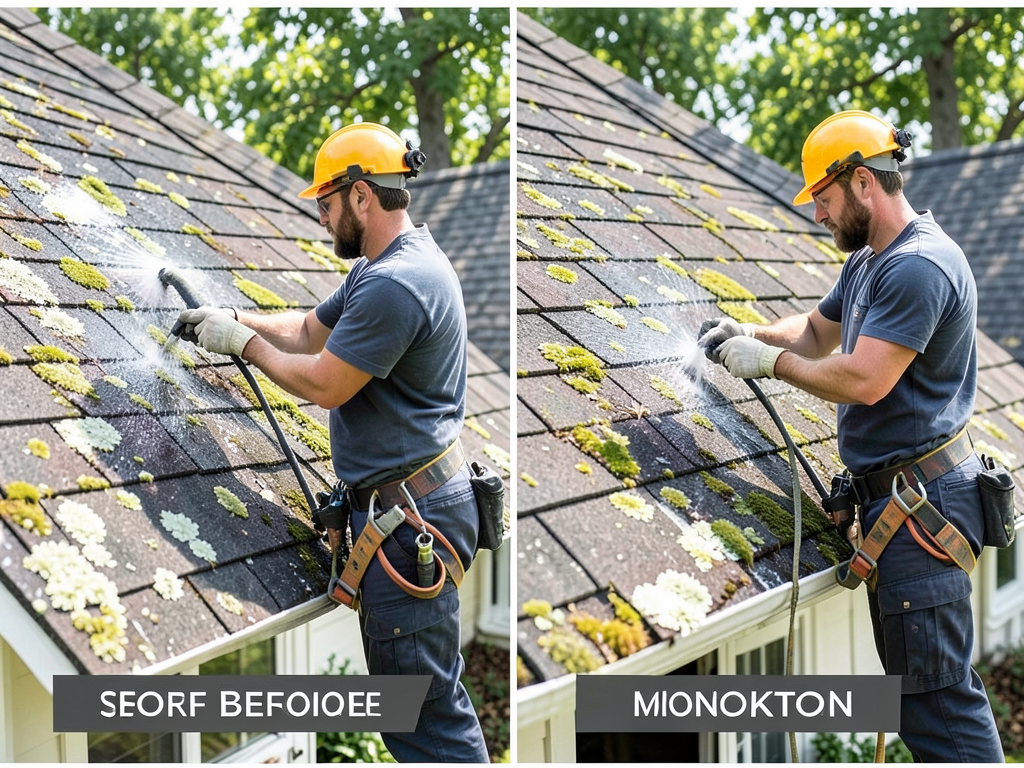
The industry-standard approach uses soft washing, which applies cleaning solutions at pressures under 100 PSI. This method relies on chemical action rather than force to kill and remove lichen. The process typically involves applying a sodium hypochlorite-based solution mixed with biodegradable surfactants, allowing it to dwell for 15-20 minutes, then rinsing with low pressure.
Professional roof cleaners in Baltimore County must follow Maryland Department of the Environment guidelines for chemical runoff, especially given Monkton’s proximity to the Gunpowder River watershed. This means using capture systems or neutralizing agents to prevent harmful chemicals from entering storm drains. Maryland Department of the Environment.
The soft wash process also addresses the root cause. After killing the visible growth, technicians apply preventative treatments that inhibit future colonization. These treatments contain zinc or copper compounds that create an environment hostile to lichen spores without harming your landscaping.
For homes with severe growth or delicate roofing materials like cedar shake or slate, some contractors use steam cleaning. This method uses superheated water (around 300°F) to kill organisms without chemicals. While more expensive, it works well for historic properties in Monkton’s older neighborhoods where chemical exposure could damage nearby plants or historic materials.
Why DIY Methods Often Fail
Many Monkton homeowners attempt to remove lichen using store-bought products or homemade solutions. While this seems cost-effective, it often creates bigger problems. Common DIY mistakes include using undiluted bleach, which discolors shingles and kills surrounding vegetation, or applying solutions during hot weather, which causes rapid evaporation before the chemicals can work.
Another critical issue involves safety. Monkton’s older homes often have steep roof pitches, especially in areas near Corbett Road where historic architecture is common. Working on a wet, lichen-covered roof creates extreme slip hazards. Professional roof cleaners use specialized fall protection equipment and have insurance coverage that homeowners’ policies typically don’t extend to DIY work.
Timing also matters significantly. Applying treatments during Baltimore County’s rainy season (May through July) often results in solutions washing away before they can penetrate the lichen’s protective layers. Professionals monitor weather patterns and schedule treatments during dry periods to ensure maximum effectiveness.
Perhaps most importantly, improper removal can spread lichen spores to other parts of your roof or even to neighboring properties. The cleaning process can dislodge microscopic spores that settle in new areas, creating a bigger problem than you started with.
Prevention Strategies for Long-Term Protection
Once you’ve removed lichen, preventing its return requires addressing the environmental factors that allowed it to grow in the first place. In Monkton’s climate, this means managing shade, moisture, and nutrient availability on your roof.
Tree management serves as the first line of defense. Trimming branches to allow at least six hours of direct sunlight on your roof dramatically reduces lichen growth potential. However, Monkton’s tree preservation ordinances mean you’ll need permits for significant pruning, especially for trees over 30 inches in diameter. Working with an arborist who understands these regulations is essential.
Gutter maintenance plays a crucial role. Clogged gutters create moisture problems that extend to your roof edge, providing ideal conditions for lichen establishment. In Monkton’s wooded areas, gutters should be cleaned at least twice yearly—once in late fall after leaves drop and again in early spring before heavy rains begin.
Zinc or copper strips installed along the roof ridge create a natural deterrent. When rainwater flows over these metals, it carries trace amounts down the roof surface, creating conditions where lichen cannot survive. This method works best on the sunny portions of your roof where moisture evaporates quickly. Installing a Metal Roof in Columbia — Is It Worth the Investment?.
Annual inspections remain critical in Monkton’s climate. The combination of high humidity, frequent rainfall, and temperature fluctuations means new growth can establish itself within a single growing season. Professional inspections can catch problems while they’re still manageable, potentially saving thousands in premature roof replacement costs. How Much a New Roof Costs in Towson (2026 Estimates).
Cost Factors and Investment Protection
Professional lichen removal in Monkton typically costs between $0.25 and $0.40 per square foot, depending on roof pitch, accessibility, and severity of growth. For an average 2,000-square-foot home, this translates to $500-$800 for complete treatment. While this might seem expensive, it’s far less than the $8,000-$15,000 cost of premature roof replacement caused by untreated lichen damage. Industrial Roof Replacement.
Insurance considerations add another layer of complexity. Some Baltimore County insurers now require documentation of roof maintenance, including cleaning and treatment, to maintain coverage. Untreated lichen growth can be considered neglect, potentially leading to claim denials for water damage that results from compromised roofing materials.
The return on investment becomes clear when you consider roof lifespan extension. A typical asphalt shingle roof in Monkton’s climate lasts 20-25 years with proper maintenance. Untreated lichen growth can reduce this to 12-15 years, representing a significant financial loss. Professional treatment extends the functional life of your existing roof while you save for eventual replacement.
Many Monkton homeowners find that combining lichen treatment with other maintenance services provides better value. Gutter cleaning, minor repairs, and preventative treatments can often be bundled at discounted rates, especially during the contractor’s slower seasons in late winter or early fall.
Choosing the Right Contractor in Monkton
Not all roof cleaning companies understand the unique challenges of Monkton’s environment. Look for contractors with specific experience in Baltimore County’s watershed regulations and knowledge of local building codes. The Maryland Home Improvement Commission (MHIC) license is mandatory, but you should also verify insurance coverage that specifically includes roof cleaning operations.
Ask potential contractors about their chemical handling procedures and environmental safeguards. Reputable companies will explain their runoff containment methods and use biodegradable products that won’t harm Monkton’s sensitive watershed areas. They should also provide documentation of their disposal methods for cleaning solutions and contaminated water.
References from other Monkton properties prove invaluable. Lichen growth patterns vary significantly even within small geographic areas, so contractors familiar with your specific neighborhood will understand the local conditions better. Ask to see before-and-after photos of similar properties in your area.
Finally, beware of companies that guarantee “instant results.” Effective lichen treatment often requires multiple applications and follow-up visits to ensure complete removal and prevent regrowth. A realistic timeline of 2-3 weeks for full results indicates a contractor who understands the biology of what they’re treating.
Frequently Asked Questions
How long does professional lichen removal take?
Most residential treatments in Monkton can be completed in a single day. The actual application takes 2-4 hours depending on roof size and pitch, but technicians need to remain on-site for the entire dwell time of the cleaning solution, which is typically 15-20 minutes. Larger commercial properties or severely affected homes may require 2-3 days.
Will lichen removal damage my plants or landscaping?
When performed by professionals using proper techniques, the risk to landscaping is minimal. Reputable contractors in Monkton pre-soak plants with water to prevent chemical absorption, use tarps to protect sensitive areas, and apply neutralizing agents to runoff. However, some temporary plant stress is normal, and delicate specimens near the roof edge should be covered or temporarily relocated.
How often should I treat my roof for lichen in Monkton’s climate?
Most Monkton homes need preventative treatment every 2-3 years, though this varies based on tree cover, roof pitch, and previous growth severity. Homes in the most heavily wooded areas near Gunpowder Falls State Park might need annual inspection and treatment. Regular maintenance is far less expensive than dealing with established growth.
Can I stay in my home during the treatment process?
Yes, the chemicals used in professional soft washing are safe once dry and don’t require occupants to leave. However, keep pets and children away from the work area during application and rinsing. Some homeowners prefer to be elsewhere during the noisiest parts of the process, typically when technicians are walking on the roof and rinsing.
Does lichen growth indicate other roof problems?
Lichen itself doesn’t cause leaks, but its presence often indicates conditions that can lead to other problems. Excessive shade and moisture can promote wood rot in roof decking, attract insects that damage roofing materials, and create ice damming issues in winter. A professional inspection during treatment can identify these secondary concerns.
Lichen Growth Comparison Chart
| Organism | Appearance | Texture | Growth Pattern | Damage Level |
|---|---|---|---|---|
| Lichen | Flat, crusty patches; green, gray, orange | Hard, dry, mineral-like | North/east sides first; raised patches | High – penetrates shingles |
| Moss | Thick, fluffy clumps; dark green | Soft, cushion-like | Shaded areas; grows in mats | Medium – traps moisture |
| Algae | Dark streaks or discoloration | Smooth, flat | Uniform across roof surface | Low – cosmetic only |
Soft Washing Process Step-by-Step
- Inspect roof condition and identify lichen growth areas
- Protect landscaping with pre-soaking and tarps
- Apply sodium hypochlorite solution at 50-100 PSI
- Allow 15-20 minute dwell time for chemical action
- Rinse thoroughly with low-pressure water
- Apply preventative treatment with zinc compounds
- Clean up and neutralize any runoff
- Perform final inspection and document results
Take Action Before Lichen Destroys Your Roof
Lichen growth on your Monkton roof creates a progressive problem that will only get worse and more expensive to fix over time. The combination of our area’s humid climate, dense tree cover, and temperature fluctuations creates perfect conditions for these organisms to thrive and damage your roofing investment.
Professional treatment using ARMA-approved soft washing methods can safely remove existing growth while protecting your shingles and the environment. But timing matters. The longer you wait, the deeper those rhizines penetrate, making removal more difficult and increasing the risk of permanent damage to your roof structure.
Don’t let another Baltimore County rainstorm feed the lichen on your roof. Call (443) 455-9099 today to schedule a professional inspection and treatment plan. Our team understands Monkton’s unique environmental challenges and uses methods that are safe for your roof, your family, and our local watershed.
Pick up the phone and call (443) 455-9099 before the next storm hits. Your roof’s lifespan—and your peace of mind—depend on it.
{
“@context”: “https://schema.org”,
“@type”: “BlogPosting”,
“headline”: “Protecting Your Roof from Lichen Growth in Shady Areas of Monkton”,
“description”: “Learn how to identify and remove lichen from your Monkton roof before it causes costly damage. Professional soft washing methods protect your investment.”,
“wordCount”: 2225,
“datePublished”: “2026-06-02T08:24:00.000Z”,
“dateModified”: “2026-06-02T08:24:00.000Z”,
“inLanguage”: “en-US”,
“mainEntityOfPage”: {
“@type”: “WebPage”,
“@id”: “https://aplusroofingbaltimore.com”
},
“publisher”: {
“@type”: “LocalBusiness”,
“name”: “A Plus Roofing Baltimore”,
“url”: “https://aplusroofingbaltimore.com”
},
“author”: {
“@type”: “Organization”,
“name”: “A Plus Roofing Baltimore”,
“url”: “https://aplusroofingbaltimore.com”
},
“image”: {
“@type”: “ImageObject”,
“url”: “https://aplusroofingbaltimore.com/wp-content/uploads/2026/03/protecting-your-roof-from-lichen-growth-in-shady-a-1.png”
}
}
{
“@context”: “https://schema.org”,
“@type”: “RoofingContractor”,
“name”: “A Plus Roofing Baltimore”,
“url”: “https://aplusroofingbaltimore.com”,
“address”: {
“@type”: “PostalAddress”,
“addressLocality”: “Baltimore”
},
“areaServed”: {
“@type”: “City”,
“name”: “Baltimore”
}
}
{
“@context”: “https://schema.org”,
“@type”: “FAQPage”,
“mainEntity”: [
{
“@type”: “Question”,
“name”: “How long does professional lichen removal take?”,
“acceptedAnswer”: {
“@type”: “Answer”,
“text”: “Most residential treatments in Monkton can be completed in a single day. The actual application takes 2-4 hours depending on roof size and pitch, but technicians need to remain on-site for the entire dwell time of the cleaning solution, which is typically 15-20 minutes. Larger commercial properties or severely affected homes may require 2-3 days.”
}
},
{
“@type”: “Question”,
“name”: “Will lichen removal damage my plants or landscaping?”,
“acceptedAnswer”: {
“@type”: “Answer”,
“text”: “When performed by professionals using proper techniques, the risk to landscaping is minimal. Reputable contractors in Monkton pre-soak plants with water to prevent chemical absorption, use tarps to protect sensitive areas, and apply neutralizing agents to runoff. However, some temporary plant stress is normal, and delicate specimens near the roof edge should be covered or temporarily relocated.”
}
},
{
“@type”: “Question”,
“name”: “How often should I treat my roof for lichen in Monkton’s climate?”,
“acceptedAnswer”: {
“@type”: “Answer”,
“text”: “Most Monkton homes need preventative treatment every 2-3 years, though this varies based on tree cover, roof pitch, and previous growth severity. Homes in the most heavily wooded areas near Gunpowder Falls State Park might need annual inspection and treatment. Regular maintenance is far less expensive than dealing with established growth.”
}
},
{
“@type”: “Question”,
“name”: “Can I stay in my home during the treatment process?”,
“acceptedAnswer”: {
“@type”: “Answer”,
“text”: “Yes, the chemicals used in professional soft washing are safe once dry and don’t require occupants to leave. However, keep pets and children away from the work area during application and rinsing. Some homeowners prefer to be elsewhere during the noisiest parts of the process, typically when technicians are walking on the roof and rinsing.”
}
},
{
“@type”: “Question”,
“name”: “Does lichen growth indicate other roof problems?”,
“acceptedAnswer”: {
“@type”: “Answer”,
“text”: “Lichen itself doesn’t cause leaks, but its presence often indicates conditions that can lead to other problems. Excessive shade and moisture can promote wood rot in roof decking, attract insects that damage roofing materials, and create ice damming issues in winter. A professional inspection during treatment can identify these secondary concerns.”
}
}
]
}
{
“@context”: “https://schema.org”,
“@type”: “BreadcrumbList”,
“itemListElement”: [
{
“@type”: “ListItem”,
“position”: 1,
“name”: “Home”,
“item”: “https://aplusroofingbaltimore.com”
},
{
“@type”: “ListItem”,
“position”: 2,
“name”: “Blog”,
“item”: “https://aplusroofingbaltimore.com/blog”
},
{
“@type”: “ListItem”,
“position”: 3,
“name”: “Protecting Your Roof from Lichen Growth in Shady Areas of Monkton”
}
]
}
{
“@context”: “https://schema.org”,
“@type”: “Service”,
“serviceType”: “Roofing”,
“provider”: {
“@type”: “LocalBusiness”,
“name”: “A Plus Roofing Baltimore”,
“url”: “https://aplusroofingbaltimore.com”
},
“areaServed”: {
“@type”: “City”,
“name”: “Baltimore”
},
“description”: “Learn how to identify and remove lichen from your Monkton roof before it causes costly damage. Professional soft washing methods protect your investment.”
}