
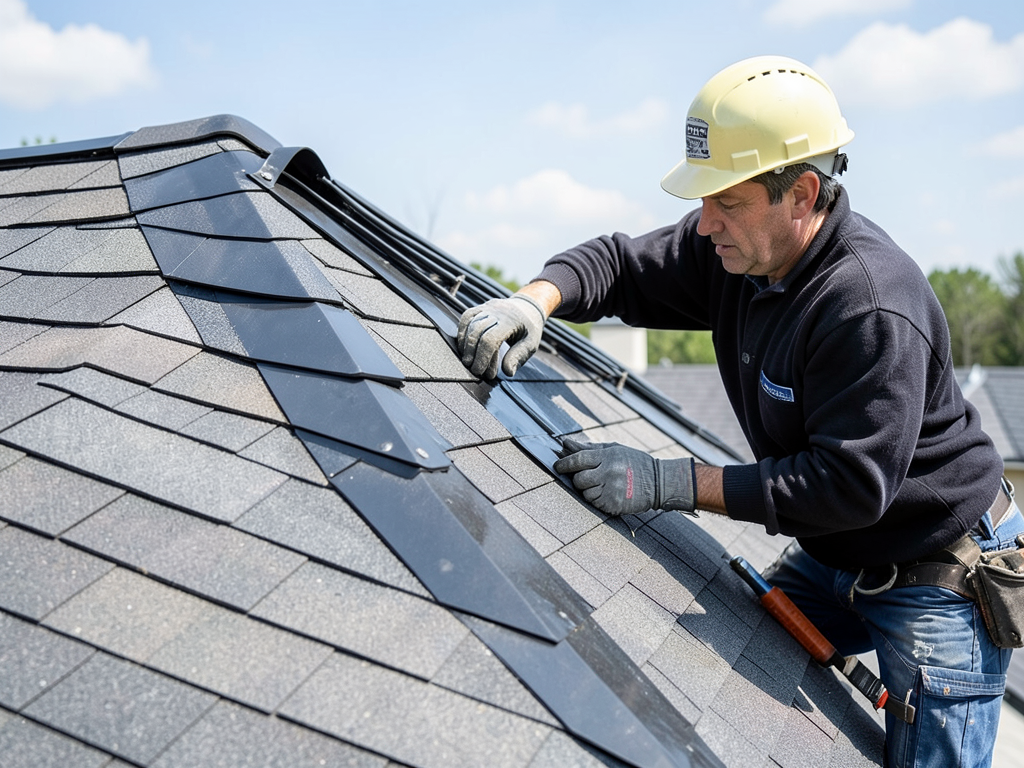
The Difference Between Ridge Vents and Power Fans for Cooling Your Medfield Attic
Hot attics drive up energy bills and shorten roof life in Baltimore’s humid summers. If your Medfield home feels like an oven upstairs, the problem might be poor attic ventilation. Ridge vents and power fans both move hot air out of your attic, but they work in very different ways. Understanding these differences helps you choose the right system for your specific home and climate. Flat Roof Repair for Baltimore Rowhouses — What Every Homeowner in Canton Needs to Know.
Ridge vents are passive systems that use natural airflow along your roof’s peak. Power fans are active systems that use electricity to pull air through your attic space. Both have strengths and weaknesses in Baltimore’s climate where summer humidity regularly exceeds 70% and winter brings freeze-thaw cycles that can damage poorly ventilated roofs.. Read more about How New Attic Insulation Can Actually Extend the Life of Your Towson Roof.
Before deciding, consider your home’s age, roof pitch, and existing ventilation. Many Medfield homes built before 2000 have inadequate ventilation that fails to meet current Maryland building codes. The right choice depends on your specific attic configuration and cooling needs.
How Attic Ventilation Works in Baltimore’s Climate
Attic ventilation follows a simple principle: hot air rises and escapes through upper vents while cooler air enters through lower vents. This creates continuous airflow that removes heat and moisture. In Baltimore’s humid summers, this process prevents heat buildup that can reach 150 degrees Fahrenheit in poorly ventilated attics.
Moisture control matters just as much as heat removal. Baltimore’s average annual rainfall exceeds 40 inches, and summer thunderstorms can dump several inches in hours. Without proper ventilation, this moisture condenses on cool attic surfaces, creating ideal conditions for mold growth and wood rot.
The International Residential Code requires one square foot of net free ventilation area for every 150 square feet of attic floor space. Homes with balanced ridge and soffit vents can use a 1:300 ratio instead. Many Medfield homes fall short of these requirements, especially those with complex roof designs or limited soffit space.
Ridge Vents: The Passive Solution
Ridge vents run along the peak of your roof, creating a continuous exhaust opening protected by a waterproof barrier. They work silently 24/7 without electricity, using wind and thermal convection to move air. The entire ridge length provides uniform ventilation across your attic space.
Installation involves cutting a slot along the roof peak and covering it with a specially designed vent that keeps rain and snow out while allowing air to escape. The vent blends with your roofline, making it nearly invisible from the ground. Most ridge vents include a baffled design that prevents wind-driven rain from entering.
Ridge vents excel in Baltimore’s climate because they work continuously without power consumption. They handle heavy rain well thanks to their protected position along the roof peak. The passive design means no moving parts to wear out or motors to fail during summer heat waves.
However, ridge vents require proper intake ventilation through soffits or other low vents to function correctly. Without adequate intake, they can create negative pressure that pulls conditioned air from your living space, increasing cooling costs. Homes with limited soffit space or complex roof designs may struggle to provide sufficient intake. How Much a New Roof Costs in Towson (2026 Estimates).
Power Attic Fans: Active Cooling
Power attic fans mount on your roof or gable end and use electric motors to pull hot air out of your attic. They move significantly more air than passive vents, often exchanging the entire attic volume every few minutes. Most models include thermostats that activate the fan when attic temperatures reach preset levels.
Solar-powered models eliminate electricity costs but provide less consistent airflow on cloudy days. Hardwired fans offer reliable performance but add to your electric bill. A typical 1,600 CFM fan uses about 300 watts when running, costing roughly $10-15 per month during peak cooling season.
Power fans excel at rapidly cooling hot attics, making them ideal for homes with minimal insulation or those that experience extreme heat buildup. They work well in attics with limited intake ventilation since they create their own airflow pattern. The immediate cooling effect can reduce air conditioning runtime and improve comfort.
The main drawback involves potential negative pressure issues. If your home has air leaks in the ceiling, power fans can pull conditioned air from living spaces into the attic. This not only wastes energy but can also draw moisture-laden air into the attic, potentially causing condensation problems. Proper sealing of the attic floor becomes critical with power ventilation.
Comparing Performance in Baltimore Weather
Baltimore’s high humidity creates unique challenges for both ventilation types. Ridge vents handle humidity passively, allowing moisture to escape naturally with the rising air. They rarely cause condensation problems since they don’t create pressure differentials that pull indoor air into the attic.
Power fans can actually worsen humidity problems if not properly balanced. When they run, they create negative pressure that can pull moist air from your home through ceiling leaks. This moisture condenses on cool attic surfaces, potentially causing more problems than the heat they remove. Homes with power fans need careful air sealing and moisture barriers.
Winter performance differs significantly between the two systems. Ridge vents provide continuous passive ventilation that helps prevent ice dam formation by keeping attic temperatures closer to outdoor levels. Power fans typically shut off at lower temperatures, potentially allowing moisture buildup during winter months when condensation is most problematic.
During Baltimore’s frequent summer thunderstorms, ridge vents’ protected position along the roof peak keeps them functioning while exposed fan housings can allow wind-driven rain entry. However, modern power fans include rain sensors that automatically shut off during storms, preventing water damage.
Installation Considerations for Medfield Homes
Medfield’s mix of mid-century and newer construction creates varied ventilation needs. Homes built before 1980 often lack proper soffit vents, making ridge vent installation challenging without major modifications. These older homes may benefit more from power fans that don’t require intake ventilation.
Roof pitch affects ventilation efficiency. Low-slope roofs under 4:12 pitch may not provide adequate natural airflow for ridge vents to function properly. Power fans work regardless of roof pitch but may require additional intake vents to prevent negative pressure issues.
Attic configuration plays a crucial role. Homes with complex roof designs, multiple valleys, or split-level attics may have areas where air doesn’t circulate well. Power fans can direct airflow to these dead zones, while ridge vents rely on natural convection that may leave some areas stagnant.
Existing insulation impacts ventilation effectiveness. Homes with R-38 or higher insulation in attics may not benefit as much from aggressive ventilation since the insulation barrier already minimizes heat transfer. In these cases, ridge vents often provide adequate moisture control without the energy costs of power fans.
Cost Comparison and Long-Term Value
Initial installation costs vary significantly between the two options. Ridge vent installation typically runs $400-800 for a standard ranch home, including removal of existing ridge caps and installation of new venting. Power fan installation costs $500-1,500 depending on whether you choose solar or hardwired models and whether electrical work is needed.
Operating costs create the biggest long-term difference. Ridge vents cost nothing to operate and require minimal maintenance beyond occasional cleaning. Power fans add $10-30 monthly to electric bills during cooling season, plus potential maintenance costs for motor replacement every 5-10 years. Industrial Roof Replacement.
Energy savings potential varies by home. Power fans can reduce air conditioning runtime by 10-20% in homes with poorly insulated attics or those that experience extreme heat buildup. However, if they pull conditioned air from living spaces, they can actually increase overall energy consumption.
Warranty considerations matter for long-term value. Quality ridge vents typically carry 20-50 year warranties since they have no moving parts. Power fans usually come with 5-10 year warranties, with motor replacement costs potentially reaching $200-400 after the warranty expires.
Net Free Area Requirements and Calculations
Understanding Net Free Area (NFA) helps determine which system provides adequate ventilation. NFA represents the actual open area available for air passage after accounting for louvers, screens, and other restrictions. The International Residential Code requires 1 square foot of NFA per 150 square feet of attic floor area.
For a typical Medfield home with 1,500 square feet of attic space, you need 10 square feet of NFA total, split between intake and exhaust vents. Ridge vents provide about 12 square inches of NFA per linear foot. A 30-foot ridge would provide 360 square inches or 2.5 square feet of exhaust NFA.
Power fans are rated by cubic feet per minute (CFM) of airflow rather than NFA. A 1,600 CFM fan typically requires about 1 square foot of net free intake area to prevent negative pressure. Many installations need additional soffit or gable vents to meet this requirement.
Balanced ventilation systems perform best. The ideal ratio provides equal intake and exhaust NFA. Unbalanced systems can cause pressure issues, moisture problems, or reduced ventilation effectiveness. Professional calculation of your specific attic’s requirements prevents these common installation mistakes.
Common Ventilation Problems in Baltimore Homes
Many Medfield homes suffer from ventilation problems that worsen in Baltimore’s climate. Blocked soffit vents from insulation are extremely common in older homes where insulation has been added without proper vent baffles. This blocks intake air, rendering ridge vents ineffective.
Mixed ventilation types often create problems. Combining ridge vents with roof louvers or gable vents can short-circuit airflow, reducing overall ventilation effectiveness. The conflicting air paths create turbulence that prevents proper attic air exchange.
Undersized ventilation systems fail to meet code requirements. Many homes have only half the required NFA, especially those with complex roof designs where standard calculations don’t account for restricted airflow areas. Professional assessment often reveals the need for significant ventilation upgrades.
Moisture problems manifest as dark spots on rafters, rusty nail heads, or musty odors. These indicate condensation issues that can lead to wood rot and mold growth. Baltimore’s high humidity makes these problems more severe and rapid than in drier climates.
Making the Right Choice for Your Home
Choose ridge vents if your home has adequate soffit ventilation, a simple roof design, and you prefer maintenance-free operation. They work best for well-insulated homes where moisture control matters more than extreme heat removal. The passive design suits Baltimore’s climate where continuous ventilation helps prevent both heat buildup and moisture problems.
Power fans make more sense for homes with limited soffit space, complex roof designs, or those that experience extreme attic heat. They’re ideal when you need rapid cooling after heat waves or have specific hot spots that passive ventilation can’t address. Just ensure proper air sealing to prevent negative pressure issues.
Consider hybrid approaches for challenging situations. Some homes benefit from ridge vents for baseline ventilation supplemented by a small power fan that activates only during extreme heat. This combines the efficiency of passive ventilation with the performance of active cooling when needed most.
Professional assessment prevents costly mistakes. A thorough attic inspection should check existing ventilation, measure attic floor area, evaluate roof pitch and design, and assess moisture levels. This analysis determines whether your current system meets code requirements and identifies the most cost-effective improvements.
Professional Installation and Code Compliance
Maryland building codes require permits for most ventilation modifications. The Baltimore County Department of Permits and Inspections enforces the International Residential Code, which includes specific requirements for attic ventilation ratios, vent placement, and material specifications. DIY installations often violate these codes, creating problems for future home sales. EPA energy efficiency standards.
Professional installers understand local requirements and common Medfield home configurations. They know which vent types work best with different roof materials and can identify potential problems before installation begins. This expertise prevents costly mistakes like cutting into structural members or creating roof leaks.
Quality installation includes proper sealing and weatherproofing. Ridge vent installation requires careful attention to shingle alignment and ridge cap installation to prevent water infiltration. Power fan mounting must include proper flashing and sealing to prevent roof leaks around the housing. Weekend Roofing Service.
Post-installation testing verifies proper function. Professional installers use smoke pencils or thermal imaging to confirm airflow patterns and identify any pressure issues. This testing ensures your new ventilation system actually solves the problems you’re experiencing rather than creating new ones.
Maintenance Requirements and Longevity
Ridge vents require minimal maintenance beyond occasional inspection. Check them annually for debris buildup, animal nesting, or damage from severe weather. Most quality ridge vents last the lifetime of your roof, though the external baffles may need replacement after 20-30 years.
Power fans need more frequent attention. Motors typically last 5-10 years and may need replacement. Fans should be cleaned annually to remove dust and debris that reduce efficiency. Check wiring connections periodically, especially for solar models where exposure to weather can cause corrosion.
Both systems benefit from annual attic inspections. Look for signs of moisture problems, check that insulation hasn’t blocked soffit vents, and verify that all components remain in good condition. Early detection of problems prevents expensive repairs later.
Consider replacement timing when planning roof projects. If your roof needs replacement within five years, it often makes sense to wait and install new ventilation during the reroofing project. This ensures proper integration with new roofing materials and may reduce overall costs.
Energy Efficiency and Environmental Impact
Ridge vents provide the best environmental profile since they consume no electricity and produce no emissions. Their passive operation aligns with sustainable building practices and may contribute to green building certification points. The embodied energy in manufacturing ridge vents is offset by decades of zero-energy operation.
Power fans consume electricity but can reduce overall energy usage by decreasing air conditioning runtime. The net energy impact depends on your home’s insulation levels and the fan’s efficiency. Solar-powered models eliminate operating costs but require energy-intensive manufacturing and may have shorter lifespans than hardwired units.
Both systems contribute to roof longevity by preventing heat damage to shingles. Baltimore’s hot summers can exceed 150 degrees in poorly ventilated attics, accelerating shingle deterioration. Proper ventilation can extend shingle life by 5-10 years, reducing the environmental impact of roof replacement.
Consider the full lifecycle when evaluating environmental impact. Ridge vents’ longevity and zero operating costs typically provide the best long-term environmental profile, though the optimal choice depends on your specific home’s characteristics and local energy sources.
Frequently Asked Questions
Can I install ridge vents on my existing roof?
Yes, ridge vents can be retrofitted to most existing roofs. The process involves removing existing ridge caps, cutting a slot along the roof peak, and installing new venting. However, proper installation requires careful attention to waterproofing and shingle alignment to prevent leaks. Installing a Metal Roof in Columbia — Is It Worth the Investment?.
How do I know if my attic has enough ventilation?
Check for signs like excessive heat in your upstairs rooms, ice dams in winter, or moisture spots on rafters. A professional can measure your attic’s Net Free Area and compare it to code requirements. Homes built before 2000 often fall short of current ventilation standards.
Will power fans void my roof warranty?
Quality power fans installed according to manufacturer specifications won’t void most roof warranties. However, improper installation that creates roof leaks or damages shingles could cause warranty issues. Always use licensed contractors familiar with your roofing material’s specific requirements.
Take Control of Your Attic Temperature Today
Don’t let another Baltimore summer turn your attic into an oven. Whether you need ridge vents for passive, maintenance-free ventilation or power fans for active cooling, the right solution starts with a professional assessment of your specific home. Our team understands Medfield’s unique housing stock and Baltimore’s challenging climate.
Call (443) 455-9099 today to schedule your attic ventilation inspection. We’ll identify problems, calculate your ventilation requirements, and recommend the most cost-effective solution for your home. Our installations meet all Baltimore County building codes and come with warranties you can trust.
Pick up the phone and call (443) 455-9099 before the next heat wave hits. Your energy bills and your roof will thank you. For more information, visit FEMA ventilation guidelines.
{
“@context”: “https://schema.org”,
“@type”: “BlogPosting”,
“headline”: “The Difference Between Ridge Vents and Power Fans for Cooling Your Medfield Attic”,
“description”: “Medfield homeowners need the right attic ventilation to beat Baltimore’s summer heat. Learn how ridge vents and power fans compare for cooling, energy savings, and long-term roof protection.”,
“wordCount”: 2683,
“datePublished”: “2026-04-07T11:30:00.000Z”,
“dateModified”: “2026-04-07T11:30:00.000Z”,
“inLanguage”: “en-US”,
“mainEntityOfPage”: {
“@type”: “WebPage”,
“@id”: “https://aplusroofingbaltimore.com”
},
“publisher”: {
“@type”: “LocalBusiness”,
“name”: “A Plus Roofing Baltimore”,
“url”: “https://aplusroofingbaltimore.com”
},
“author”: {
“@type”: “Organization”,
“name”: “A Plus Roofing Baltimore”,
“url”: “https://aplusroofingbaltimore.com”
},
“image”: {
“@type”: “ImageObject”,
“url”: “https://aplusroofingbaltimore.com/wp-content/uploads/2026/03/the-difference-between-ridge-vents-and-power-fans-1.png”
}
}
{
“@context”: “https://schema.org”,
“@type”: “RoofingContractor”,
“name”: “A Plus Roofing Baltimore”,
“url”: “https://aplusroofingbaltimore.com”,
“address”: {
“@type”: “PostalAddress”,
“addressLocality”: “Baltimore”
},
“areaServed”: {
“@type”: “City”,
“name”: “Baltimore”
}
}
{
“@context”: “https://schema.org”,
“@type”: “FAQPage”,
“mainEntity”: [
{
“@type”: “Question”,
“name”: “Can I install ridge vents on my existing roof?”,
“acceptedAnswer”: {
“@type”: “Answer”,
“text”: “Yes, ridge vents can be retrofitted to most existing roofs. The process involves removing existing ridge caps, cutting a slot along the roof peak, and installing new venting. However, proper installation requires careful attention to waterproofing and shingle alignment to prevent leaks. Installing a Metal Roof in Columbia — Is It Worth the Investment?.”
}
},
{
“@type”: “Question”,
“name”: “How do I know if my attic has enough ventilation?”,
“acceptedAnswer”: {
“@type”: “Answer”,
“text”: “Check for signs like excessive heat in your upstairs rooms, ice dams in winter, or moisture spots on rafters. A professional can measure your attic’s Net Free Area and compare it to code requirements. Homes built before 2000 often fall short of current ventilation standards.”
}
}
]
}
{
“@context”: “https://schema.org”,
“@type”: “BreadcrumbList”,
“itemListElement”: [
{
“@type”: “ListItem”,
“position”: 1,
“name”: “Home”,
“item”: “https://aplusroofingbaltimore.com”
},
{
“@type”: “ListItem”,
“position”: 2,
“name”: “Blog”,
“item”: “https://aplusroofingbaltimore.com/blog”
},
{
“@type”: “ListItem”,
“position”: 3,
“name”: “The Difference Between Ridge Vents and Power Fans for Cooling Your Medfield Attic”
}
]
}
{
“@context”: “https://schema.org”,
“@type”: “Service”,
“serviceType”: “Roofing”,
“provider”: {
“@type”: “LocalBusiness”,
“name”: “A Plus Roofing Baltimore”,
“url”: “https://aplusroofingbaltimore.com”
},
“areaServed”: {
“@type”: “City”,
“name”: “Baltimore”
},
“description”: “Medfield homeowners need the right attic ventilation to beat Baltimore’s summer heat. Learn how ridge vents and power fans compare for cooling, energy savings, and long-term roof protection.”
}