
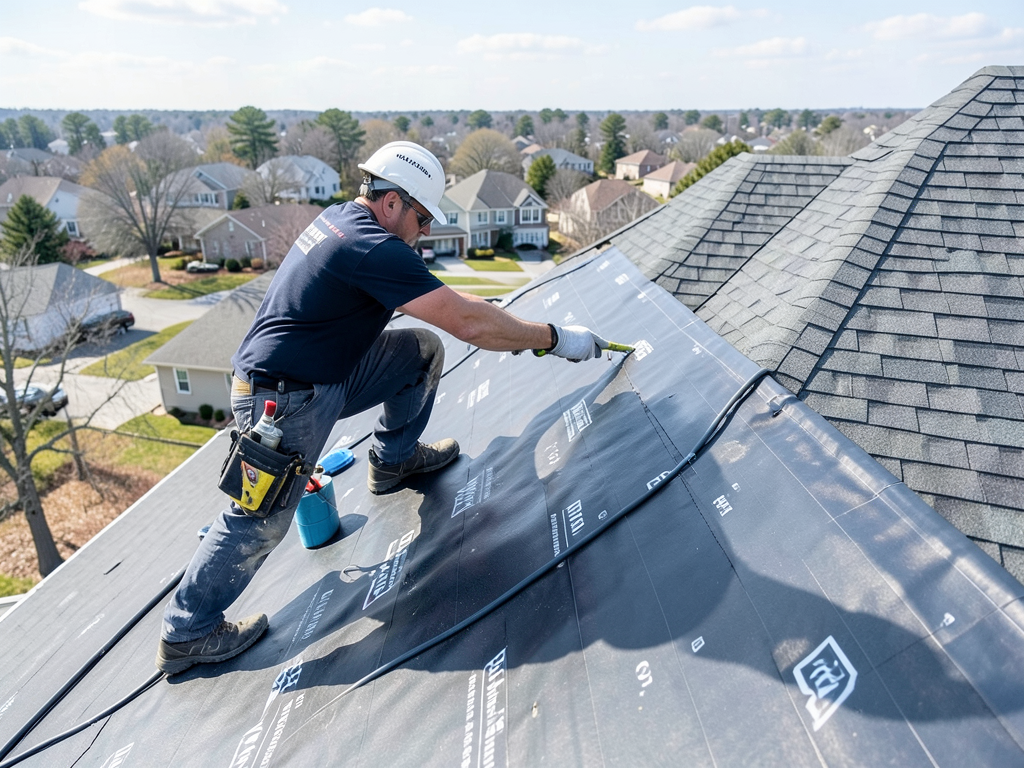
Why Synthetic Underlayment is Far Superior to Felt Paper for Your Reisterstown Roof
Choosing the right underlayment for your Reisterstown roof means the difference between a roof that lasts 15 years and one that fails in half that time. Baltimore’s climate with its high humidity freeze-thaw cycles and heavy storm seasons creates unique challenges that synthetic underlayment handles far better than traditional felt paper. While felt paper has been the standard for decades it absorbs moisture wrinkles and tears under the weight of Maryland winters. Synthetic underlayment provides superior protection against water damage and extends your roof’s lifespan significantly. Flat Roof Repair for Baltimore Rowhouses — What Every Homeowner in Canton Needs to Know.
Comparison at a Glance: Synthetic vs. Traditional Felt
| Feature | Synthetic Underlayment | Traditional Felt |
|---|---|---|
| Weight | Lightweight 20-30 lbs per roll | Heavy 80-100 lbs per roll |
| UV Resistance | 30-180 days exposure | 7-14 days exposure |
| Tear Strength | 200+ lbs per square inch | 20-30 lbs per square inch |
| Moisture Absorption | Negligible | High |
| Cost per Square | $35-50 | $15-25 |
What is Traditional Felt Underlayment?
Traditional felt underlayment consists of asphalt-saturated organic or fiberglass mat. The #15 felt weighs about 15 pounds per roofing square and provides basic water resistance. #30 felt offers slightly better durability at 30 pounds per square but still suffers from the same fundamental weaknesses. When exposed to Baltimore’s summer humidity felt paper absorbs moisture causing it to wrinkle and bubble. These imperfections telegraph through asphalt shingles creating visible waves across your roof surface. Weekend Roofing Service.
During winter storms ice dams form at roof edges. Traditional felt underlayment becomes brittle in freezing temperatures and develops cracks. Water seeps through these cracks into your attic causing mold growth and structural damage. The material tears easily when walked on especially in cold weather making installation dangerous for roofing crews.
What is Synthetic Underlayment?
Synthetic underlayment uses woven or spun-bonded polypropylene or polyethylene materials. These polymers create a water-resistant barrier that does not absorb moisture. High-quality synthetic products like GAF Deck-Armor or Owens Corning ProArmor feature microscopic pores that allow water vapor to escape while blocking liquid water penetration.
The material weighs significantly less than felt paper making it easier to transport and install. Workers can walk across synthetic underlayment without fear of tearing even when wet. The slip-resistant surface provides better footing during installation reducing workplace accidents. Most synthetic products include UV inhibitors allowing exposure for 30-180 days compared to felt paper’s 7-14 day limit.
Why Baltimore Weather Matters for Your Choice
Reisterstown sits in Baltimore County’s northern tier experiencing some of the harshest weather in the metro area. Winter temperatures regularly drop below freezing causing repeated freeze-thaw cycles. Water trapped under shingles expands when frozen creating pressure that forces nails upward and breaks adhesive seals.
Summer humidity in Reisterstown often exceeds 85% causing traditional felt to absorb moisture like a sponge. This absorbed water adds significant weight to your roof structure. The moisture also creates perfect conditions for mold and mildew growth between the felt and your roof deck. Synthetic underlayment’s hydrophobic properties prevent this moisture absorption maintaining consistent weight and preventing biological growth.
Atlantic storm systems bring wind-driven rain that tests your roof’s water resistance. Synthetic underlayment’s higher tear strength and better nail seal properties keep water out where traditional felt fails. The material maintains flexibility in cold weather preventing the cracking that occurs with asphalt-based products.
Cost Analysis for Maryland Homeowners
Installing synthetic underlayment on a typical 2000 square foot Reisterstown home adds $700-1000 to your roofing project. Traditional felt installation costs $300-500 for the same area. The price difference represents 15-20% of total underlayment costs but delivers significantly better performance. How Much a New Roof Costs in Towson (2026 Estimates).
Consider the long-term value. A roof with synthetic underlayment lasts 5-7 years longer than one with traditional felt. That extended lifespan means you delay the $8000-12000 replacement cost by nearly a decade. Synthetic underlayment also reduces the likelihood of water damage repairs which average $2500-4000 when leaks occur. EPA Building America Best Practices.
Insurance companies increasingly recognize synthetic underlayment’s superior performance. Some carriers offer premium discounts for homes with high-quality roofing materials. The improved moisture protection also reduces the risk of mold claims which can increase your rates significantly.
Installation Comparison
Roofing crews complete synthetic underlayment installation 25-30% faster than traditional felt. The lightweight rolls are easier to carry up ladders and across roof slopes. Workers unroll the material without worrying about tears or wrinkles. Most synthetic products feature overlapping edges with built-in adhesive strips creating watertight seams without additional fasteners.
Safety improves dramatically with synthetic underlayment. The slip-resistant surface provides better traction especially on steep slopes common in Reisterstown’s older neighborhoods. Crews can work in wet conditions that would make felt installation dangerous. The material’s consistent texture allows workers to maintain footing even when morning dew or light rain creates slick conditions.
Weather delays decrease with synthetic products. Traditional felt requires dry installation conditions to prevent moisture absorption before shingles install. Synthetic underlayment installs in light rain and tolerates brief exposure to moisture without degradation. This flexibility allows crews to maintain schedules during Maryland’s unpredictable spring and fall weather patterns.
Frequently Asked Questions
Can I mix synthetic underlayment with traditional felt on the same roof?
Mixing materials creates compatibility issues and voids most manufacturer warranties. Stick with one type throughout your entire roof for consistent performance and warranty coverage.
Is synthetic underlayment worth the extra money?
Yes. The additional $500-700 investment pays for itself through extended roof life reduced repair costs and better moisture protection. Most homeowners recoup the cost within 5-7 years through avoided repairs and delayed replacement. Industrial Roof Replacement.
Does my warranty require synthetic underlayment?
Many shingle manufacturers require specific synthetic underlayment products to maintain their full warranty coverage. Check your shingle warranty requirements before selecting underlayment materials.
How long does synthetic underlayment last compared to felt?
Synthetic underlayment lasts 25-30 years while traditional felt typically needs replacement after 15-20 years. The synthetic material maintains its properties throughout your roof’s lifespan while felt degrades from UV exposure and moisture absorption.
Can synthetic underlayment handle heavy snow loads?
Yes. Synthetic underlayment maintains flexibility in cold temperatures and resists tearing under the weight of snow and ice. The material’s consistent thickness provides uniform support across your entire roof deck.
Making the Right Choice for Your Reisterstown Home
Your roof represents one of your home’s most important investments. Baltimore’s climate with its humidity freeze-thaw cycles and severe storms demands materials that can withstand these challenges. Synthetic underlayment provides superior protection against water damage extends your roof’s lifespan and reduces long-term maintenance costs.
Professional roofing contractors in Reisterstown increasingly recommend synthetic underlayment for all new installations and replacements. The material’s benefits far outweigh the modest additional cost. When you consider the extended roof life reduced repair needs and improved home protection synthetic underlayment delivers exceptional value.
Don’t let traditional felt paper compromise your roof’s performance. Baltimore’s weather patterns continue to intensify with more frequent severe storms and wider temperature swings. Your roof needs modern materials designed for these conditions not 50-year-old technology that fails when you need it most.
Ready to Upgrade Your Roof Protection?
Call (443) 455-9099 today to schedule your inspection and get a detailed quote comparing synthetic underlayment with traditional felt options. Our Reisterstown roofing experts will show you exactly how synthetic underlayment protects your home better and saves you money over time. Don’t wait until the next storm reveals your roof’s weaknesses. Pick up the phone and call (443) 455-9099 before the next Baltimore downpour hits.
Protect your Reisterstown home with synthetic underlayment that stands up to Maryland weather. Call (443) 455-9099 now for your free consultation. For more information, visit ASHRAE Technical Resources.
{
“@context”: “https://schema.org”,
“@type”: “BlogPosting”,
“headline”: “Why Synthetic Underlayment is Far Superior to Felt Paper for Your Reisterstown Roof”,
“description”: “Discover why synthetic underlayment outperforms felt paper in Reisterstown’s harsh climate. Learn about durability, moisture resistance, and long-term savings for your roof.”,
“wordCount”: 1288,
“datePublished”: “2026-05-06T14:00:00.000Z”,
“dateModified”: “2026-05-06T14:00:00.000Z”,
“inLanguage”: “en-US”,
“mainEntityOfPage”: {
“@type”: “WebPage”,
“@id”: “https://aplusroofingbaltimore.com”
},
“publisher”: {
“@type”: “LocalBusiness”,
“name”: “A Plus Roofing Baltimore”,
“url”: “https://aplusroofingbaltimore.com”
},
“author”: {
“@type”: “Organization”,
“name”: “A Plus Roofing Baltimore”,
“url”: “https://aplusroofingbaltimore.com”
},
“image”: {
“@type”: “ImageObject”,
“url”: “https://aplusroofingbaltimore.com/wp-content/uploads/2026/03/why-synthetic-underlayment-is-far-superior-to-felt-1.png”
}
}
{
“@context”: “https://schema.org”,
“@type”: “RoofingContractor”,
“name”: “A Plus Roofing Baltimore”,
“url”: “https://aplusroofingbaltimore.com”,
“address”: {
“@type”: “PostalAddress”,
“addressLocality”: “Baltimore”
},
“areaServed”: {
“@type”: “City”,
“name”: “Baltimore”
}
}
{
“@context”: “https://schema.org”,
“@type”: “FAQPage”,
“mainEntity”: [
{
“@type”: “Question”,
“name”: “What is Traditional Felt Underlayment?”,
“acceptedAnswer”: {
“@type”: “Answer”,
“text”: “Traditional felt underlayment consists of asphalt-saturated organic or fiberglass mat. The #15 felt weighs about 15 pounds per roofing square and provides basic water resistance. #30 felt offers slightly better durability at 30 pounds per square but still suffers from the same fundamental weaknesses. When exposed to Baltimore’s summer humidity felt paper absorbs moisture causing it to wrinkle and bubble. These imperfections telegraph through asphalt shingles creating visible waves across your roof surface. Weekend Roofing Service.”
}
},
{
“@type”: “Question”,
“name”: “What is Synthetic Underlayment?”,
“acceptedAnswer”: {
“@type”: “Answer”,
“text”: “Synthetic underlayment uses woven or spun-bonded polypropylene or polyethylene materials. These polymers create a water-resistant barrier that does not absorb moisture. High-quality synthetic products like GAF Deck-Armor or Owens Corning ProArmor feature microscopic pores that allow water vapor to escape while blocking liquid water penetration.”
}
},
{
“@type”: “Question”,
“name”: “Can I mix synthetic underlayment with traditional felt on the same roof?”,
“acceptedAnswer”: {
“@type”: “Answer”,
“text”: “Mixing materials creates compatibility issues and voids most manufacturer warranties. Stick with one type throughout your entire roof for consistent performance and warranty coverage.”
}
},
{
“@type”: “Question”,
“name”: “Is synthetic underlayment worth the extra money?”,
“acceptedAnswer”: {
“@type”: “Answer”,
“text”: “Yes. The additional $500-700 investment pays for itself through extended roof life reduced repair costs and better moisture protection. Most homeowners recoup the cost within 5-7 years through avoided repairs and delayed replacement. Industrial Roof Replacement.”
}
},
{
“@type”: “Question”,
“name”: “Does my warranty require synthetic underlayment?”,
“acceptedAnswer”: {
“@type”: “Answer”,
“text”: “Many shingle manufacturers require specific synthetic underlayment products to maintain their full warranty coverage. Check your shingle warranty requirements before selecting underlayment materials.”
}
},
{
“@type”: “Question”,
“name”: “How long does synthetic underlayment last compared to felt?”,
“acceptedAnswer”: {
“@type”: “Answer”,
“text”: “Synthetic underlayment lasts 25-30 years while traditional felt typically needs replacement after 15-20 years. The synthetic material maintains its properties throughout your roof’s lifespan while felt degrades from UV exposure and moisture absorption.”
}
},
{
“@type”: “Question”,
“name”: “Can synthetic underlayment handle heavy snow loads?”,
“acceptedAnswer”: {
“@type”: “Answer”,
“text”: “Yes. Synthetic underlayment maintains flexibility in cold temperatures and resists tearing under the weight of snow and ice. The material’s consistent thickness provides uniform support across your entire roof deck.”
}
},
{
“@type”: “Question”,
“name”: “Ready to Upgrade Your Roof Protection?”,
“acceptedAnswer”: {
“@type”: “Answer”,
“text”: “Call (443) 455-9099 today to schedule your inspection and get a detailed quote comparing synthetic underlayment with traditional felt options. Our Reisterstown roofing experts will show you exactly how synthetic underlayment protects your home better and saves you money over time. Don’t wait until the next storm reveals your roof’s weaknesses. Pick up the phone and call (443) 455-9099 before the next Baltimore downpour hits.”
}
}
]
}
{
“@context”: “https://schema.org”,
“@type”: “BreadcrumbList”,
“itemListElement”: [
{
“@type”: “ListItem”,
“position”: 1,
“name”: “Home”,
“item”: “https://aplusroofingbaltimore.com”
},
{
“@type”: “ListItem”,
“position”: 2,
“name”: “Blog”,
“item”: “https://aplusroofingbaltimore.com/blog”
},
{
“@type”: “ListItem”,
“position”: 3,
“name”: “Why Synthetic Underlayment is Far Superior to Felt Paper for Your Reisterstown Roof”
}
]
}
{
“@context”: “https://schema.org”,
“@type”: “Service”,
“serviceType”: “Roofing”,
“provider”: {
“@type”: “LocalBusiness”,
“name”: “A Plus Roofing Baltimore”,
“url”: “https://aplusroofingbaltimore.com”
},
“areaServed”: {
“@type”: “City”,
“name”: “Baltimore”
},
“description”: “Discover why synthetic underlayment outperforms felt paper in Reisterstown’s harsh climate. Learn about durability, moisture resistance, and long-term savings for your roof.”
}