
Why the Rubber Boot Around Your Mayfield Roof Pipe is Probably Leaking
Water stains on your ceiling near bathrooms or kitchens often mean a failing rubber boot around your plumbing vent pipe. In Mayfield’s older homes, neoprene seals crack from Baltimore’s humidity and freeze-thaw cycles, letting water seep into your attic. This guide explains how to spot the signs, understand the causes, and know when to call a professional roofer before minor damage becomes a major repair. Flat Roof Repair for Baltimore Rowhouses — What Every Homeowner in Canton Needs to Know.
How Roof Pipe Boots Work and Why They Fail
A roof pipe boot is a flexible rubber or neoprene collar that seals around plumbing vent pipes where they penetrate your roof. The boot creates a watertight barrier between the pipe and roofing material. Over time, Baltimore’s weather breaks down these seals. UV rays from summer sun make rubber brittle. Winter freeze-thaw cycles cause expansion and contraction that creates hairline cracks. High humidity traps moisture against the seal, accelerating deterioration. Squirrels and raccoons often chew on boots looking for water, creating larger tears. When the seal fails, rainwater flows down the pipe into your attic instead of draining off your roof.
Common Signs Your Pipe Boot Needs Replacement
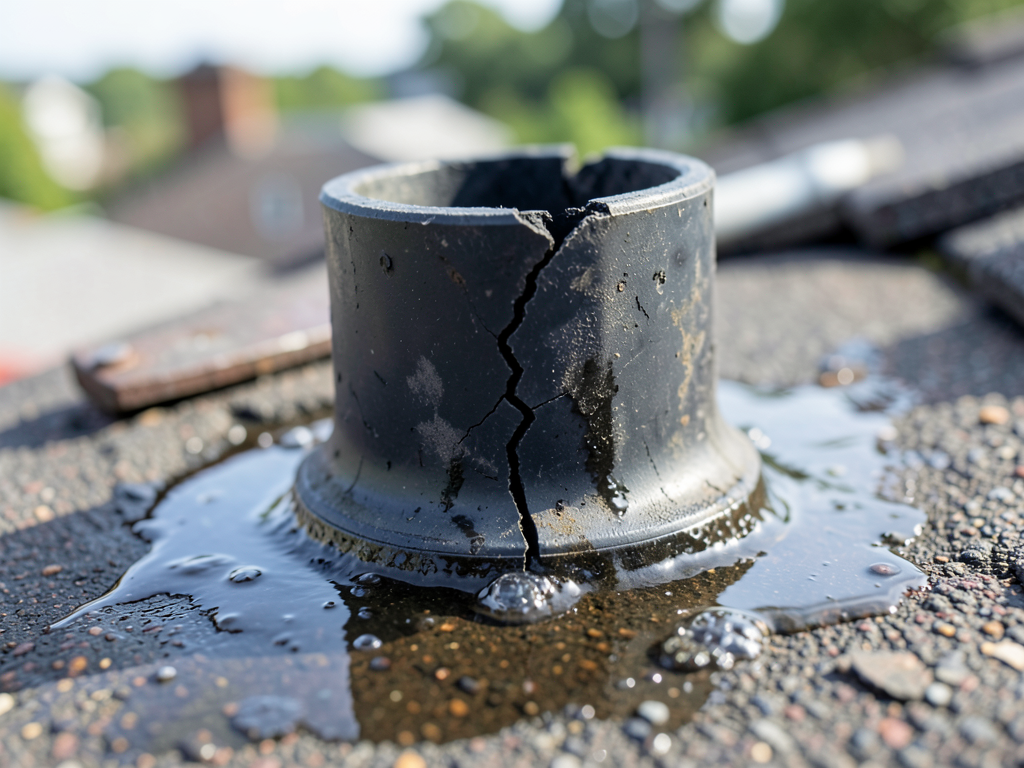
Water spots on your ceiling near bathrooms or kitchens often indicate a pipe boot leak. Attic mold or mildew smells point to moisture intrusion from above. Peeling paint or bubbling drywall around vent pipes shows water damage. Visible cracks, splits, or missing pieces in the rubber collar mean the seal has failed. Rust stains on metal flashing suggest water is getting past the boot. If you see daylight through the roof around a pipe from inside your attic, the seal is completely compromised. These symptoms worsen quickly during Baltimore’s rainy season. Installing a Metal Roof in Columbia — Is It Worth the Investment?.
Types of Pipe Boots and Which Lasts Longest
Neoprene boots are standard on most homes but last only 7-10 years in Baltimore’s climate. Lead boots offer superior durability and can last 30+ years, though they cost more upfront. Silicone boots resist UV damage better than rubber but may not flex as well in extreme cold. Galvanized steel boots with rubber seals provide a middle ground between cost and longevity. EPDM rubber boots work well for flat roofs common in Baltimore rowhouses. The best choice depends on your roof pitch, pipe material, and local weather exposure. A professional inspection can recommend the right boot for your specific situation.
DIY vs Professional Pipe Boot Repair: What’s the Risk?
Climbing on your roof carries serious fall risks, especially on sloped surfaces. DIY repairs often use incorrect sealants that fail within months. Proper installation requires removing shingles around the pipe, which can damage surrounding roofing if done incorrectly. Professionals use code-compliant materials and ensure proper flashing integration. They also check for underlying damage to roof decking or insulation that DIYers might miss. Baltimore building codes require permits for certain roof penetrations. A licensed roofer knows these requirements and can handle the paperwork. The small savings from DIY often leads to bigger problems and costs later. How Much a New Roof Costs in Towson (2026 Estimates).
Step-by-Step Pipe Boot Replacement Process
The repair starts with a thorough attic inspection to assess water damage extent. Technicians remove surrounding shingles carefully to access the old boot. They clean the pipe surface and check for corrosion or damage. The new boot slides over the pipe and seals against the roof deck. High-grade roofing sealant creates a waterproof barrier around the boot’s base. Shingles reinstall over the boot flange following manufacturer patterns. Final inspection ensures proper water shedding and no exposed nail heads. The entire process typically takes 2-3 hours for a single pipe boot replacement. Industrial Roof Replacement.
Cost Factors for Pipe Boot Repair in Baltimore
Basic neoprene boot replacement costs $150-250 in Baltimore, including labor and materials. Lead boots run $300-400 due to material costs. Complex repairs involving water damage to decking add $200-500. Emergency weekend service calls carry a $75-100 premium. Homes in historic districts may require special materials meeting preservation guidelines, increasing costs by 15-20%. Multi-story homes need additional safety equipment, adding $50-75 to the job. Most repairs include a 1-year workmanship warranty. Insurance may cover repairs if damage results from covered perils like wind or hail.
Preventing Future Pipe Boot Failures
Annual roof inspections catch boot deterioration before leaks develop. Trim tree branches that drop debris on your roof, as organic matter holds moisture against seals. Install squirrel guards around pipes to prevent animal damage. Ensure proper attic ventilation to reduce humidity that accelerates rubber breakdown. Replace boots proactively at 7-8 years rather than waiting for failure. Use UV-resistant caulk when sealing any roof penetrations. Keep gutters clean to prevent ice dam formation that can back up under boots. These simple steps extend boot life and prevent costly water damage.. Read more about Stopping Constant Leaks on Mobile Home Roofs in Joppa Without Spending a Fortune.
Local Building Codes and Permit Requirements
Baltimore County requires permits for roof penetrations that alter the roof structure or waterproofing system. The Maryland Building Performance Standards mandate specific flashing details for pipe boots on slopes over 4:12. NEC Article 300.6 requires proper bonding of metal vent pipes to prevent galvanic corrosion. EPA regulations require lead-free solder on potable water pipes, affecting boot compatibility. Local codes also specify minimum headlap for shingles over boot flanges. A licensed Baltimore roofer knows these requirements and ensures your repair meets all local standards, preventing code violation issues when selling your home. Maryland Building Performance Standards.
Emergency Response for Active Leaks
Active leaks require immediate attention to prevent structural damage. Place buckets under ceiling leaks to catch water. Move furniture and valuables away from affected areas. If safe, inspect your attic for the leak source using a flashlight. Avoid walking on wet ceiling drywall as it may collapse. Call a roofer immediately rather than waiting for regular business hours. Many Baltimore contractors offer 24/7 emergency service for active leaks. Temporary tarping can prevent further damage until permanent repairs begin. Document damage with photos for insurance purposes.
Frequently Asked Questions
How long does a typical rubber boot last in Baltimore’s climate?
Most neoprene pipe boots last 7-10 years in Baltimore due to humidity, UV exposure, and freeze-thaw cycles. Lead boots can last 30+ years but cost more upfront.
Can I just seal a cracked boot with caulk instead of replacing it?
Temporary caulk seals often fail within months. Proper replacement involves removing shingles and installing a new boot with correct flashing, which provides a lasting repair.
Will my homeowner’s insurance cover pipe boot replacement?
Insurance typically covers sudden damage from covered perils like storms but not gradual deterioration from normal wear. Check your policy details or ask your agent.
How can I tell if my pipe boot is failing before I see ceiling stains?
Look for visible cracks, splits, or missing pieces in the rubber. Check for rust stains on metal flashing. Attic inspections can reveal moisture before it reaches your living space. Metal Retrofit Roofing.
Is it normal for pipe boots to make noise when it’s windy?
Squeaking or flapping sounds indicate the boot is loose or damaged. This allows wind-driven rain to enter and should be repaired promptly.
Protect Your Mayfield Home from Water Damage
Don’t wait for ceiling stains to appear before addressing a failing pipe boot. Baltimore’s weather puts extra stress on these seals, and small problems become expensive repairs quickly. A professional inspection can identify issues before they cause major damage. Call (443) 455-9099 today to schedule your roof inspection and keep your Mayfield home dry and protected. Our licensed technicians understand local building codes and use materials proven to withstand Maryland’s climate. For more information, visit NEC Article 300.6.
You may also find this helpful. Upgrading Your Builder-Grade Roof in Severn Before It Starts Leaking.
{
“@context”: “https://schema.org”,
“@type”: “BlogPosting”,
“headline”: “Why the Rubber Boot Around Your Mayfield Roof Pipe is Probably Leaking”,
“description”: “Is your Mayfield roof leaking? Learn why rubber pipe boots fail in Baltimore’s climate and how to prevent costly water damage to your home.”,
“wordCount”: 1294,
“datePublished”: “2026-04-16T12:38:00.000Z”,
“dateModified”: “2026-04-16T12:38:00.000Z”,
“inLanguage”: “en-US”,
“mainEntityOfPage”: {
“@type”: “WebPage”,
“@id”: “https://aplusroofingbaltimore.com”
},
“publisher”: {
“@type”: “LocalBusiness”,
“name”: “A Plus Roofing Baltimore”,
“url”: “https://aplusroofingbaltimore.com”
},
“author”: {
“@type”: “Organization”,
“name”: “A Plus Roofing Baltimore”,
“url”: “https://aplusroofingbaltimore.com”
},
“image”: {
“@type”: “ImageObject”,
“url”: “https://aplusroofingbaltimore.com/wp-content/uploads/2026/03/why-the-rubber-boot-around-your-mayfield-roof-pipe-1.png”
}
}
{
“@context”: “https://schema.org”,
“@type”: “RoofingContractor”,
“name”: “A Plus Roofing Baltimore”,
“url”: “https://aplusroofingbaltimore.com”,
“address”: {
“@type”: “PostalAddress”,
“addressLocality”: “Baltimore”
},
“areaServed”: {
“@type”: “City”,
“name”: “Baltimore”
}
}
{
“@context”: “https://schema.org”,
“@type”: “FAQPage”,
“mainEntity”: [
{
“@type”: “Question”,
“name”: “DIY vs Professional Pipe Boot Repair: What’s the Risk?”,
“acceptedAnswer”: {
“@type”: “Answer”,
“text”: “Climbing on your roof carries serious fall risks, especially on sloped surfaces. DIY repairs often use incorrect sealants that fail within months. Proper installation requires removing shingles around the pipe, which can damage surrounding roofing if done incorrectly. Professionals use code-compliant materials and ensure proper flashing integration. They also check for underlying damage to roof decking or insulation that DIYers might miss. Baltimore building codes require permits for certain roof penetrations. A licensed roofer knows these requirements and can handle the paperwork. The small savings from DIY often leads to bigger problems and costs later. How Much a New Roof Costs in Towson (2026 Estimates).”
}
},
{
“@type”: “Question”,
“name”: “How long does a typical rubber boot last in Baltimore’s climate?”,
“acceptedAnswer”: {
“@type”: “Answer”,
“text”: “Most neoprene pipe boots last 7-10 years in Baltimore due to humidity, UV exposure, and freeze-thaw cycles. Lead boots can last 30+ years but cost more upfront.”
}
},
{
“@type”: “Question”,
“name”: “Can I just seal a cracked boot with caulk instead of replacing it?”,
“acceptedAnswer”: {
“@type”: “Answer”,
“text”: “Temporary caulk seals often fail within months. Proper replacement involves removing shingles and installing a new boot with correct flashing, which provides a lasting repair.”
}
},
{
“@type”: “Question”,
“name”: “Will my homeowner’s insurance cover pipe boot replacement?”,
“acceptedAnswer”: {
“@type”: “Answer”,
“text”: “Insurance typically covers sudden damage from covered perils like storms but not gradual deterioration from normal wear. Check your policy details or ask your agent.”
}
},
{
“@type”: “Question”,
“name”: “How can I tell if my pipe boot is failing before I see ceiling stains?”,
“acceptedAnswer”: {
“@type”: “Answer”,
“text”: “Look for visible cracks, splits, or missing pieces in the rubber. Check for rust stains on metal flashing. Attic inspections can reveal moisture before it reaches your living space. Metal Retrofit Roofing.”
}
},
{
“@type”: “Question”,
“name”: “Is it normal for pipe boots to make noise when it’s windy?”,
“acceptedAnswer”: {
“@type”: “Answer”,
“text”: “Squeaking or flapping sounds indicate the boot is loose or damaged. This allows wind-driven rain to enter and should be repaired promptly.”
}
}
]
}
{
“@context”: “https://schema.org”,
“@type”: “BreadcrumbList”,
“itemListElement”: [
{
“@type”: “ListItem”,
“position”: 1,
“name”: “Home”,
“item”: “https://aplusroofingbaltimore.com”
},
{
“@type”: “ListItem”,
“position”: 2,
“name”: “Blog”,
“item”: “https://aplusroofingbaltimore.com/blog”
},
{
“@type”: “ListItem”,
“position”: 3,
“name”: “Why the Rubber Boot Around Your Mayfield Roof Pipe is Probably Leaking”
}
]
}
{
“@context”: “https://schema.org”,
“@type”: “Service”,
“serviceType”: “Roofing”,
“provider”: {
“@type”: “LocalBusiness”,
“name”: “A Plus Roofing Baltimore”,
“url”: “https://aplusroofingbaltimore.com”
},
“areaServed”: {
“@type”: “City”,
“name”: “Baltimore”
},
“description”: “Is your Mayfield roof leaking? Learn why rubber pipe boots fail in Baltimore’s climate and how to prevent costly water damage to your home.”
}