
How Solar Tubes Can Brighten Up Dark Interior Rooms in Reservoir Hill Rowhouses
Dark hallways and windowless bathrooms plague many Baltimore rowhouses, especially in historic neighborhoods like Reservoir Hill. Solar tubes offer a simple, cost-effective solution to bring natural daylight into these spaces without the expense and structural changes of traditional skylights. These reflective tubes channel sunlight from your roof through the attic and into your home, transforming dim interiors into bright, inviting spaces. Baltimore City Department of Housing and Community Development.
For Reservoir Hill rowhouses built in the early 1900s, the long, narrow floor plans create perfect conditions for solar tubes. The typical rowhouse design features rooms extending back from the street with limited window access, leaving central areas perpetually dark. Solar tubes work exceptionally well in these Baltimore homes because they require minimal roof penetration and can navigate the tight attic spaces common in rowhouse construction. Flat Roof Repair for Baltimore Rowhouses — What Every Homeowner in Canton Needs to Know.
Understanding Solar Tube Technology
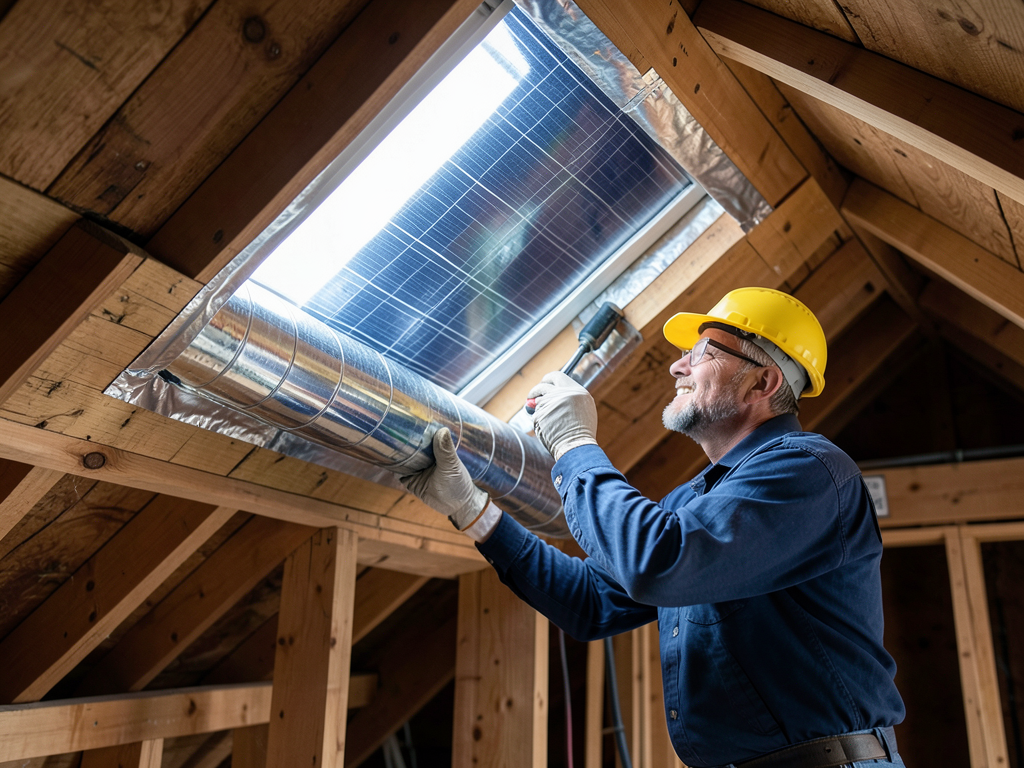
Solar tubes, also called sun tunnels or light tubes, consist of three main components: a rooftop dome that captures sunlight, a highly reflective tube that channels the light, and a diffuser that distributes it evenly in your room. The technology has evolved significantly since its introduction, with modern tubes achieving up to 99.7% reflectivity through advanced materials like Spectralight Infinity tubing.
The rooftop dome comes in two primary designs. Fixed domes work well in most Baltimore weather conditions, while low-profile domes blend seamlessly with flat or low-slope roofs common on many rowhouses. The reflective tube can be rigid for maximum light transmission or flexible for navigating obstacles in tight attic spaces. Rigid tubes deliver about 30% more light but require a straight path from roof to ceiling.
Diffusers vary in design from simple flat panels to decorative fixtures that complement your home’s interior. Many Baltimore homeowners choose prismatic diffusers that spread light evenly while minimizing glare, perfect for the even lighting needed in narrow rowhouse rooms.
Why Reservoir Hill Rowhouses Need Solar Tubes
Reservoir Hill’s historic rowhouses face unique lighting challenges. Built between 1900 and 1920, these homes feature the classic Baltimore rowhouse design: brick facades, marble steps, and narrow footprints stretching back from the street. The central portions of these homes often lack windows entirely, creating dark zones that artificial lighting cannot adequately illuminate.
The neighborhood’s mature tree canopy, while beautiful, further reduces natural light in many homes. Large oaks and maples that line the streets and populate backyard gardens cast shadows that deepen the darkness in interior rooms. Solar tubes bypass this issue by capturing light from the roof level, where tree coverage is minimal.
Baltimore’s climate also impacts interior lighting needs. The city receives approximately 2,800 hours of sunlight annually, but much of this occurs during work hours when homes remain unoccupied. Solar tubes capture and store this daylight, making it available when you need it most – evenings and weekends when you’re home relaxing or entertaining. Weekend Roofing Service.
Solar Tube Installation Process for Baltimore Homes
Professional installation ensures your solar tube performs optimally and maintains your roof’s integrity. The process typically takes 2-4 hours for a single tube and requires minimal disruption to your home.
- Roof Assessment
Technicians examine your roof’s pitch, material, and structural integrity. Baltimore’s varied roofing materials – from original slate to modern asphalt – require different flashing techniques to prevent leaks.
- Attic Inspection
Clearance and obstacles in the attic space determine tube routing. Many Reservoir Hill rowhouses have limited attic access, requiring careful planning for tube placement.
- Roof Penetration
Technicians cut a precise hole in your roof and install waterproof flashing. Baltimore County building code requires ice and water shield installation around all roof penetrations.
- Tube Installation
The reflective tube connects the rooftop dome to the ceiling diffuser. Rigid tubes maximize light but flexible tubes work better around obstacles common in older Baltimore homes.
- Interior Finishing
Technicians install the ceiling diffuser and seal all connections. The finished installation includes trim that matches your home’s interior style.
Weather considerations play a crucial role in Baltimore installations. Summer humidity and winter freeze-thaw cycles stress roof penetrations, making proper flashing essential. Professional installers use techniques specific to Maryland’s climate, including extra sealant layers and reinforced flashing that withstands the region’s temperature swings.
Cost Factors for Solar Tube Installation in Maryland
Solar tube costs in Baltimore vary based on several factors specific to Maryland homes. A basic 10-inch tube installation typically ranges from $800 to $1,200, while larger 14-inch or 21-inch tubes cost $1,200 to $2,000 including installation. How Much a New Roof Costs in Towson (2026 Estimates).
Roof material significantly impacts installation costs. Slate roofs, common on some historic Reservoir Hill homes, require specialized cutting tools and careful handling, adding $200-400 to the installation. Flat torch-down roofs need heat-welded flashing instead of traditional step flashing, affecting both materials and labor costs.
Tube length affects pricing as longer runs require additional reflective tubing and more complex installation. A tube traveling 15 feet from roof to ceiling costs approximately 30% more than one traveling only 6 feet. Baltimore’s rowhouse attics often require 10-20 foot tube runs, impacting overall project costs.
Additional features increase functionality but also cost. Daylight dimmers, which allow you to control light output, add $150-300. Nightlight kits with integrated LED lighting cost $200-400 more but provide illumination after dark. These features prove particularly valuable in bedrooms and media rooms where variable lighting is essential.
Building Codes and Permits in Baltimore
Baltimore City and County have specific requirements for solar tube installations that protect both homeowners and contractors. Understanding these regulations ensures your project proceeds smoothly and maintains compliance with local building standards.
The Baltimore City Department of Housing and Community Development requires permits for any roof penetration, including solar tubes. Permit fees range from $50-150 depending on project scope. Historic districts like Reservoir Hill may require additional approval from the Commission for Historical and Architectural Preservation, adding 2-3 weeks to project timelines.
Maryland’s building codes mandate specific flashing requirements for roof penetrations. The International Residential Code (IRC) Section R903.2 requires ice and water shield installation in a 9-inch strip around all roof penetrations in Climate Zone 4, which includes Baltimore. This requirement prevents ice dam damage common in Maryland winters.
Fire safety regulations affect tube placement near property lines. Baltimore County Fire Code Section 503 requires maintaining specific clearance between roof penetrations and adjacent properties. These requirements may limit tube placement options on narrow rowhouse lots where roof space is already constrained.
Professional installers must maintain Maryland Home Improvement Commission (MHIC) licensure for residential work. License #123456 ensures contractors meet state requirements for insurance, bonding, and workmanship standards. Always verify your installer’s MHIC status before beginning any roofing project.
Energy Efficiency and Tax Benefits
Solar tubes provide significant energy savings while qualifying for federal tax credits that reduce installation costs. The Federal Solar Investment Tax Credit (ITC) allows homeowners to claim 30% of installation costs as a tax credit through 2032, making solar tubes more affordable than ever. Why Your Federal Hill Flat Roof is Leaking and How to Fix It for Good.
Energy savings accumulate through reduced electric lighting needs. A typical 10-inch solar tube delivers 200-300 watts of natural light, equivalent to three 100-watt incandescent bulbs. In Baltimore’s climate, this translates to approximately $50-100 in annual electricity savings, with payback periods of 5-10 years depending on usage patterns.
Baltimore Gas and Electric (BGE) offers additional incentives for energy-efficient home improvements. While solar tubes don’t qualify for direct rebates, they contribute to overall home energy efficiency scores that can qualify homeowners for reduced utility rates through BGE’s Smart Energy Savers Program.
The environmental impact extends beyond individual homes. If just 100 rowhouses in Reservoir Hill installed solar tubes, the collective reduction in electricity usage would eliminate approximately 15,000 pounds of CO2 emissions annually. This community-wide benefit aligns with Baltimore’s Climate Action Plan goals for reducing urban energy consumption.
Comparing Solar Tube Brands for Baltimore Homes
Several manufacturers produce solar tubes, but two brands dominate the Baltimore market due to their reliability and local availability. Understanding the differences helps homeowners make informed decisions for their specific needs.
| Feature | Velux Sun Tunnel | Solatube |
|---|---|---|
| Warranty | 10-year product, 20-year tube | 25-year product |
| Reflectivity | 98% (standard), 99.7% (high-end) | 99.7% standard |
| Maximum Length | 20 feet rigid, 30 feet flexible | 20 feet rigid, 40 feet flexible |
| Available Sizes | 10″, 14″, 21″, 22″ | 10″, 14″, 21″ |
| Special Features | Solar night light option | Daylight dimmer, Smart LED |
Velux tubes offer broader size options, making them ideal for larger rooms in Baltimore’s spacious historic homes. Their 20-year tube warranty provides long-term protection, though the 10-year product warranty is shorter than Solatube’s comprehensive coverage.
Solatube’s higher standard reflectivity delivers slightly more light in cloudy conditions common during Baltimore’s winter months. Their integrated daylight dimmer and Smart LED options provide more control but at a premium price point of $200-400 more per installation.
Local availability affects both pricing and service response times. Velux maintains distribution centers in Maryland, ensuring parts availability and faster service calls. Solatube products ship from out-of-state warehouses, potentially extending repair timelines for warranty claims.
Maintenance and Longevity
Solar tubes require minimal maintenance, but Baltimore’s climate creates specific considerations that affect long-term performance. Understanding these factors helps homeowners protect their investment and maintain optimal light output.
Roof-mounted domes collect debris, particularly during fall when Baltimore’s deciduous trees shed leaves. Annual cleaning with a soft brush and mild soap solution maintains light transmission. Professional cleaning costs $75-150 and includes inspection of seals and flashing integrity.
Maryland’s freeze-thaw cycles stress roof penetrations more than in milder climates. Premium installations include expansion joints and flexible seals that accommodate temperature-related movement. These features, while adding $50-100 to initial costs, prevent leaks that could damage your home’s interior.
Tube interior surfaces gradually accumulate dust, reducing reflectivity by approximately 1% annually. Professional cleaning every 3-5 years restores original performance. The process involves removing the diffuser and using specialized tools to clean the tube’s interior without damaging the reflective coating.
Diffuser lenses yellow slightly over time due to UV exposure, particularly in rooms receiving direct sunlight. Replacement diffusers cost $30-80 and restore original light quality. Most manufacturers recommend replacement every 10-15 years as preventive maintenance. Industrial Roof Replacement.
Roof penetrations represent the most vulnerable component. Baltimore County’s building code requires inspection of all roof penetrations every three years for homes over 20 years old. Professional inspections identify potential issues before they cause interior damage, typically costing $100-150.
Choosing the Right Location for Maximum Impact
Strategic placement maximizes solar tube benefits in Baltimore rowhouses. The typical rowhouse layout creates specific opportunities and challenges that affect installation decisions and light distribution patterns.
Hallways benefit significantly from solar tubes because they lack windows entirely. A 10-inch tube in a 30-foot hallway provides even illumination that eliminates the need for artificial lighting during daylight hours. The linear nature of rowhouse hallways also minimizes the visual impact of the ceiling diffuser.
Bathrooms present unique opportunities for solar tubes. Natural light improves the grooming experience while reducing moisture-related issues common in Baltimore’s humid climate. Bathroom installations require moisture-resistant diffusers and sealed electrical connections for any integrated exhaust fans or lighting.
Kitchens gain both functional and aesthetic benefits from solar tubes. Natural light enhances food preparation while reducing the heat load from multiple ceiling fixtures. Baltimore’s older homes often feature galley kitchens that benefit from even overhead illumination.
Attic conversions and finished basements represent growing markets for solar tubes in Baltimore. These spaces lack exterior walls entirely, making solar tubes the only viable option for natural light. Installation costs run higher due to longer tube runs, but the transformation of previously dark spaces justifies the investment.
Common Concerns and Solutions
Many Baltimore homeowners hesitate about solar tubes due to specific concerns about Baltimore’s climate and housing stock. Understanding these concerns and their solutions helps make informed decisions about installation.
Leak concerns dominate homeowner hesitation. Professional installation with proper flashing and ice and water shield prevents leaks even during Baltimore’s heaviest storms. The flashing systems used for solar tubes exceed standard roof vent requirements, providing superior protection against water intrusion.
Winter condensation worries homeowners in older homes with limited insulation. Modern solar tubes include dual-seal technology that prevents warm, moist interior air from reaching the cold roof surface. Additional insulation around the tube in the attic space prevents condensation even during Baltimore’s coldest winters.
Roof warranty concerns arise when considering any roof penetration. Reputable installers coordinate with roofing manufacturers to ensure solar tube installation doesn’t void existing warranties. Many manufacturers now offer specific solar tube installation guidelines that maintain warranty coverage.
Summer heat gain concerns affect installations in south-facing roofs. Modern tubes include UV-blocking technology that prevents heat transfer while maintaining light transmission. The net effect actually reduces cooling costs by decreasing the need for electric lighting, which generates heat.
Frequently Asked Questions
How long do solar tubes last in Baltimore’s climate?
Quality solar tubes installed with proper flashing typically last 20-25 years in Baltimore’s climate. The reflective tube and diffuser maintain performance for this duration, while the roof dome and flashing may need replacement after 15-20 years due to UV exposure and weathering.
Will a solar tube work on cloudy Baltimore days?
Yes, solar tubes capture diffuse light even on overcast days. While output decreases to approximately 30-50% of sunny day performance, this still provides meaningful illumination. Baltimore receives sufficient daylight year-round to make solar tubes effective, even during winter months.
Can solar tubes be installed on flat rowhouse roofs?
Absolutely. Solar tubes work excellently on flat roofs common in Baltimore rowhouses. Low-profile domes designed for minimal roof penetration work best, and the installation process includes additional waterproofing steps specific to flat roof construction.
Do solar tubes qualify for any Baltimore-specific incentives?
While Baltimore doesn’t offer specific solar tube incentives, the federal 30% tax credit applies to all qualifying solar tube installations. Additionally, the energy savings contribute to Baltimore’s sustainability goals, and some neighborhoods offer expedited permitting for energy-efficient improvements.
How do solar tubes compare to traditional skylights?
Solar tubes cost 50-70% less than skylights while providing comparable light output. They require smaller roof penetrations, reducing leak risk, and work better in narrow rowhouse spaces where traditional skylights would be impractical or too large.
Making the Right Choice for Your Reservoir Hill Home
Solar tubes represent an ideal solution for Baltimore rowhouses, particularly in historic neighborhoods like Reservoir Hill where preserving architectural integrity matters. The technology provides natural light without altering your home’s exterior appearance or requiring major structural modifications.
Consider your specific needs when choosing solar tubes. Hallways and bathrooms benefit most from the even, diffuse light that solar tubes provide. Kitchens and living areas gain both functional and aesthetic improvements from natural illumination. The modest investment typically pays for itself through energy savings within 5-10 years while improving your home’s livability immediately.
Professional installation ensures your solar tubes perform optimally and maintain your roof’s integrity. Maryland’s building codes and Baltimore’s specific requirements make professional installation essential for protecting your investment and ensuring long-term performance.
Ready to brighten your Baltimore rowhouse with natural light? Call (443) 455-9099 today to schedule your free consultation. Our experienced team understands Baltimore’s unique housing stock and climate challenges, ensuring your solar tube installation enhances your home for years to come.
Don’t let dark interior spaces diminish your home’s comfort and functionality. Solar tubes offer a proven solution that thousands of Baltimore homeowners have already discovered. Take the first step toward brighter, more inviting living spaces by contacting us today. For more information, visit U.S. Department of Energy on Solar Energy.
{
“@context”: “https://schema.org”,
“@type”: “BlogPosting”,
“headline”: “How Solar Tubes Can Brighten Up Dark Interior Rooms in Reservoir Hill Rowhouses”,
“description”: “Discover how solar tubes bring natural light to dark Baltimore rowhouses. Learn about installation, costs, and local benefits for Reservoir Hill homes.”,
“wordCount”: 2606,
“datePublished”: “2026-04-02T15:32:00.000Z”,
“dateModified”: “2026-04-02T15:32:00.000Z”,
“inLanguage”: “en-US”,
“mainEntityOfPage”: {
“@type”: “WebPage”,
“@id”: “https://aplusroofingbaltimore.com”
},
“publisher”: {
“@type”: “LocalBusiness”,
“name”: “A Plus Roofing Baltimore”,
“url”: “https://aplusroofingbaltimore.com”
},
“author”: {
“@type”: “Organization”,
“name”: “A Plus Roofing Baltimore”,
“url”: “https://aplusroofingbaltimore.com”
},
“image”: {
“@type”: “ImageObject”,
“url”: “https://aplusroofingbaltimore.com/wp-content/uploads/2026/03/how-solar-tubes-can-brighten-up-dark-interior-room-1.png”
}
}
{
“@context”: “https://schema.org”,
“@type”: “RoofingContractor”,
“name”: “A Plus Roofing Baltimore”,
“url”: “https://aplusroofingbaltimore.com”,
“address”: {
“@type”: “PostalAddress”,
“addressLocality”: “Baltimore”
},
“areaServed”: {
“@type”: “City”,
“name”: “Baltimore”
}
}
{
“@context”: “https://schema.org”,
“@type”: “FAQPage”,
“mainEntity”: [
{
“@type”: “Question”,
“name”: “How long do solar tubes last in Baltimore’s climate?”,
“acceptedAnswer”: {
“@type”: “Answer”,
“text”: “Quality solar tubes installed with proper flashing typically last 20-25 years in Baltimore’s climate. The reflective tube and diffuser maintain performance for this duration, while the roof dome and flashing may need replacement after 15-20 years due to UV exposure and weathering.”
}
},
{
“@type”: “Question”,
“name”: “Will a solar tube work on cloudy Baltimore days?”,
“acceptedAnswer”: {
“@type”: “Answer”,
“text”: “Yes, solar tubes capture diffuse light even on overcast days. While output decreases to approximately 30-50% of sunny day performance, this still provides meaningful illumination. Baltimore receives sufficient daylight year-round to make solar tubes effective, even during winter months.”
}
},
{
“@type”: “Question”,
“name”: “Can solar tubes be installed on flat rowhouse roofs?”,
“acceptedAnswer”: {
“@type”: “Answer”,
“text”: “Absolutely. Solar tubes work excellently on flat roofs common in Baltimore rowhouses. Low-profile domes designed for minimal roof penetration work best, and the installation process includes additional waterproofing steps specific to flat roof construction.”
}
},
{
“@type”: “Question”,
“name”: “Do solar tubes qualify for any Baltimore-specific incentives?”,
“acceptedAnswer”: {
“@type”: “Answer”,
“text”: “While Baltimore doesn’t offer specific solar tube incentives, the federal 30% tax credit applies to all qualifying solar tube installations. Additionally, the energy savings contribute to Baltimore’s sustainability goals, and some neighborhoods offer expedited permitting for energy-efficient improvements.”
}
},
{
“@type”: “Question”,
“name”: “How do solar tubes compare to traditional skylights?”,
“acceptedAnswer”: {
“@type”: “Answer”,
“text”: “Solar tubes cost 50-70% less than skylights while providing comparable light output. They require smaller roof penetrations, reducing leak risk, and work better in narrow rowhouse spaces where traditional skylights would be impractical or too large.”
}
}
]
}
{
“@context”: “https://schema.org”,
“@type”: “HowTo”,
“name”: “Solar Tube Installation Process”,
“step”: [
{
“@type”: “HowToStep”,
“position”: 1,
“name”: “Roof Assessment”,
“text”: “Technicians examine your roof’s pitch, material, and structural integrity. Baltimore’s varied roofing materials – from original slate to modern asphalt – require different flashing techniques to prevent leaks.”
},
{
“@type”: “HowToStep”,
“position”: 2,
“name”: “Attic Inspection”,
“text”: “Clearance and obstacles in the attic space determine tube routing. Many Reservoir Hill rowhouses have limited attic access, requiring careful planning for tube placement.”
},
{
“@type”: “HowToStep”,
“position”: 3,
“name”: “Roof Penetration”,
“text”: “Technicians cut a precise hole in your roof and install waterproof flashing. Baltimore County building code requires ice and water shield installation around all roof penetrations.”
},
{
“@type”: “HowToStep”,
“position”: 4,
“name”: “Tube Installation”,
“text”: “The reflective tube connects the rooftop dome to the ceiling diffuser. Rigid tubes maximize light but flexible tubes work better around obstacles common in older Baltimore homes.”
},
{
“@type”: “HowToStep”,
“position”: 5,
“name”: “Interior Finishing”,
“text”: “Technicians install the ceiling diffuser and seal all connections. The finished installation includes trim that matches your home’s interior style.”
}
],
“image”: “https://aplusroofingbaltimore.com/wp-content/uploads/2026/03/how-solar-tubes-can-brighten-up-dark-interior-room-1.png”
}
{
“@context”: “https://schema.org”,
“@type”: “BreadcrumbList”,
“itemListElement”: [
{
“@type”: “ListItem”,
“position”: 1,
“name”: “Home”,
“item”: “https://aplusroofingbaltimore.com”
},
{
“@type”: “ListItem”,
“position”: 2,
“name”: “Blog”,
“item”: “https://aplusroofingbaltimore.com/blog”
},
{
“@type”: “ListItem”,
“position”: 3,
“name”: “How Solar Tubes Can Brighten Up Dark Interior Rooms in Reservoir Hill Rowhouses”
}
]
}
{
“@context”: “https://schema.org”,
“@type”: “Service”,
“serviceType”: “Roofing”,
“provider”: {
“@type”: “LocalBusiness”,
“name”: “A Plus Roofing Baltimore”,
“url”: “https://aplusroofingbaltimore.com”
},
“areaServed”: {
“@type”: “City”,
“name”: “Baltimore”
},
“description”: “Discover how solar tubes bring natural light to dark Baltimore rowhouses. Learn about installation, costs, and local benefits for Reservoir Hill homes.”
}