
Solving Common Flat Roof Drainage Problems for Small Businesses in Bel Air
Flat roofs are a common feature on Bel Air’s commercial buildings from Main Street shops to office parks near the Harford Mall. When drainage systems fail, water pools and creates ponding that leads to leaks, structural damage, and expensive repairs. This guide covers the most frequent drainage issues, how Maryland’s freeze-thaw cycles and heavy rains make them worse, and what local businesses can do to fix them before minor problems become major expenses. Harford County Building Department.
Why Flat Roof Drainage Fails in Bel Air’s Climate
Bel Air’s location in Harford County means commercial roofs face heavy spring rains, summer thunderstorms, and winter freeze-thaw cycles that stress drainage systems. Water that ponds for more than 48 hours according to the National Roofing Contractors Association (NRCA) starts breaking down roofing membranes through UV exposure and biological growth. When temperatures drop below freezing, trapped water expands and damages scuppers, drains, and the roof deck itself. National Roofing Contractors Association.
The area’s clay-rich soil also contributes to foundation settling that can cause roof slopes to shift over time. Even a slight change in pitch of less than 1/4 inch per foot can prevent water from flowing to drains. Combined with debris from nearby trees along the Winters Run stream corridor, this creates perfect conditions for drainage failure.
Common Flat Roof Drainage Problems and Their Causes
Ponding Water on Commercial Roofs
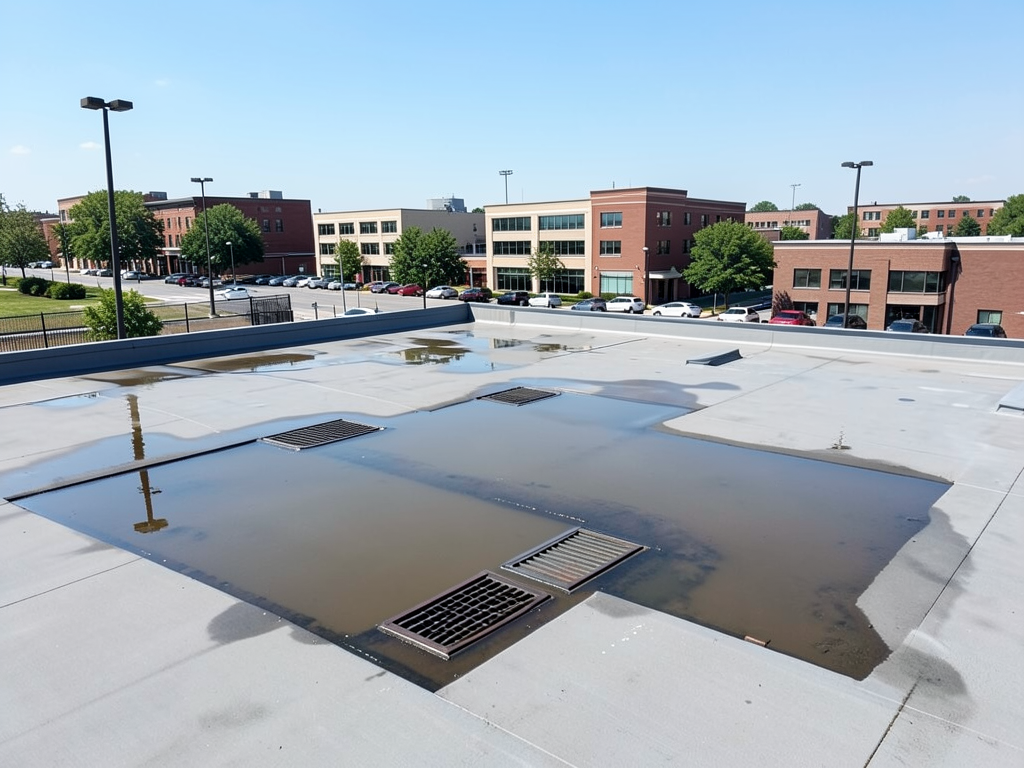
Ponding appears as visible standing water that remains 24-48 hours after rainfall. On TPO or EPDM membranes, it looks like darkened areas where dirt and algae accumulate. The water’s weight adds stress to the roof structure and accelerates membrane deterioration. In Bel Air’s humid climate, ponding water also becomes a breeding ground for mosquitoes, creating liability concerns for business owners.. Read more about The Best Flat Roof Membranes for High Traffic Rooftop Decks in Canton.
Clogged Roof Drains and Scuppers
Commercial flat roofs use internal drains or exterior scuppers to channel water off the roof. Drains connect to internal piping while scuppers are openings along the parapet walls. Both systems fail when leaves, twigs, and debris from mature trees common in Bel Air’s older commercial districts block the flow. A single clogged drain can cause water to back up across thousands of square feet of roof area.. Read more about Roof Maintenance Responsibilities for Commercial Landlords and Tenants in Owings Mills.
Damaged or Missing Drainage Components
Roof drains have strainers, domes, and clamping rings that can crack or corrode over time. Scuppers can become blocked by ice dams in winter or damaged by falling tree limbs during storms. The surrounding roofing material around drains often separates due to thermal expansion, creating gaps where water can penetrate the building envelope.
How to Diagnose Flat Roof Drainage Issues
Visual Inspection During Rainfall
The most effective way to find drainage problems is to observe the roof during a rainstorm. Look for areas where water flows toward instead of away from drains, watch for overflow from scuppers, and note any ponding that forms. This diagnostic test reveals the exact locations where water collects and which drains are functioning properly.
Infrared Moisture Scanning
Water retains heat differently than dry roofing materials. Using an infrared camera after sunset can reveal wet areas that appear cooler than surrounding dry areas. This non-invasive test helps locate water trapped beneath the surface that isn’t visible during a visual inspection. The technology is particularly useful for identifying the extent of damage around failed drains.
Core Sampling and Moisture Testing
When infrared scanning indicates moisture problems, core samples taken from suspect areas can confirm the presence of trapped water. A small section of roofing material is removed to examine the substrate and insulation layers. This test determines whether the roof deck has water damage that requires more extensive repairs beyond just fixing the drainage system. Flat Roof Repair for Baltimore Rowhouses — What Every Homeowner in Canton Needs to Know.
Repair Solutions for Common Drainage Problems
Cleaning and Maintaining Roof Drains
Regular drain cleaning prevents most drainage failures. This involves removing debris from strainers, flushing drain lines with water to clear blockages, and checking for proper water flow. For businesses in wooded areas near Bel Air’s parks and stream valleys, quarterly cleaning may be necessary during heavy leaf-fall seasons.
Installing Additional Roof Crickets
Roof crickets are small raised ridges installed to divert water around obstacles like HVAC units or toward drains. When existing slopes are inadequate, crickets can be added to create positive drainage paths. These are typically built from tapered insulation boards and covered with the existing roofing membrane to maintain waterproofing.
Replacing Damaged Scuppers and Drain Components
Failed scuppers require complete removal of the surrounding roofing material to install new components properly. The new scupper is flashed into the roofing system with compatible materials to prevent future leaks. For internal drains, replacing the entire drain assembly including strainers, domes, and clamping rings ensures a watertight connection.
Preventing Future Drainage Problems
Scheduled Maintenance Programs
Commercial properties benefit from quarterly roof maintenance that includes drain cleaning, debris removal, and inspection of all drainage components. This proactive approach catches minor issues before they cause major damage. Many Bel Air property managers schedule maintenance in early spring before heavy rains and again in late fall after leaf drop.
Upgrading to Larger Capacity Drainage Systems
Older commercial buildings may have drainage systems designed for lower rainfall volumes than current storms produce. Upgrading to larger diameter drain pipes or adding additional drains can handle increased water flow. This is particularly important for buildings near Bel Air’s downtown area where impervious surfaces have increased runoff.
Applying Roof Coatings for Protection
Silicone or acrylic roof coatings create a seamless waterproof layer that protects the underlying membrane from UV damage and ponding water. These coatings can extend roof life by 10-15 years when properly applied over a sound substrate. They also improve energy efficiency by reflecting sunlight, reducing cooling costs for businesses. How Much a New Roof Costs in Towson (2026 Estimates).
Cost Factors for Flat Roof Drainage Repairs
Repair costs vary based on the extent of damage and the roofing system involved. Simple drain cleaning typically costs $200-500 while replacing drain assemblies runs $800-2,500 per drain depending on accessibility and roofing type. Installing crickets or modifying roof slopes costs $15-25 per square foot of area modified. Installing a Metal Roof in Columbia — Is It Worth the Investment?.
Emergency repairs during active leaks cost 30-50% more than scheduled repairs due to after-hours labor and expedited material delivery. Property owners who wait until water enters the building often face additional interior damage repair costs that can exceed the roofing repairs themselves.
Local Building Code Requirements
Harford County requires commercial roofs to meet specific drainage standards outlined in the International Building Code adopted locally. Roofs must be designed to prevent ponding water and ensure positive drainage to approved disposal points. The code also mandates minimum slope requirements and specifies approved materials for roofing assemblies in commercial applications.
Permits are required for any work that modifies the roof structure or drainage system. Local inspectors verify that repairs meet code requirements for slope, drainage capacity, and material compatibility. Working with contractors familiar with Harford County’s specific requirements helps ensure compliance and avoids costly rework.
When to Call a Commercial Roofing Professional
Business owners should contact a roofing professional when they notice ponding water that persists more than 48 hours, active leaks during rainfall, or visible damage to drainage components. Signs of interior water damage like ceiling stains, mold growth, or warped walls indicate that drainage problems have already caused building damage.
Professional inspection is also recommended before major storms or after severe weather events. A qualified roofer can identify vulnerabilities and make preventative repairs that prevent emergency situations. Many commercial property insurance policies require regular professional inspections to maintain coverage for roof-related claims.
Emergency Response for Active Leaks
When water is actively entering a building, temporary emergency measures can minimize damage while permanent repairs are arranged. This includes placing tarps over the affected area, using wet vacuums to remove standing water, and redirecting drainage paths if possible. Quick response prevents water from spreading to unaffected areas and reduces repair costs.
Most commercial roofing contractors offer 24/7 emergency service for active leaks. Having a pre-established relationship with a local roofing company ensures faster response times when emergencies occur. Many contractors can be on-site within 2-4 hours for urgent situations in the Bel Air area.
Long-Term Solutions for Flat Roof Drainage
For buildings with chronic drainage problems, complete roof replacement may be the most cost-effective solution. Modern roofing systems incorporate improved drainage design from the start, with properly sloped substrates and strategically placed drains. New materials like TPO and PVC offer better resistance to ponding water than older built-up roofing systems. Industrial Roof Replacement.
During replacement, contractors can address underlying issues like inadequate slope, poor structural support, or outdated drainage capacity. This comprehensive approach solves both immediate problems and prevents future failures. While more expensive upfront, complete replacement often costs less than repeated repairs over time.
Protecting Your Investment
Flat roof drainage problems don’t fix themselves and typically worsen over time. Early intervention when issues are minor prevents the cascade of damage that occurs when water penetrates the building envelope. Regular maintenance, prompt repairs, and working with experienced local contractors helps Bel Air businesses protect their buildings and avoid costly emergency repairs.
The combination of Maryland’s weather patterns and Bel Air’s specific environmental conditions makes professional drainage management essential for commercial property owners. Understanding the common failure points and implementing preventative measures keeps businesses dry and operational year-round.
Frequently Asked Questions
How often should commercial flat roofs be inspected?
Commercial flat roofs should be inspected at least twice yearly, typically in spring and fall. Additional inspections are recommended after severe storms or when ponding water is observed. Quarterly maintenance including drain cleaning helps prevent most drainage failures. Getting Your Roof Inspected Before Buying a Home in Locust Point.
What causes ponding water on flat roofs?
Ponding water results from inadequate roof slope, clogged drains, structural settling, or damage to the roofing membrane. In Bel Air’s climate, freeze-thaw cycles and heavy rains can worsen existing drainage problems by creating new low spots or blocking existing drainage paths.
How much does it cost to repair flat roof drainage?
Repair costs range from $200 for simple drain cleaning to $2,500+ for replacing drain assemblies. Modifying roof slopes with crickets costs $15-25 per square foot. Emergency repairs during active leaks cost 30-50% more than scheduled work.
Can I fix flat roof drainage problems myself?
Minor maintenance like removing visible debris from scuppers can be done safely by building maintenance staff. However, working on commercial roofs involves fall hazards and requires proper safety equipment. Professional contractors also have the expertise to identify underlying issues that aren’t visible from the surface.
How long do flat roof repairs typically last?
Properly executed drain repairs and minor modifications typically last 5-10 years. More extensive work like slope modifications or complete drain replacements can last the remaining life of the roof system, often 15-20 years with proper maintenance.
What are signs that drainage problems have caused interior damage?
Interior signs include ceiling stains, bubbling paint, warped walls, mold growth, and musty odors. These indicate water has penetrated the roof assembly and entered the building interior. At this point, both exterior repairs and interior restoration are needed.
Are roof coatings effective for preventing drainage problems?
Roof coatings don’t fix inadequate slope or blocked drains, but they do protect the membrane from UV damage and ponding water degradation. Silicone coatings are particularly effective for areas prone to standing water as they maintain flexibility and adhesion even when submerged.
How do I know if my building needs a complete roof replacement?
Consider replacement when repair costs exceed 50% of replacement cost, when the roof is over 20 years old, or when multiple areas have chronic problems. A professional inspection can assess the overall condition and provide cost-benefit analysis for repair versus replacement options.
Take Action Before Small Problems Become Big Expenses
Flat roof drainage issues won’t resolve themselves and typically worsen over time. If you’ve noticed ponding water, slow-draining areas, or signs of interior water damage, don’t wait for the next heavy rainstorm to make problems worse.
Call (443) 455-9099 today to schedule a comprehensive roof inspection. Our experienced team understands Bel Air’s unique climate challenges and can identify drainage problems before they cause major damage. We’ll provide clear recommendations and upfront pricing so you can make informed decisions about protecting your commercial property.
Don’t let a small drainage issue turn into a costly emergency. Pick up the phone and call (443) 455-9099 before the next storm hits. Your building and your business depend on a properly functioning roof.
You may also find this helpful. How Your Rooftop AC Unit Might Be Damaging Your Flat Roof in Federal Hill.
{
“@context”: “https://schema.org”,
“@type”: “BlogPosting”,
“headline”: “Solving Common Flat Roof Drainage Problems for Small Businesses in Bel Air”,
“description”: “Flat roof drainage failures cost Bel Air businesses thousands. Learn the causes, solutions, and when to call a commercial roofing expert.”,
“wordCount”: 2111,
“datePublished”: “2026-05-13T06:05:00.000Z”,
“dateModified”: “2026-05-13T06:05:00.000Z”,
“inLanguage”: “en-US”,
“mainEntityOfPage”: {
“@type”: “WebPage”,
“@id”: “https://aplusroofingbaltimore.com”
},
“publisher”: {
“@type”: “LocalBusiness”,
“name”: “A Plus Roofing Baltimore”,
“url”: “https://aplusroofingbaltimore.com”
},
“author”: {
“@type”: “Organization”,
“name”: “A Plus Roofing Baltimore”,
“url”: “https://aplusroofingbaltimore.com”
},
“image”: {
“@type”: “ImageObject”,
“url”: “https://aplusroofingbaltimore.com/wp-content/uploads/2026/03/solving-common-flat-roof-drainage-problems-for-sma-1.png”
}
}
{
“@context”: “https://schema.org”,
“@type”: “RoofingContractor”,
“name”: “A Plus Roofing Baltimore”,
“url”: “https://aplusroofingbaltimore.com”,
“address”: {
“@type”: “PostalAddress”,
“addressLocality”: “Baltimore”
},
“areaServed”: {
“@type”: “City”,
“name”: “Baltimore”
}
}
{
“@context”: “https://schema.org”,
“@type”: “FAQPage”,
“mainEntity”: [
{
“@type”: “Question”,
“name”: “How often should commercial flat roofs be inspected?”,
“acceptedAnswer”: {
“@type”: “Answer”,
“text”: “Commercial flat roofs should be inspected at least twice yearly, typically in spring and fall. Additional inspections are recommended after severe storms or when ponding water is observed. Quarterly maintenance including drain cleaning helps prevent most drainage failures. Getting Your Roof Inspected Before Buying a Home in Locust Point.”
}
},
{
“@type”: “Question”,
“name”: “What causes ponding water on flat roofs?”,
“acceptedAnswer”: {
“@type”: “Answer”,
“text”: “Ponding water results from inadequate roof slope, clogged drains, structural settling, or damage to the roofing membrane. In Bel Air’s climate, freeze-thaw cycles and heavy rains can worsen existing drainage problems by creating new low spots or blocking existing drainage paths.”
}
},
{
“@type”: “Question”,
“name”: “How much does it cost to repair flat roof drainage?”,
“acceptedAnswer”: {
“@type”: “Answer”,
“text”: “Repair costs range from $200 for simple drain cleaning to $2,500+ for replacing drain assemblies. Modifying roof slopes with crickets costs $15-25 per square foot. Emergency repairs during active leaks cost 30-50% more than scheduled work.”
}
},
{
“@type”: “Question”,
“name”: “Can I fix flat roof drainage problems myself?”,
“acceptedAnswer”: {
“@type”: “Answer”,
“text”: “Minor maintenance like removing visible debris from scuppers can be done safely by building maintenance staff. However, working on commercial roofs involves fall hazards and requires proper safety equipment. Professional contractors also have the expertise to identify underlying issues that aren’t visible from the surface.”
}
},
{
“@type”: “Question”,
“name”: “How long do flat roof repairs typically last?”,
“acceptedAnswer”: {
“@type”: “Answer”,
“text”: “Properly executed drain repairs and minor modifications typically last 5-10 years. More extensive work like slope modifications or complete drain replacements can last the remaining life of the roof system, often 15-20 years with proper maintenance.”
}
},
{
“@type”: “Question”,
“name”: “What are signs that drainage problems have caused interior damage?”,
“acceptedAnswer”: {
“@type”: “Answer”,
“text”: “Interior signs include ceiling stains, bubbling paint, warped walls, mold growth, and musty odors. These indicate water has penetrated the roof assembly and entered the building interior. At this point, both exterior repairs and interior restoration are needed.”
}
},
{
“@type”: “Question”,
“name”: “Are roof coatings effective for preventing drainage problems?”,
“acceptedAnswer”: {
“@type”: “Answer”,
“text”: “Roof coatings don’t fix inadequate slope or blocked drains, but they do protect the membrane from UV damage and ponding water degradation. Silicone coatings are particularly effective for areas prone to standing water as they maintain flexibility and adhesion even when submerged.”
}
},
{
“@type”: “Question”,
“name”: “How do I know if my building needs a complete roof replacement?”,
“acceptedAnswer”: {
“@type”: “Answer”,
“text”: “Consider replacement when repair costs exceed 50% of replacement cost, when the roof is over 20 years old, or when multiple areas have chronic problems. A professional inspection can assess the overall condition and provide cost-benefit analysis for repair versus replacement options.”
}
}
]
}
{
“@context”: “https://schema.org”,
“@type”: “BreadcrumbList”,
“itemListElement”: [
{
“@type”: “ListItem”,
“position”: 1,
“name”: “Home”,
“item”: “https://aplusroofingbaltimore.com”
},
{
“@type”: “ListItem”,
“position”: 2,
“name”: “Blog”,
“item”: “https://aplusroofingbaltimore.com/blog”
},
{
“@type”: “ListItem”,
“position”: 3,
“name”: “Solving Common Flat Roof Drainage Problems for Small Businesses in Bel Air”
}
]
}
{
“@context”: “https://schema.org”,
“@type”: “Service”,
“serviceType”: “Roofing”,
“provider”: {
“@type”: “LocalBusiness”,
“name”: “A Plus Roofing Baltimore”,
“url”: “https://aplusroofingbaltimore.com”
},
“areaServed”: {
“@type”: “City”,
“name”: “Baltimore”
},
“description”: “Flat roof drainage failures cost Bel Air businesses thousands. Learn the causes, solutions, and when to call a commercial roofing expert.”
}