menu

Commercial Roof Coatings in Baltimore – Extend Asset Life and Eliminate Costly Tear-Offs

A Plus Roofing Baltimore deploys industrial-grade elastomeric roof coatings and liquid applied roofing systems that restore flat and low-slope roofs across the Baltimore metro, minimizing downtime and maximizing ROI without full replacement.

Slider Image 1
Slider Image 2
Slider Image 3
Slider Image 4
Slider Image 5
Slider Image 7
Slider Image 8
Slider Image 9
Slider Image 10
Slider Image 11

Why Baltimore's Climate Accelerates Commercial Roof Degradation

Baltimore's maritime climate creates a hostile environment for commercial roofing assets. Winter freeze-thaw cycles crack membrane seams. Summer heat and UV radiation degrade bitumen and single-ply systems. High humidity from the Chesapeake Bay promotes ponding water on flat roofs, leading to premature membrane failure and structural rot.

Most commercial flat roof coatings fail in this region because contractors apply generic systems without accounting for local conditions. Industrial facilities near the Port of Baltimore face additional salt air exposure, which corrodes fasteners and accelerates coating breakdown. Warehouses in Canton and manufacturing plants in Dundalk experience thermal cycling that loosens seams and opens penetrations.

Ignoring early signs of coating failure leads to interior water damage, mold growth, and business interruption. You face lost inventory, halted production, and liability exposure. Commercial roof restoration systems offer a solution, but only when applied correctly for Baltimore's specific environmental stressors. Elastomeric roof coatings provide the flexibility to handle temperature swings, while liquid applied roofing creates monolithic barriers that eliminate seam failure points entirely.

The cost of inaction escalates quickly. Minor membrane damage becomes structural rot. Surface wear becomes interior flooding. What starts as a maintenance issue becomes a six-figure capital expenditure with weeks of operational downtime.

Why Baltimore's Climate Accelerates Commercial Roof Degradation
How Properly Applied Roof Coatings Restore Commercial Assets

How Properly Applied Roof Coatings Restore Commercial Assets

A Plus Roofing Baltimore does not apply coatings over failing substrates. We restore the roof system first, then apply industrial roof coatings engineered for Baltimore's climate profile. This approach eliminates the premature failure common with quick-coat contractors.

We start with moisture surveys using infrared thermography to identify saturated insulation. Wet areas are removed and replaced before coating application. Surface preparation includes pressure washing, crack routing, and seam reinforcement with reinforcing fabric. This prevents coating adhesion failure and ensures longevity.

Material selection depends on substrate type, slope, and exposure. Single-ply membranes receive elastomeric roof coatings with minimum 20-mil dry film thickness. Built-up roofs get aluminum or asphalt emulsion bases before topcoats. Metal roofs require specialized primers to prevent oxidation bleed-through. We adjust solids content and application rates based on ambient temperature and humidity levels specific to your installation date.

Our commercial roof restoration systems include full penetration sealing, parapet wall flashing, and drain detail reinforcement. These transition zones fail first in Baltimore's weather cycles. We apply multiple coats with staged curing intervals, not single-pass applications that crack within months.

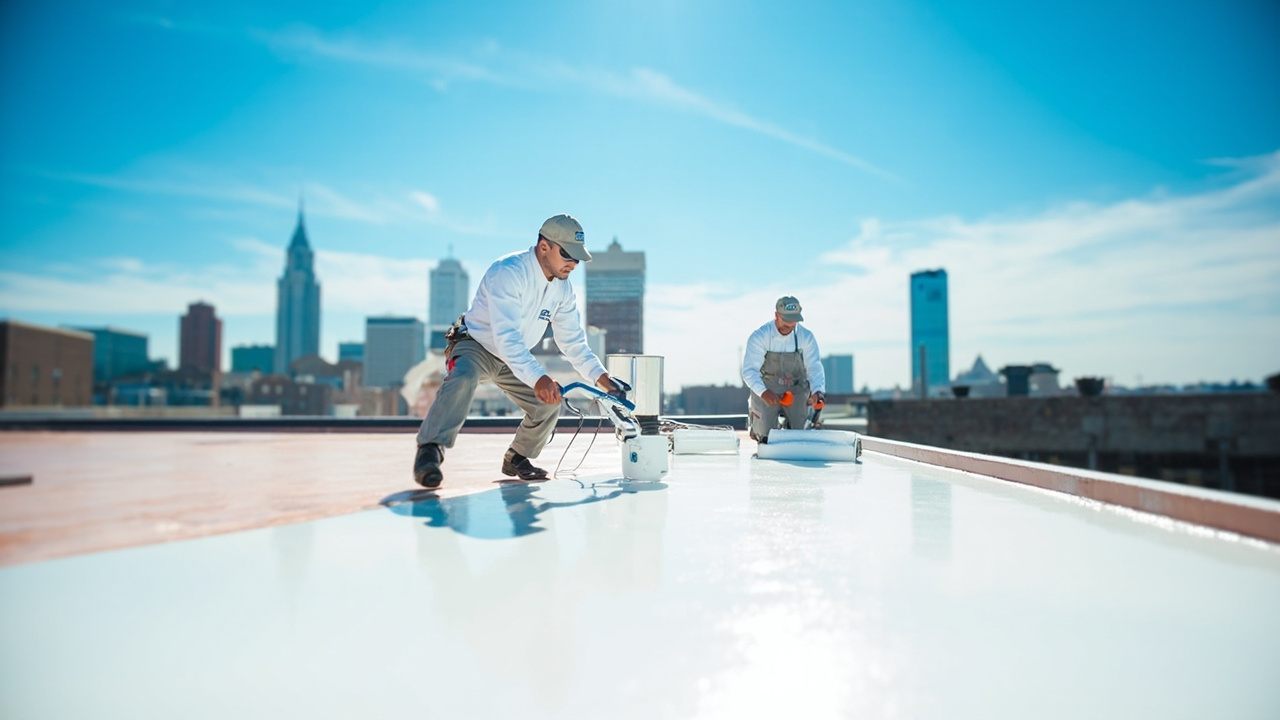
Liquid applied roofing creates seamless membranes that eliminate the weak points in rolled goods. For facilities requiring ongoing operations, we phase the work to avoid production interruptions. Sections cure while adjacent areas remain functional. This approach maintains business continuity while delivering a restored asset.

Our Commercial Coating Application Protocol

Commercial Roof Coatings in Baltimore – Extend Asset Life and Eliminate Costly Tear-Offs
01

Substrate Condition Assessment

We conduct comprehensive roof surveys using infrared moisture detection and core sampling to determine substrate integrity. This identifies saturated insulation, failed fasteners, and compromised decking that must be addressed before coating application. We document ponding areas, measure membrane thickness at penetrations, and evaluate flashing conditions. This diagnostic phase prevents coating failure by ensuring you coat over sound structure, not deferred maintenance.
02

Surface Preparation and Repair

We remove all loose material, grind down ridges, and pressure wash to achieve proper surface profile. Failed seams get heat-welded or chemically bonded before coating. Cracks are routed and filled with elastomeric sealants. Penetrations receive new counterflashing and base details. Metal surfaces are treated with rust converters and primed. This phase eliminates every potential failure point. We apply base coats only after surface moisture content drops below manufacturer specifications, which matters in Baltimore's humid conditions.
03

Multi-Coat System Installation

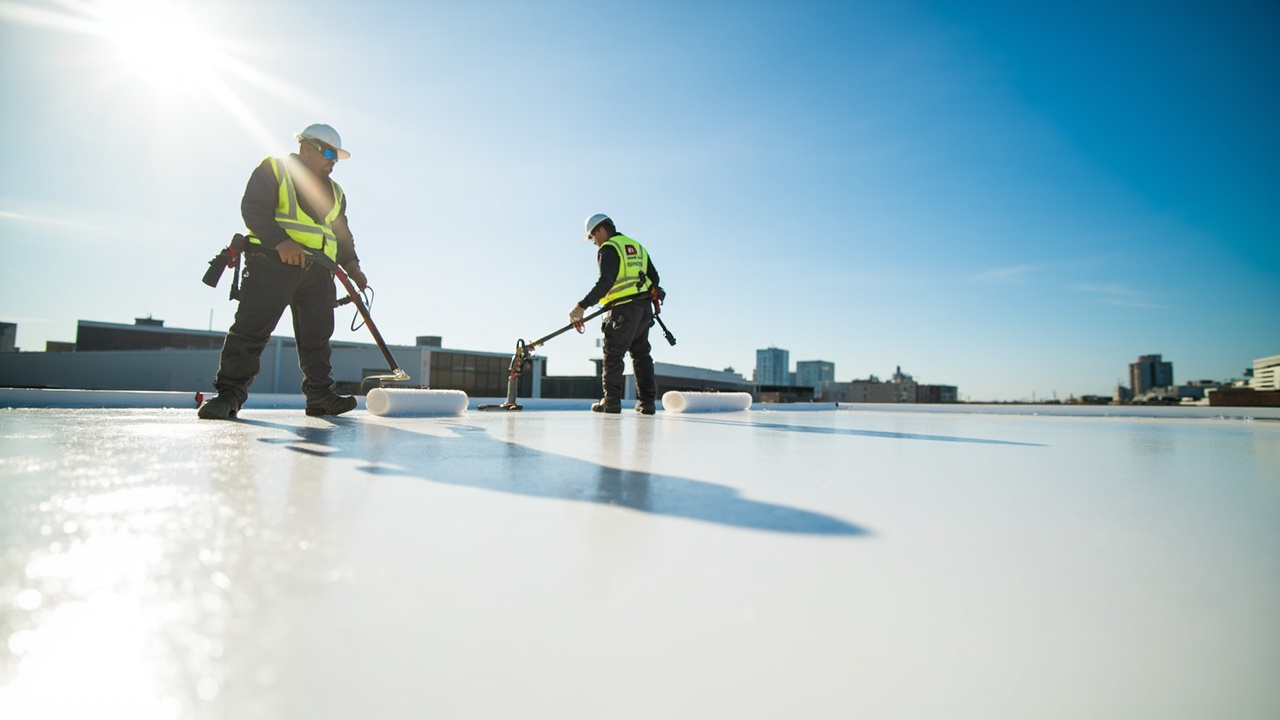
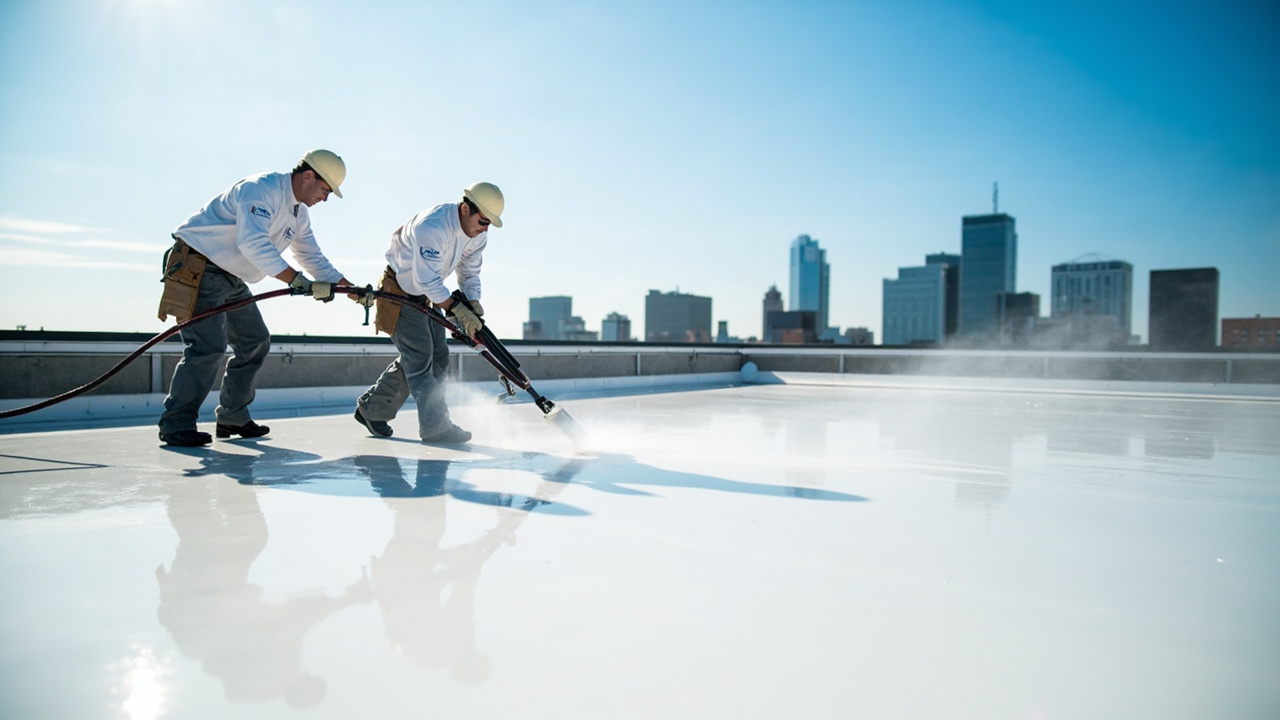
We apply commercial flat roof coatings in multiple passes, allowing proper cure time between coats. Base coats embed reinforcing fabric at all seams and transitions. Intermediate coats build mil thickness to specification. Finish coats provide UV protection and reflectivity. Each layer is inspected for pinholing, bare spots, and proper coverage before the next application. We measure wet and dry film thickness throughout to ensure you receive the warranted system, not a thin coating that fails early.

Why Baltimore Facility Managers Choose A Plus Roofing

Baltimore commercial properties require contractors who understand local building stock and environmental challenges. A Plus Roofing Baltimore specializes in the flat and low-slope roof systems common to industrial facilities, distribution centers, and commercial buildings throughout the metro area. We know the difference between coating a warehouse in Locust Point versus a manufacturing facility in Sparrows Point.

Our crews work within Baltimore City and Baltimore County commercial building codes, including requirements for fall protection, stormwater management, and roof access compliance. We coordinate with property managers to schedule work during low-activity periods, minimizing tenant disruption and maintaining security protocols. For multi-tenant properties, we phase installations to keep occupied spaces operational.

We do not subcontract coating applications. Our teams apply every system, ensuring quality control from substrate prep through final inspection. This matters when coating failures appear months after installation and the subcontractor has moved on. You get direct accountability.

Most coating failures in Baltimore stem from improper material selection for the specific substrate and climate. We match elastomeric roof coatings, acrylic systems, or silicone formulations to your roof type and exposure conditions. A distribution center roof in Jessup faces different thermal loads than a refrigerated facility in Curtis Bay. We adjust systems accordingly.

Our diagnostic approach identifies problems other contractors miss. Infrared surveys reveal moisture intrusion invisible to visual inspection. Core samples determine whether your roof deck can support additional coating weight. We provide detailed condition reports before proposing solutions, giving you the information needed for capital planning and budget forecasting.

What Your Commercial Roof Coating Project Includes

Project Timeline and Scheduling

Most commercial roof restoration systems require seven to fourteen days from mobilization through final inspection, depending on roof size and complexity. Weather delays extend timelines in Baltimore's unpredictable spring and fall seasons. We provide detailed schedules that account for cure times between coats and coordinate with your operational requirements. For facilities requiring continuous operations, we phase work into sections that allow adjacent areas to remain functional. Emergency situations receive priority scheduling, with crews mobilized within 48 hours to prevent further damage and business interruption.

Initial Roof Assessment Process

Your assessment begins with visual inspection, infrared moisture survey, and physical core sampling to determine substrate condition. We document all penetrations, drainage issues, and existing damage with photographic evidence. This generates a comprehensive condition report with recommendations for repair scope before coating application. You receive material specifications, estimated coverage rates, and projected service life for different coating systems. The assessment identifies code compliance issues, fall protection requirements, and stormwater management obligations specific to Baltimore regulations. This information supports informed capital planning decisions.

Coating System Performance

Properly applied industrial roof coatings extend commercial roof life ten to twenty years when maintained correctly. You receive a restored waterproof membrane that resists Baltimore's freeze-thaw cycles, UV degradation, and ponding water damage. Reflective topcoats reduce cooling loads by 20 to 30 percent during summer months, lowering energy costs. The seamless membrane eliminates leak points at seams and penetrations. Your roof gains renewed protection without the cost, downtime, and waste disposal requirements of full replacement. Final inspection includes mil thickness verification and complete photographic documentation of the finished system.

Post-Installation Support and Maintenance

Commercial flat roof coatings require periodic maintenance to achieve projected service life. We provide detailed maintenance protocols specific to your coating system, including recommended cleaning schedules, drain clearing procedures, and recoat intervals for high-traffic areas. Annual inspections identify minor issues before they become failures. You receive documentation for warranty compliance and asset management records. We respond to coating damage from rooftop equipment installation, storm debris, or foot traffic with repairs that match the original system. Proactive maintenance maximizes your coating investment and prevents premature failure that negates the restoration cost savings.

Frequently Asked Questions

You Have Questions,
We Have Answers

How much does commercial roof coating cost? +

Commercial roof coating costs depend on roof size, substrate condition, coating type, and accessibility. Silicone coatings generally run higher than acrylics due to superior weathering resistance. Expect material and labor pricing to reflect the complexity of your existing roof system. Baltimore facilities with older built-up roofs or multiple penetrations require more surface prep, which increases total project cost. Factor in downtime minimization and whether you need a full roof restoration versus simple recoating. Request a detailed scope breakdown that separates material costs from labor and surface preparation. Commercial projects prioritize ROI and extended asset life over initial expense.

What type of roof coating is best? +

The best coating depends on your substrate, climate exposure, and operational requirements. Silicone coatings excel in Baltimore due to superior UV resistance and ponding water tolerance, which is critical given the region's humid summers and flat roof prevalence. Acrylic coatings work well for sloped metal roofs with good drainage. Polyurethane coatings provide exceptional impact resistance for high-traffic rooftop equipment areas. Evaluate your existing membrane type, warranty transfer options, and whether you need reflectivity for energy cost reduction. Commercial decisions prioritize lifecycle cost and compatibility with existing roofing assemblies over generic recommendations.

What are the latest trends in commercial roofing? +

Commercial roofing trends focus on sustainability and energy efficiency mandates. Cool roof coatings with high solar reflectance index ratings reduce HVAC loads and qualify for energy rebates in Maryland. Fluid-applied systems allow for seamless restoration without tear-off waste. Vegetative roof assemblies gain traction in Baltimore's urban core for stormwater management compliance. Infrared scanning and drone inspections enable predictive maintenance rather than reactive repairs. Silicone restoration systems extend asset life while meeting increasingly strict building code requirements. Commercial property managers prioritize solutions that minimize business interruption and demonstrate measurable ROI through lower operating costs.

What are the disadvantages of roof coatings? +

Roof coatings require proper substrate conditions to perform. Coatings will not fix structural issues, severe ponding areas, or saturated insulation. Baltimore's freeze-thaw cycles can compromise poorly prepared surfaces, leading to delamination. Application requires specific weather windows, which can delay projects during humid or cold periods. Coatings add minimal insulation value compared to recover or replacement systems. They demand skilled applicators who understand mil thickness requirements and proper surface preparation. Warranties often contain strict maintenance clauses. Coatings extend roof life but are not a permanent solution for facilities with fundamental drainage or structural problems.

How many years does roof coating last? +

Commercial roof coating longevity ranges from 10 to 20 years depending on coating type, application quality, and maintenance. Silicone coatings typically outlast acrylics in Baltimore due to superior resistance to UV degradation and moisture cycling. Proper surface preparation and achieving manufacturer-specified mil thickness directly impact service life. Facilities with regular maintenance programs and minimal rooftop traffic see extended performance. Climate stress from Baltimore's temperature swings and humidity accelerates degradation on poorly maintained roofs. Budget for recoating intervals based on your specific exposure conditions and operational requirements rather than generic manufacturer claims.

Can roofers make 100k a year? +

This question is not relevant to commercial roof coating procurement decisions. Commercial property managers and facility directors should focus on contractor qualifications, project references, and demonstrated expertise with coating systems similar to your facility. Evaluate contractors based on manufacturer certifications, insurance limits adequate for your property value, and experience with Baltimore commercial projects. Verify their understanding of local code requirements and ability to work within your operational constraints. Compensation structures for roofing labor do not impact your project outcome or coating system performance.

Which roof coating lasts the longest? +

Silicone coatings demonstrate the longest service life in commercial applications, particularly in Baltimore's climate. Silicone resists UV degradation, maintains flexibility through temperature cycling, and tolerates ponding water without breaking down. Polyurea coatings offer durability but require precise application conditions. Acrylic coatings degrade faster under constant moisture exposure. Longevity depends equally on proper substrate preparation and achieving specified dry film thickness. Commercial facilities prioritize coatings that maintain watertight integrity and reflectivity over time. Select systems with proven track records on similar substrates in mid-Atlantic climate conditions rather than relying solely on laboratory test data.

How much does Rhino RV roof coating cost? +

Rhino RV roof coating pricing is not applicable to commercial flat roof systems. Commercial facilities require different coating chemistries, application methods, and performance specifications than recreational vehicles. Baltimore commercial properties need coatings rated for ponding water, large temperature differentials, and membrane compatibility with EPDM, TPO, or modified bitumen substrates. Focus procurement decisions on commercial-grade silicone, acrylic, or polyurethane systems with manufacturer warranties appropriate for your building class. Consult contractors experienced with commercial roof restoration rather than RV-specific products that lack the durability and code compliance required for occupied structures.

Which is better, EPDM or TPO? +

EPDM and TPO serve different commercial applications. TPO offers heat-welded seams and higher reflectivity, reducing cooling loads in Baltimore's humid summers. EPDM provides proven longevity and flexibility through freeze-thaw cycles but absorbs more heat. TPO costs more initially but delivers energy savings over time. EPDM repairs more easily and tolerates ponding water. For coating applications, both substrates accept silicone or acrylic systems after proper cleaning. Your decision should factor in existing roof assembly, energy cost priorities, and whether you need a lightweight retrofit solution. Evaluate lifecycle cost and operational requirements rather than material cost alone.

What is the 10/50/50 rule? +

The 10/50/50 rule is not standard terminology in commercial roof coating specifications. You may be referencing warranty structures or maintenance requirements specific to certain manufacturers. Commercial coating warranties typically require surface preparation meeting ASTM standards, application at specified mil thickness, and documented maintenance intervals. Baltimore contractors should clarify warranty terms, including prorated coverage periods, transferability, and exclusions for ponding water or structural movement. Request detailed warranty documentation that specifies coverage triggers and maintenance obligations. Focus on contractor qualifications and proven system performance rather than ambiguous industry shorthand that lacks standardized meaning.

How Baltimore's Port Environment Impacts Commercial Roof Coating Performance

Baltimore's proximity to the Chesapeake Bay and the Port of Baltimore creates a corrosive atmosphere that degrades standard roof coatings faster than inland locations. Salt air accelerates metal fastener corrosion, which telegraphs through coating layers and creates failure points. High humidity levels slow cure times for liquid applied roofing systems, requiring adjusted application protocols to prevent solvent entrapment and blistering. Industrial facilities near the port face additional exposure from airborne particulates that embed in wet coatings, reducing reflectivity and creating surface degradation. Elastomeric roof coatings must include mildewcides and algaecides to prevent biological growth on membrane surfaces in this maritime climate.

A Plus Roofing Baltimore maintains relationships with commercial property managers, facility directors, and industrial maintenance supervisors throughout the Baltimore metro. We understand local inspection requirements and work directly with Baltimore City Department of Housing and Community Development for permit compliance on commercial projects. Our crews are familiar with access restrictions at port facilities, security protocols at industrial sites, and coordination requirements for multi-tenant commercial properties. This local knowledge prevents project delays and ensures your coating installation meets all regulatory requirements specific to Baltimore jurisdiction.
Roofing Services in The Baltimore Area

We are proud to be a locally owned and operated business committed to serving the entire Baltimore community and its surrounding counties. View our office location on the map and see the breadth of our service area. We encourage you to visit our facility or contact us directly to discuss your next roofing project.

Address:
A Plus Roofing Baltimore, 101 N Haven St, Baltimore, MD, 21224

Additional Services We Offer

Our news updates

Latest Articles & News from The Blogs

Can You Actually Replace Your Roof During a Cold Baltimore Winter? Replacing a roof in Baltimore during winter is absolutely…

Can You Actually Replace Your Roof During a Cold Baltimore Winter?

Can You Actually Replace Your Roof During a Cold Baltimore Winter? Replacing a roof in Baltimore during winter is absolutely…

How New Attic Insulation Can Actually Extend the Life of Your Towson Roof

How New Attic Insulation Can Actually Extend the Life of Your Towson Roof Your Towson roof faces a unique combination…

Why Pressure Washing Your Pikesville Roof Does More Harm Than Good

Why Pressure Washing Your Pikesville Roof Does More Harm Than Good Your Pikesville roof faces unique challenges from Maryland’s humid…

Contact Us

Stop deferring roof maintenance until replacement becomes your only option. Call A Plus Roofing Baltimore at (443) 455-9099 for a comprehensive roof assessment. We provide detailed condition reports and coating system recommendations specific to your facility and budget requirements.