menu

Commercial PVC Roof Installation in Baltimore – Minimal Downtime, Maximum ROI

A Plus Roofing Baltimore delivers industrial-grade polyvinyl chloride membrane installation on your schedule, keeping your operations running while protecting assets from the Chesapeake Bay climate zone's seasonal extremes.

Slider Image 1
Slider Image 2
Slider Image 3
Slider Image 4
Slider Image 5
Slider Image 7
Slider Image 8
Slider Image 9
Slider Image 10
Slider Image 11

Why Baltimore's Climate Demands Commercial-Grade PVC Roofing Systems

Baltimore sits in a coastal transition zone where freeze-thaw cycling meets high summer humidity. Your commercial flat roof absorbs this punishment daily. Temperature swings from 20°F winters to 95°F summers cause traditional roofing membranes to crack, blister, and fail prematurely. The result is water intrusion, inventory damage, and disrupted operations.

The Port of Baltimore and Inner Harbor create microclimates with elevated moisture levels. Standard EPDM and TPO systems degrade faster in these conditions. You face higher maintenance costs and shortened roof lifespans. Every leak means lost revenue, potential OSHA violations, and expensive emergency repairs during business hours.

Commercial PVC roofing installation solves this problem through superior chemical resistance and heat-welded seams. PVC membrane installation creates a monolithic barrier that withstands Baltimore's coastal salt air, industrial pollutants from the I-95 corridor, and UV exposure without deteriorating. Unlike mechanically fastened systems, heat-welded PVC roofing system installation eliminates the weak points where water penetrates.

Your facility in Canton, Fells Point, or Harbor East needs a roof that performs in real-world conditions. PVC flat roof installation delivers a 20-plus-year service life with minimal maintenance. The membrane reflects solar heat, reducing HVAC loads during Maryland's humid summers. This translates to lower utility bills and extended equipment life. Polyvinyl chloride roof installation is not a residential solution scaled up. It is an engineered system designed for commercial loading, foot traffic, and equipment vibration. Your business continuity depends on infrastructure that works when you need it.

Why Baltimore's Climate Demands Commercial-Grade PVC Roofing Systems
Our Commercial PVC Membrane Installation Process

Our Commercial PVC Membrane Installation Process

We do not apply cookie-cutter solutions. Every commercial PVC roofing installation begins with structural load analysis and substrate evaluation. Baltimore's older industrial buildings often have concealed deck damage or inadequate drainage slopes. We use infrared thermography to map moisture intrusion and identify failing insulation before membrane installation begins. This prevents callbacks and ensures your new roof performs as specified.

Substrate preparation determines membrane longevity. We mechanically fasten a fleece-backed base sheet to the existing deck, creating a stable platform for the PVC membrane. This eliminates the thermal bridging and condensation issues common with fully adhered systems. Our crews install tapered insulation to achieve positive drainage, eliminating ponding water that voids most roof warranties.

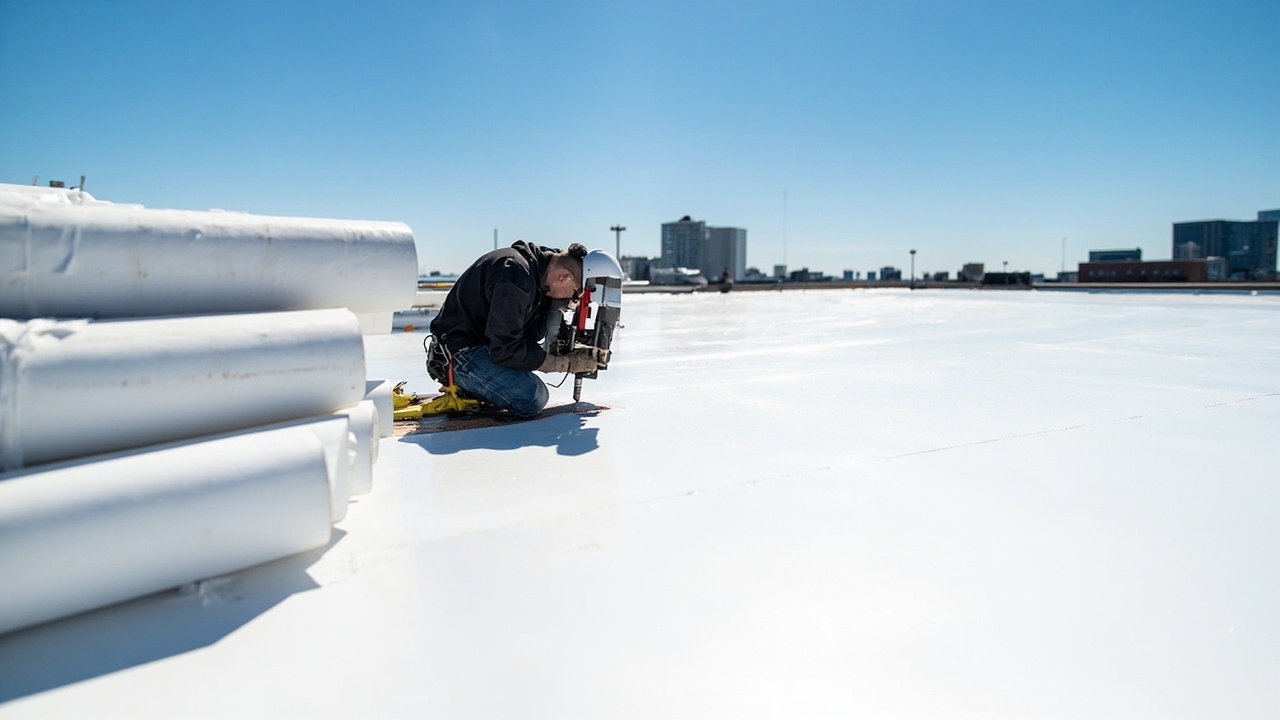
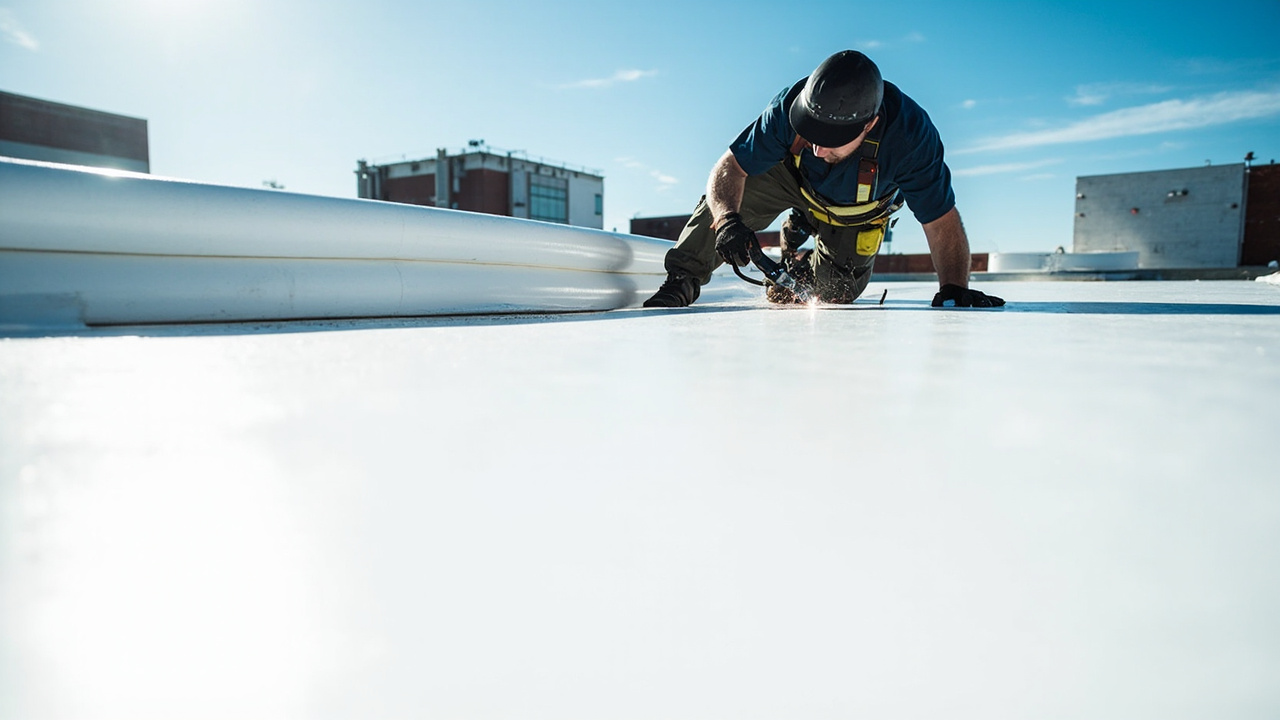
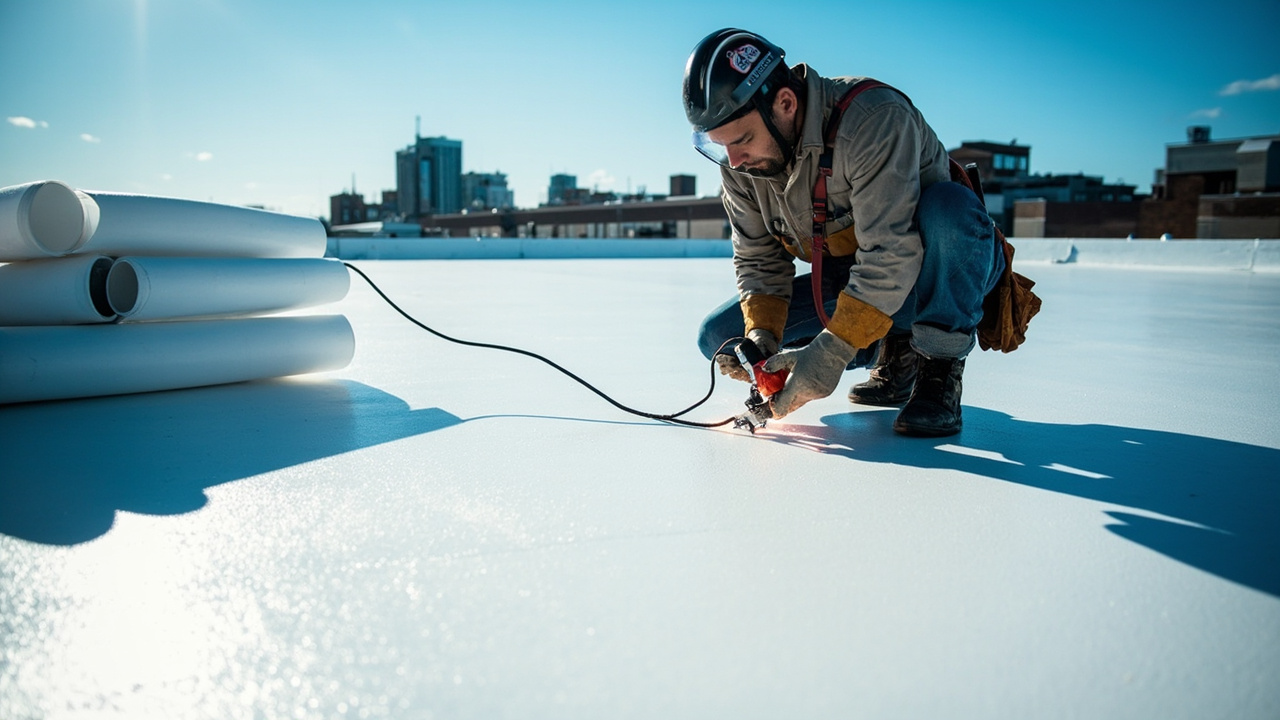
The PVC roofing system installation uses hot-air welding to create seams stronger than the membrane itself. We produce overlapping seams with tensile strength exceeding 600 pounds per linear inch. Every seam gets tested with a probe to verify watertight integrity before we move to the next section. This is not torch-applied work. Hot-air welding eliminates the fire risk and produces consistent, verifiable results.

Penetration details require precision. We custom-fabricate PVC flashings for HVAC curbs, vent pipes, and parapet walls. Each detail ties into the main membrane with heat-welded seams and mechanically fastened termination bars. We do not rely on caulk or mastic, which fail within three years in Baltimore's climate. Our polyvinyl chloride roof installation meets or exceeds Baltimore City commercial building codes and FM Global wind uplift requirements. You get a roof engineered for your building's specific exposure and occupancy classification.

How We Execute Your Commercial PVC Roof Installation

Commercial PVC Roof Installation in Baltimore – Minimal Downtime, Maximum ROI
01

Pre-Construction Analysis and Planning

We conduct a structural assessment to verify deck capacity for new insulation and membrane weight. Our team coordinates with your facility manager to identify operational constraints, establish work zones, and schedule installation during off-peak hours. You receive a detailed project timeline with critical path milestones. We pull all required Baltimore City permits and submit engineered drawings for code compliance review before any material arrives on site.
02

Phased Installation Execution

We section your roof into manageable work areas to maintain building weatherproofing throughout the project. Each phase gets completed and tested before we move to the next section. This approach prevents business disruption and eliminates weather-related delays. Our crews arrive with all materials staged, complete each zone in sequence, and remove debris daily. You maintain normal operations while we work overhead. Progress photos and daily reports keep you informed without requiring site meetings.
03

Final Testing and Documentation

Every seam undergoes destructive testing to verify weld strength meets manufacturer specifications. We provide you with a comprehensive as-built drawing package showing all penetration details, drain locations, and membrane attachment points. Your maintenance team receives a roof care manual with inspection protocols and minor repair procedures. We register your installation with the membrane manufacturer to activate the material warranty. You get a complete project closeout package for your facility records and future roof maintenance planning.

Why Baltimore Businesses Choose A Plus Roofing for PVC Membrane Systems

We understand Baltimore's commercial building stock. TheRowHouse neighborhoods, Locust Point warehouses, and Highlandtown industrial facilities each present unique roofing challenges. We have installed PVC membrane systems on everything from Harbor East office buildings to Dundalk distribution centers. This experience means we anticipate problems before they occur.

Our crews are trained in confined space entry, fall protection, and hot work permits required for Baltimore City commercial projects. We coordinate with building management, tenants, and adjacent property owners to minimize disruption. When you operate a 24/7 facility, we schedule installation during your lowest-activity periods. Weekend and night shifts are standard procedure for us.

We maintain relationships with Baltimore's commercial building inspectors and understand their expectations for final approval. Your project does not get delayed by permit issues or inspection failures. We know the difference between International Building Code requirements and Baltimore City amendments. This knowledge prevents costly change orders and keeps your project on schedule.

A Plus Roofing Baltimore stocks PVC membrane, insulation, and fasteners locally. We do not wait for material shipments from out-of-state distributors. When a weather window opens, we move immediately. Our project managers communicate through your preferred channel, whether that is email progress reports, text updates, or weekly conference calls.

You need a contractor who understands commercial liability exposure. We carry project-specific general liability and workers compensation coverage that meets your risk management requirements. Our installation crews are background-checked employees, not subcontractors. They wear company uniforms and operate marked vehicles. When we are on your property, you know who is there and what they are doing. This matters for secure facilities and multi-tenant buildings where access control is critical.

What Your Commercial PVC Roof Installation Includes

Project Timeline and Scheduling Flexibility

We provide a guaranteed completion date based on your operational requirements. Most commercial PVC flat roof installations in Baltimore complete within two to four weeks depending on square footage and building complexity. We break larger projects into phases to maintain weathertight protection throughout construction. Your facility stays operational. We work around delivery schedules, peak business hours, and tenant needs. Our crews arrive on time, complete scheduled work zones, and leave your property clean each day. You receive weekly progress updates with photo documentation. Weather delays get communicated immediately with revised completion dates. We do not leave projects partially finished.

Comprehensive Roof Assessment and Specification Development

Your project begins with a detailed roof survey using infrared thermography and core sampling to identify hidden moisture and structural deficiencies. We measure drainage slopes, evaluate existing flashing conditions, and assess deck attachment integrity. You receive a written report with photographs documenting current conditions and recommended repairs. We develop a specification package tailored to your building's exposure classification, occupancy type, and budget parameters. This is not a generic proposal. We specify insulation R-values based on your energy reduction goals and calculate wind uplift requirements using Baltimore's design wind speeds. You understand exactly what you are getting before any work begins.

Engineered Installation with Verifiable Quality Control

You get a roof system designed to meet FM Global and Factory Mutual wind uplift standards. Our installation follows manufacturer specifications for fastener spacing, seam overlap, and membrane tension. Every heat-welded seam gets probed to verify a watertight bond. We document quality control testing with time-stamped photographs for your records. The finished installation includes custom-fabricated metal terminations at parapets, properly sloped drainage channels, and fully integrated penetration flashings. Your building envelope is complete, not just covered. We provide you with as-built drawings showing all roof details for future maintenance reference. This documentation protects your investment and simplifies future repairs.

Manufacturer Warranty Activation and Maintenance Guidance

We register your PVC roofing system installation directly with the membrane manufacturer to activate material warranties. You receive warranty documentation within 30 days of project completion. We provide your maintenance team with a roof care manual that includes inspection checklists, minor repair procedures, and recommendations for seasonal maintenance. Our team trains your facilities staff on proper roof access protocols and what to look for during routine inspections. This knowledge prevents small issues from becoming major problems. We offer annual inspection services to document roof condition and identify maintenance needs before they affect building operations. Your roof is an asset that requires ongoing attention. We give you the tools to protect that investment long-term.

Frequently Asked Questions

You Have Questions,
We Have Answers

What are the disadvantages of PVC roofing? +

PVC roofing carries a higher upfront cost compared to TPO or EPDM membranes, which impacts project budgets. The material becomes brittle in extreme cold, posing installation challenges during Baltimore winters. Seam failures can occur if welding is not executed correctly, creating potential leak points. PVC also has lower puncture resistance than rubber systems, requiring careful handling during installation and maintenance. For flat commercial roofs in Baltimore that experience foot traffic or equipment placement, this vulnerability can increase long-term maintenance costs. Chemical compatibility issues exist with certain roofing materials, limiting retrofit applications on older buildings.

How much does it cost to install a PVC roof? +

PVC roof installation costs vary based on membrane thickness, roof complexity, existing conditions, and building access. Baltimore commercial projects face unique variables including parapet height, rooftop HVAC configurations, and code compliance requirements. Membrane prices fluctuate with petroleum markets, affecting material costs. Labor represents a significant portion due to specialized welding requirements and Baltimore union wage scales. Removal of existing roofing, substrate repairs, insulation upgrades, and disposal fees add to total investment. Building size and pitch affect efficiency. Request detailed proposals from qualified Baltimore contractors that itemize material specifications, warranty coverage, and scope limitations for accurate budgeting.

How to adhere PVC roofing? +

PVC membrane adheres through fully adhered, mechanically attached, or ballasted methods. Fully adhered systems use specialized adhesives applied to the substrate, providing superior wind uplift resistance for Baltimore's coastal wind exposure. Mechanical attachment employs fastener plates through the membrane into the deck, offering cost efficiency for larger commercial buildings. Hot air welding creates thermoplastic bonds at seams, forming watertight connections stronger than the membrane itself. Proper substrate preparation is critical. Baltimore's humidity requires dry conditions during adhesive application. Welding temperature must be calibrated precisely, typically 900-1100 degrees Fahrenheit, to avoid under-welding or membrane damage. Qualified installers ensure code-compliant attachment patterns.

How long will a PVC roof last? +

PVC roofing systems last 20-30 years under proper installation and maintenance conditions. Baltimore commercial roofs face freeze-thaw cycles, UV exposure, and temperature fluctuations that affect membrane longevity. Seam integrity determines lifespan. Factory-welded details and quality hot air welding during installation prevent premature failures. Regular inspections catch ponding water issues and debris accumulation that accelerate deterioration. Reflective white membranes resist UV degradation better than darker colors. Foot traffic patterns, rooftop equipment vibration, and maintenance practices impact durability. Facilities with proactive maintenance programs and twice-yearly inspections typically achieve or exceed projected service life, protecting long-term ROI.

How many years does a PVC ceiling last? +

PVC ceilings in interior applications differ from roofing membranes but offer 15-25 year service life. Commercial buildings in Baltimore use PVC ceiling panels for moisture resistance in pool areas, kitchens, and industrial spaces. Material quality, installation method, and environmental exposure determine longevity. High humidity environments common to Baltimore's climate require proper ventilation to prevent mold growth behind panels. UV exposure degrades interior PVC faster than shielded applications. Cleanroom facilities and healthcare environments benefit from antimicrobial PVC formulations. Regular cleaning extends lifespan. Unlike roofing membranes that face weathering, interior PVC ceilings primarily contend with thermal cycling, impact damage, and chemical exposure from cleaning agents.

What's better, TPO or PVC roofing? +

PVC outperforms TPO in chemical resistance, seam strength, and longevity, making it preferable for Baltimore commercial buildings with rooftop grease exhaust, restaurant operations, or industrial processes. PVC costs 15-25 percent more upfront but delivers superior puncture resistance and hot air weldability. TPO offers better low-temperature flexibility for winter installations in Baltimore. Both provide reflective white surfaces meeting energy code requirements. PVC maintains flexibility throughout its service life, while TPO can become brittle. For high-traffic commercial roofs requiring frequent maintenance access or buildings with HVAC condensate exposure, PVC justifies the cost premium through reduced callbacks and extended warranties.

Which is better EPDM or PVC roofing? +

PVC and EPDM serve different commercial applications. EPDM rubber membranes cost less initially and offer proven 30-plus year durability in Baltimore's climate. EPDM handles temperature extremes better and installs faster in cold weather. PVC provides superior chemical resistance, reflectivity, and heat-welded seams that surpass EPDM adhesive or tape joints. For Baltimore commercial buildings prioritizing energy efficiency and cool roof tax incentives, PVC white membranes reflect more solar radiation than black EPDM. Facilities with grease hoods, exhaust stacks, or potential chemical exposure benefit from PVC. Budget-focused projects with minimal roof penetrations often choose EPDM for cost-effective performance.

What does it cost to roof a 2000 sq ft house? +

Residential applications differ from commercial PVC installations. Baltimore residential roofing typically uses asphalt shingles, metal, or slate rather than single-ply membranes. A 2000 square foot residential roof involves different labor rates, material costs, and code requirements than commercial flat roofs. Slope, complexity, material selection, and permit fees drive pricing. PVC membranes rarely apply to residential steep-slope applications. Commercial flat or low-slope roofs on office buildings, warehouses, or retail centers represent the primary PVC market. Focus your inquiry on commercial building specifications, square footage, existing conditions, and performance requirements for accurate Baltimore commercial roofing proposals.

What is the minimum pitch for a PVC roof? +

PVC roofing systems function on roofs with minimum slope of one-quarter inch per foot, though one-half inch per foot improves drainage performance. Baltimore commercial buildings must address ponding water within 48 hours per warranty requirements. Flat roofs rarely achieve true zero pitch due to structural deflection and settlement. Proper slope design directs water to drains, scuppers, or gutters, preventing membrane degradation. Tapered insulation systems create drainage paths on structurally flat decks. Building codes require positive drainage for commercial roofs. Inadequate slope leads to premature failures, membrane splitting, and seam stress. Design professionals should specify drainage plans addressing Baltimore rainfall patterns and roof loading.

How Baltimore's Chesapeake Bay Microclimate Affects Commercial PVC Roofing Performance

Baltimore's position at the head of the Chesapeake Bay creates unique roofing challenges. The city experiences over 200 freeze-thaw cycles annually, more than cities 50 miles inland. This cycling causes traditional roofing membranes to develop stress cracks at seams and penetrations. Commercial buildings near the harbor face additional exposure to salt-laden air that accelerates metal corrosion and degrades asphalt-based systems. PVC membrane installation resists both chemical attack and thermal cycling through its plasticized polymer formulation. The material remains flexible at temperatures down to negative 20°F, preventing the brittleness that causes winter failures in EPDM systems.

Baltimore City enforces strict stormwater management requirements under the Chesapeake Bay restoration mandate. Your commercial roof must meet runoff reduction standards and support green infrastructure where applicable. We design PVC roofing system installations that accommodate vegetative overlays, blue roof detention systems, and solar panel arrays. Our team understands Baltimore's Building, Fire, and Related Codes and coordinates with the Department of Housing and Community Development for commercial permit approval. This local knowledge prevents project delays and ensures your installation meets all regulatory requirements. Choosing a contractor familiar with Baltimore's commercial building environment protects you from compliance issues and failed inspections.
Roofing Services in The Baltimore Area

We are proud to be a locally owned and operated business committed to serving the entire Baltimore community and its surrounding counties. View our office location on the map and see the breadth of our service area. We encourage you to visit our facility or contact us directly to discuss your next roofing project.

Address:
A Plus Roofing Baltimore, 101 N Haven St, Baltimore, MD, 21224

Additional Services We Offer

Our news updates

Latest Articles & News from The Blogs

How New Attic Insulation Can Actually Extend the Life of Your Towson Roof Your Towson roof faces a unique combination…

How New Attic Insulation Can Actually Extend the Life of Your Towson Roof

How New Attic Insulation Can Actually Extend the Life of Your Towson Roof Your Towson roof faces a unique combination…

Why Pressure Washing Your Pikesville Roof Does More Harm Than Good

Why Pressure Washing Your Pikesville Roof Does More Harm Than Good Your Pikesville roof faces unique challenges from Maryland’s humid…

Why Steep Slope Roofs in Mount Airy Require a Different Kind of Specialist

Why Steep Slope Roofs in Mount Airy Require a Different Kind of Specialist Steep slope roofs in Mount Airy present…

Contact Us

Your facility deserves a roof that works as hard as your team. Call A Plus Roofing Baltimore at (443) 455-9099 to schedule a no-cost roof assessment. We provide transparent pricing, realistic timelines, and installations that keep your business running.