
How Maryland Insurance Laws Protect Your Right to a Matching Roof After a Storm
If your roof gets damaged in a Maryland storm, you might think the insurance company will cover the repairs. But what happens when they only want to fix the damaged section, leaving you with mismatched shingles? Maryland law actually protects you from this exact situation. Under COMAR 31.15.12, insurance companies must provide matching materials when replacement is necessary for a reasonably uniform appearance. This means you have the legal right to a full roof replacement if partial repairs would leave your home looking uneven or patched together. Maryland state government.
Many Baltimore homeowners don’t realize they have these protections. Insurance adjusters often push for the cheapest solution, suggesting spot repairs that save the company money but cost you in property value and curb appeal. Understanding your rights under Maryland’s specific regulations can mean the difference between a quick patch job and a complete roof replacement that maintains your home’s integrity and appearance. Flat Roof Repair for Baltimore Rowhouses — What Every Homeowner in Canton Needs to Know.
What Maryland Law Says About Matching Roof Materials
Maryland’s insurance regulations go beyond what most states require. The key provision is COMAR 31.15.12, which establishes the ‘reasonably uniform appearance’ standard. This regulation means insurance companies cannot simply replace damaged shingles with whatever they have available. They must either find matching materials or replace the entire roof section to ensure visual consistency.
The law specifically addresses situations where original materials are discontinued or no longer available. In these cases, insurers must provide materials that closely match the existing roof in color, texture, and quality. This protects homeowners from having a patchwork roof that looks different from the street and can actually decrease property value.
Understanding the ‘Reasonably Uniform Appearance’ Standard
The ‘reasonably uniform appearance’ standard is more than just matching colors. It encompasses the overall visual impression from typical viewing distances. Maryland courts have interpreted this to mean that from the street or sidewalk, your roof should look consistent across all visible sections.
This standard considers factors like shingle texture, color variation patterns, and even the way light reflects off different materials. If replacement shingles create a noticeable difference when viewed from your neighbor’s yard or the street, the appearance is not reasonably uniform. This gives homeowners significant leverage when negotiating with insurance companies. Industrial Roof Replacement.
How the Line of Sight Rule Affects Your Claim
The ‘line of sight’ rule is a critical concept in Maryland roof insurance claims. It means that if damaged areas are visible from ground level or common viewing areas, they must match the existing roof. Areas that are not visible from typical viewing angles may have different requirements, but most residential roofs are fully exposed to public view.. Read more about Navigating HOA Roofing Requirements for Townhomes and Condos in Owings Mills.
For Baltimore rowhomes and suburban properties, this rule typically means the entire front-facing roof section must match. Insurance companies cannot argue that only the back section needs replacement if the front is damaged and visible from the street. This protects the overall aesthetic of your neighborhood and maintains property values.
Common Scenarios Where Matching Laws Apply
Several situations trigger Maryland’s matching requirements. The most common is when a tree limb or severe storm damages a specific section of your roof. Insurance companies often want to replace only the damaged area, but Maryland law requires matching materials throughout the affected section.
Another frequent scenario involves discontinued shingle colors. If your roof was installed ten years ago with a specific color that’s no longer manufactured, the insurance company must find the closest available match or replace the entire roof section. They cannot simply use whatever is cheapest or most readily available.
The Role of the Maryland Insurance Administration
The Maryland Insurance Administration (MIA) enforces these regulations and handles complaints against insurance companies. If your insurer denies your request for matching materials or a full replacement, you can file a formal complaint with the MIA. They will investigate whether the insurance company is complying with COMAR 31.15.12 requirements.
The MIA has the authority to require insurance companies to provide matching materials or face penalties. They also maintain records of common violations and can issue guidance to help homeowners understand their rights. This state oversight provides an important check on insurance company practices.
Steps to Take When Your Claim is Denied
If your insurance company denies your request for matching materials, you have several options. First, request a detailed written explanation of their decision. This creates a paper trail and may reveal weaknesses in their reasoning. Second, gather evidence of the mismatch, including photos from multiple angles and distances.
Third, contact a public adjuster who specializes in Maryland insurance claims. These professionals understand the local regulations and can often negotiate better settlements. Fourth, file a complaint with the Maryland Insurance Administration if you believe your rights under COMAR 31.15.12 are being violated.
Documentation That Strengthens Your Position
Strong documentation is essential for successful insurance claims. Start by taking clear photos of your entire roof before any damage occurs. Document the age of your roof, the manufacturer, and the specific product line. Keep all receipts and warranty information in a safe place.
After damage occurs, document everything thoroughly. Take photos immediately after the storm, before any temporary repairs are made. Keep records of all communications with your insurance company, including dates, times, and the names of representatives you speak with. This documentation can be crucial if you need to escalate your claim.
How to Navigate a Disputed Claim in Baltimore
Baltimore homeowners face unique challenges with roof insurance claims. The city’s mix of historic rowhomes and newer suburban construction means different materials and replacement requirements. Understanding how Maryland law applies to your specific situation is crucial for a successful claim.
For rowhome owners, the matching requirement often extends to the entire roof plane visible from the street. Insurance companies cannot simply replace one section if it creates a visible difference. Suburban homeowners in areas like Towson or Pikesville may have more complex roof designs that require careful matching across multiple planes and angles.
If you’re dealing with a disputed claim in Baltimore, consider working with a local roofing contractor who understands Maryland’s insurance regulations. They can provide expert assessments and documentation that support your right to matching materials under COMAR 31.15.12. Weekend Roofing Service.
The Role of the Maryland Insurance Administration (MIA)
The Maryland Insurance Administration serves as the primary watchdog for insurance company compliance with state regulations. They investigate complaints, enforce penalties for violations, and provide guidance to both consumers and insurance companies about proper claim handling procedures.
When you file a complaint with the MIA, they will review your documentation and the insurance company’s response. They have the authority to require companies to provide matching materials if they find violations of COMAR 31.15.12. The MIA also tracks patterns of non-compliance and can take broader enforcement actions against companies with repeated violations.
FAQs about Roof Replacement and Insurance Coverage in Maryland
Does Maryland’s matching law apply to siding and other exterior materials?
Yes, Maryland’s insurance regulations extend beyond roofing to include other exterior materials like siding, windows, and doors. The ‘reasonably uniform appearance’ standard applies to any exterior replacement where matching materials are available. However, the specific requirements may vary depending on the material and the extent of the damage.
What if my shingles are discontinued and no exact match exists?
If your original shingles are discontinued, the insurance company must provide the closest available match in color, texture, and quality. If no acceptable match exists, they must replace the entire affected section of the roof to ensure uniform appearance. The burden is on the insurance company to prove that no suitable match is available.
How long do I have to file a claim for matching materials?
Maryland law doesn’t specify a strict deadline for filing claims related to matching materials, but insurance policies typically have time limits for filing claims after damage occurs. It’s best to contact your insurance company as soon as possible after discovering damage and document everything thoroughly from the beginning.
Comparison of Maryland Insurance Requirements vs. Other States
| Requirement | Maryland | Typical Other States |
|---|---|---|
| Matching Materials Required | Yes – COMAR 31.15.12 | Often No – Patchwork Allowed |
| Uniform Appearance Standard | Reasonably Uniform Appearance | Often No Specific Standard |
| Discontinued Materials | Closest Match or Full Replacement | Often Cheapest Available |
| State Oversight | MIA Enforcement Available | Often No Specific Oversight |
| Historic District Protections | Enhanced Requirements Apply | Often No Special Protections |
Protecting Your Investment: Why Matching Matters
A mismatched roof does more than just look bad. It can significantly reduce your home’s value and make it harder to sell. Potential buyers often view patchwork roofs as signs of poor maintenance or previous damage that wasn’t properly addressed. This perception can cost you thousands of dollars when it’s time to sell your home.
Beyond property value, mismatched roofs can create ongoing maintenance issues. Different materials age at different rates, expand and contract differently with temperature changes, and may have different warranty periods. This can lead to premature failure of the newer materials or create gaps where water can penetrate.
Working with Contractors Who Understand Maryland Law
Not all roofing contractors understand Maryland’s specific insurance requirements. When choosing a contractor to help with your insurance claim, look for someone with experience navigating COMAR 31.15.12 requirements. They should be able to explain your rights under Maryland law and provide documentation that supports your claim for matching materials.
A knowledgeable contractor can also help you understand the true cost of matching materials versus patchwork repairs. They can provide detailed estimates that show why full replacement is often the most cost-effective solution in the long run, even if it seems more expensive initially.
Common Insurance Company Tactics and How to Counter Them
Insurance companies use several tactics to minimize payouts on roof claims. One common approach is to argue that small areas of damage don’t require matching materials. Another is to claim that discontinued materials are ‘similar enough’ when they’re clearly different. Understanding these tactics helps you prepare effective counterarguments.
Another frequent tactic is to delay the claims process, hoping you’ll become frustrated and accept a lower settlement. Document every communication and set clear deadlines for responses. If the insurance company continues to delay, remind them of your rights under Maryland law and your intention to file a complaint with the MIA if necessary.
The Cost Factor: Why Matching Often Saves Money Long-Term
While matching materials may seem more expensive upfront, they often save money over time. Patchwork roofs typically require more frequent repairs as different materials age at different rates. Matching materials ensure consistent performance and warranty coverage across your entire roof.
Additionally, insurance companies may be more willing to approve matching materials when presented with a cost analysis showing the long-term savings. A professional estimate that breaks down the lifetime costs of patchwork versus matching materials can be persuasive evidence in your claim.
Local Building Codes and Historic District Considerations
Baltimore’s historic districts have additional requirements that complement Maryland’s insurance matching laws. In areas like Federal Hill or Fells Point, the Commission for Historical and Architectural Preservation may have specific requirements for roof materials and appearance. These local regulations often align with Maryland’s matching requirements but may be even more stringent. Why Your Federal Hill Flat Roof is Leaking and How to Fix It for Good.
If your home is in a historic district, work with both your insurance company and the local historic preservation commission to ensure compliance with all applicable regulations. This may require additional documentation or approval processes, but it protects your right to maintain your home’s historic character.
Case Studies: Successful Matching Claims in Maryland
Consider a recent case in Towson where a homeowner’s insurance company initially offered to replace only the damaged section of a 15-year-old roof. The homeowner, aware of COMAR 31.15.12, provided documentation showing that the discontinued shingle color was no longer available. With the help of a public adjuster, they successfully negotiated a full roof replacement that maintained the home’s appearance and value.
In another Baltimore City case, a rowhome owner faced with mismatched repairs documented how the patchwork would be visible from the street and could potentially violate historic district guidelines. The insurance company ultimately agreed to a full replacement after learning about both Maryland’s matching requirements and local historic preservation standards.
Technology and Testing: Proving the Need for Matching
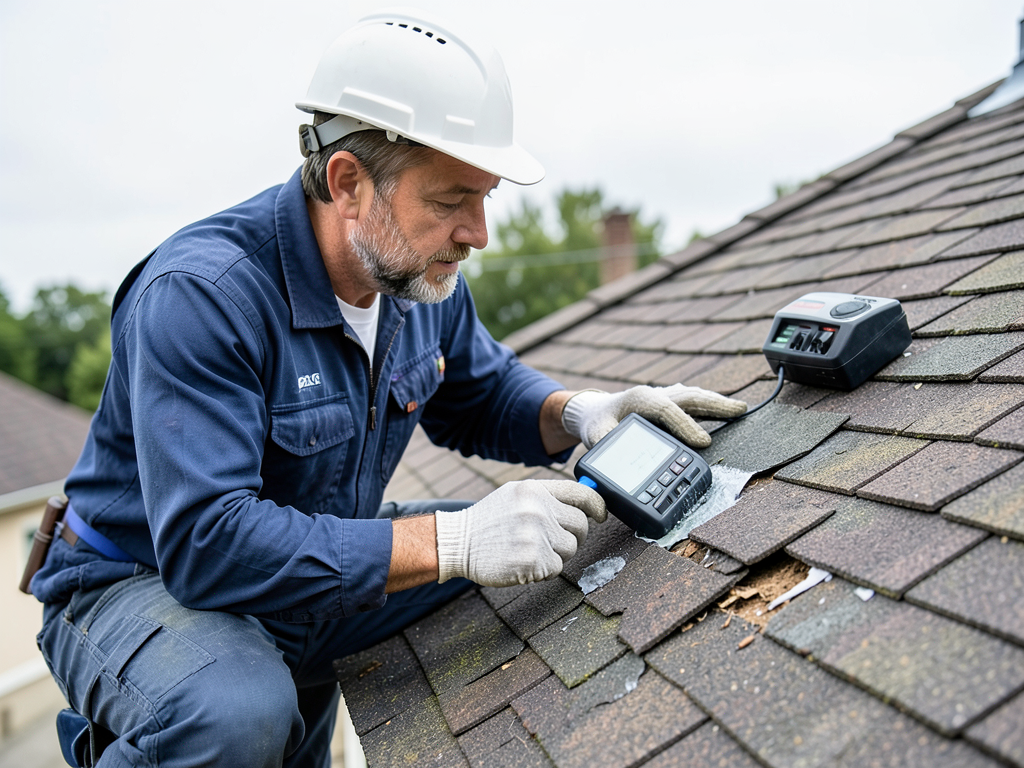
Modern technology can help prove the need for matching materials. Digital imaging can show how different materials will appear from various viewing angles. Some contractors use specialized software to demonstrate how patchwork roofs will look over time as materials age differently.
Professional testing can also document the exact specifications of your existing materials, making it easier to prove that replacement materials don’t match. This documentation can be crucial evidence when negotiating with insurance companies or filing complaints with the Maryland Insurance Administration.
Emergency Repairs vs. Permanent Solutions
After storm damage, you may need temporary emergency repairs to prevent further damage. However, it’s important to distinguish between temporary fixes and permanent solutions when dealing with insurance claims. Temporary repairs should be documented as such, and you should make it clear that you’re seeking permanent matching materials under Maryland law.
Keep all receipts for emergency repairs and communicate clearly with your insurance company about your intention to pursue matching materials for permanent repairs. This documentation can help ensure that temporary repair costs are covered while you work toward a permanent solution that complies with Maryland’s matching requirements.
Future Trends in Insurance Matching Requirements
As building materials become more specialized and color options expand, matching requirements are likely to become even more important. Insurance companies are increasingly using technology to verify material specifications and ensure compliance with matching requirements. This trend suggests that Maryland’s current regulations may become the standard in other states.
Homeowners who understand their rights under current Maryland law will be better positioned to take advantage of future developments in insurance claim handling. As technology makes it easier to verify matching requirements, insurance companies may become more willing to approve matching materials to avoid disputes and complaints.
Conclusion: Your Rights Under Maryland Law
Maryland’s insurance matching laws provide important protections for homeowners facing roof damage. Under COMAR 31.15.12, you have the right to matching materials that provide a reasonably uniform appearance. This protection extends to situations involving discontinued materials, historic districts, and visible damage from typical viewing angles.
Understanding these rights and how to document your claim effectively can make the difference between a patchwork repair and a complete roof replacement that maintains your home’s value and appearance. Don’t accept less than what Maryland law requires. If your insurance company denies your request for matching materials, remember that you have recourse through the Maryland Insurance Administration and public adjusters who specialize in Maryland claims.
Frequently Asked Questions
What should I do first if my roof is damaged in a storm?
Document the damage thoroughly with photos and videos from multiple angles. Contact your insurance company to report the damage, but don’t start permanent repairs until the adjuster has inspected the damage. Keep all receipts for any emergency repairs you make to prevent further damage. Getting Your Roof Inspected Before Buying a Home in Locust Point.
How can I prove that replacement materials don’t match my existing roof?
Professional roofers can use color matching technology and material specifications to demonstrate differences. Take clear photos from typical viewing distances and angles. If possible, provide documentation of your original roof materials, including manufacturer information and installation dates.
Can I be forced to accept a partial repair that leaves my roof mismatched?
No, under Maryland law you cannot be forced to accept mismatched repairs if matching materials are available or if the damage is visible from typical viewing angles. Insurance companies must comply with COMAR 31.15.12 requirements or face penalties from the Maryland Insurance Administration.
Take Action to Protect Your Rights
Understanding Maryland’s insurance matching laws is the first step in protecting your rights as a homeowner. If you’re facing roof damage and your insurance company is pushing for patchwork repairs, don’t accept less than what the law requires. Document everything, know your rights under COMAR 31.15.12, and be prepared to escalate your claim if necessary.
Working with a contractor who understands Maryland’s specific requirements can make the process much smoother. They can help you document your claim, provide expert assessments, and negotiate with insurance companies on your behalf. Remember, a properly matched roof isn’t just about appearance—it’s about protecting your investment and ensuring long-term performance.
Call (443) 455-9099 today to schedule your inspection and learn more about your rights under Maryland insurance law. Don’t let insurance companies shortchange you on matching materials that protect your home’s value and appearance.
Additional Resources
For more information about Maryland’s insurance regulations and your rights as a homeowner, visit the Maryland Insurance Administration website at insurance.maryland.gov. You can also find helpful information about roof replacement costs and options in our guide to roof replacement costs in Towson.
If you live in a historic district like Federal Hill or Canton, be sure to check with the Commission for Historical and Architectural Preservation about any additional requirements that may apply to your roof replacement project.
{
“@context”: “https://schema.org”,
“@type”: “BlogPosting”,
“headline”: “How Maryland Insurance Laws Protect Your Right to a Matching Roof After a Storm”,
“description”: “Learn how Maryland insurance laws require full roof replacement when shingles don’t match. Understand your rights under COMAR 31.15.12 and protect your property value.”,
“wordCount”: 2878,
“datePublished”: “2026-05-20T14:45:00.000Z”,
“dateModified”: “2026-05-20T14:45:00.000Z”,
“inLanguage”: “en-US”,
“mainEntityOfPage”: {
“@type”: “WebPage”,
“@id”: “https://aplusroofingbaltimore.com”
},
“publisher”: {
“@type”: “LocalBusiness”,
“name”: “A Plus Roofing Baltimore”,
“url”: “https://aplusroofingbaltimore.com”
},
“author”: {
“@type”: “Organization”,
“name”: “A Plus Roofing Baltimore”,
“url”: “https://aplusroofingbaltimore.com”
},
“image”: {
“@type”: “ImageObject”,
“url”: “https://aplusroofingbaltimore.com/wp-content/uploads/2026/03/how-maryland-insurance-laws-protect-your-right-to-1.png”
}
}
{
“@context”: “https://schema.org”,
“@type”: “RoofingContractor”,
“name”: “A Plus Roofing Baltimore”,
“url”: “https://aplusroofingbaltimore.com”,
“address”: {
“@type”: “PostalAddress”,
“addressLocality”: “Baltimore”
},
“areaServed”: {
“@type”: “City”,
“name”: “Baltimore”
}
}
{
“@context”: “https://schema.org”,
“@type”: “FAQPage”,
“mainEntity”: [
{
“@type”: “Question”,
“name”: “Does Maryland’s matching law apply to siding and other exterior materials?”,
“acceptedAnswer”: {
“@type”: “Answer”,
“text”: “Yes, Maryland’s insurance regulations extend beyond roofing to include other exterior materials like siding, windows, and doors. The ‘reasonably uniform appearance’ standard applies to any exterior replacement where matching materials are available. However, the specific requirements may vary depending on the material and the extent of the damage.”
}
},
{
“@type”: “Question”,
“name”: “What if my shingles are discontinued and no exact match exists?”,
“acceptedAnswer”: {
“@type”: “Answer”,
“text”: “If your original shingles are discontinued, the insurance company must provide the closest available match in color, texture, and quality. If no acceptable match exists, they must replace the entire affected section of the roof to ensure uniform appearance. The burden is on the insurance company to prove that no suitable match is available.”
}
},
{
“@type”: “Question”,
“name”: “How long do I have to file a claim for matching materials?”,
“acceptedAnswer”: {
“@type”: “Answer”,
“text”: “Maryland law doesn’t specify a strict deadline for filing claims related to matching materials, but insurance policies typically have time limits for filing claims after damage occurs. It’s best to contact your insurance company as soon as possible after discovering damage and document everything thoroughly from the beginning.”
}
},
{
“@type”: “Question”,
“name”: “What should I do first if my roof is damaged in a storm?”,
“acceptedAnswer”: {
“@type”: “Answer”,
“text”: “Document the damage thoroughly with photos and videos from multiple angles. Contact your insurance company to report the damage, but don’t start permanent repairs until the adjuster has inspected the damage. Keep all receipts for any emergency repairs you make to prevent further damage. Getting Your Roof Inspected Before Buying a Home in Locust Point.”
}
},
{
“@type”: “Question”,
“name”: “How can I prove that replacement materials don’t match my existing roof?”,
“acceptedAnswer”: {
“@type”: “Answer”,
“text”: “Professional roofers can use color matching technology and material specifications to demonstrate differences. Take clear photos from typical viewing distances and angles. If possible, provide documentation of your original roof materials, including manufacturer information and installation dates.”
}
},
{
“@type”: “Question”,
“name”: “Can I be forced to accept a partial repair that leaves my roof mismatched?”,
“acceptedAnswer”: {
“@type”: “Answer”,
“text”: “No, under Maryland law you cannot be forced to accept mismatched repairs if matching materials are available or if the damage is visible from typical viewing angles. Insurance companies must comply with COMAR 31.15.12 requirements or face penalties from the Maryland Insurance Administration.”
}
}
]
}
{
“@context”: “https://schema.org”,
“@type”: “BreadcrumbList”,
“itemListElement”: [
{
“@type”: “ListItem”,
“position”: 1,
“name”: “Home”,
“item”: “https://aplusroofingbaltimore.com”
},
{
“@type”: “ListItem”,
“position”: 2,
“name”: “Blog”,
“item”: “https://aplusroofingbaltimore.com/blog”
},
{
“@type”: “ListItem”,
“position”: 3,
“name”: “How Maryland Insurance Laws Protect Your Right to a Matching Roof After a Storm”
}
]
}
{
“@context”: “https://schema.org”,
“@type”: “Service”,
“serviceType”: “Roofing”,
“provider”: {
“@type”: “LocalBusiness”,
“name”: “A Plus Roofing Baltimore”,
“url”: “https://aplusroofingbaltimore.com”
},
“areaServed”: {
“@type”: “City”,
“name”: “Baltimore”
},
“description”: “Learn how Maryland insurance laws require full roof replacement when shingles don’t match. Understand your rights under COMAR 31.15.12 and protect your property value.”
}