
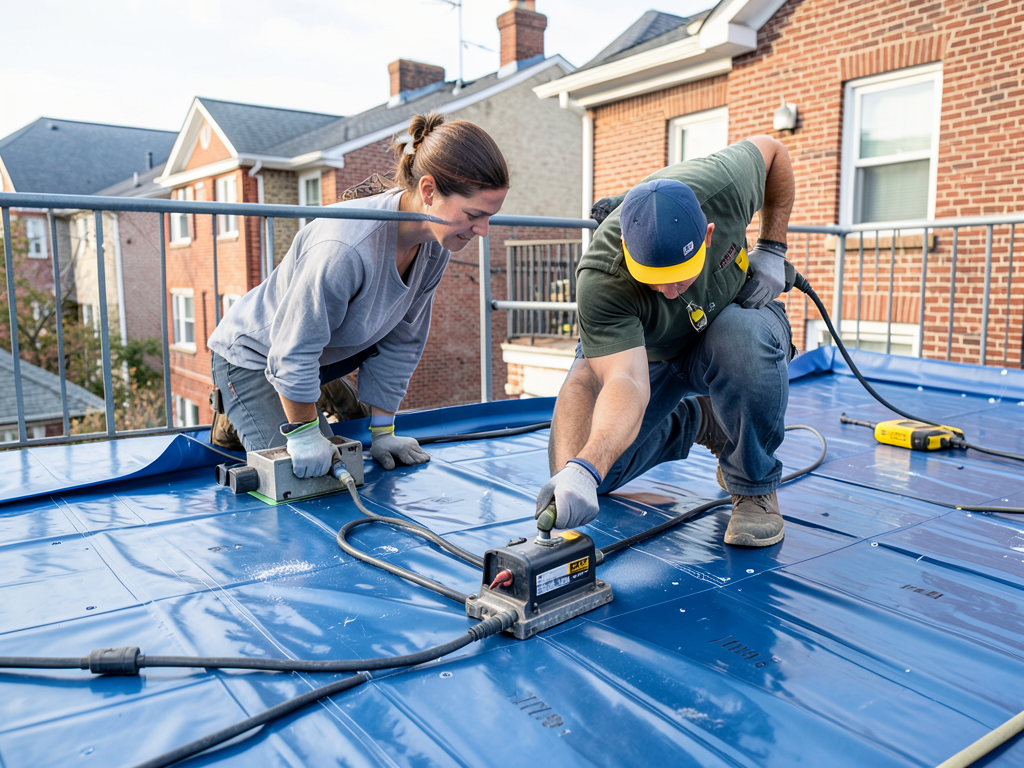
The Best Flat Roof Membranes for High Traffic Rooftop Decks in Canton
High traffic rooftop decks in Canton demand more than standard flat roofing. You need membranes that handle foot traffic, resist UV damage, and prevent leaks when people are walking directly on your roof. The right membrane protects your investment while creating a safe, enjoyable outdoor space.. Read more about Choosing the Right Grease Resistant Roof for Your Restaurant in Canton or Fells Point.
Canton’s rowhome architecture means many decks sit directly on flat roofs with minimal slope. This creates unique challenges: standing water, concentrated loads from furniture and people, and exposure to Baltimore’s humid summers and freezing winters. A membrane failure here doesn’t just mean a leak—it means water pouring into your living room. Baltimore City Building Inspections.
The best membranes for high traffic decks combine durability with waterproofing integrity. They must resist punctures from furniture legs, handle thermal expansion from direct sun exposure, and maintain flexibility during freeze-thaw cycles. Plus, Baltimore City building codes require specific materials and installation methods for rooftop decks on rowhomes. Flat Roof Repair for Baltimore Rowhouses — What Every Homeowner in Canton Needs to Know.
Top 3 Roofing Membranes for High Traffic Rooftop Decks
Choosing the right membrane means understanding how each material performs under constant foot traffic and Baltimore’s specific climate conditions. Here’s what separates the best from the rest. EPA Roofing Resources.
1. TPO (Thermoplastic Polyolefin) 60-mil or 80-mil
TPO dominates the high traffic deck market for good reason. The 80-mil thickness provides superior puncture resistance compared to standard 45-mil roofing membranes. Heat-welded seams create monolithic waterproofing that won’t separate under foot traffic pressure.
TPO reflects UV rays, keeping deck surfaces cooler during Canton’s humid summers. The material remains flexible in freezing temperatures, preventing cracks from ice expansion. Most importantly, TPO’s smooth surface works perfectly with pedestal paver systems, creating a stable walking surface without compromising waterproofing.
Installation requires heat welding expertise—improper seam work leads to failure. Baltimore’s humidity means careful moisture testing before installation, as trapped moisture causes bubbling and seam separation.. Read more about What Baltimore City Homeowners Need to Know About Roofing Permits and Inspections.
2. PVC (Polyvinyl Chloride) Roofing Membrane
PVC excels where TPO meets its limits. The material resists chemical exposure from grease, food spills, and cleaning products common on rooftop decks. Its inherent fire resistance provides Class A protection, crucial for Baltimore rowhomes where fire spread between buildings remains a concern.
PVC’s flexibility handles thermal movement better than TPO, reducing stress on seams and flashings. The material’s smooth surface prevents dirt accumulation, making it easier to maintain clean deck surfaces. However, PVC costs 15-20% more than TPO and requires specialized welding equipment. How Much a New Roof Costs in Towson (2026 Estimates).
For decks hosting frequent gatherings or outdoor kitchens, PVC’s chemical resistance and fire safety make it worth the premium. The material’s proven track record in commercial applications translates to residential reliability.
3. EPDM (Ethylene Propylene Diene Monomer)
EPDM offers excellent durability at a lower price point, but requires specific considerations for high traffic applications. The rubber material handles freeze-thaw cycles exceptionally well, crucial for Canton’s winter weather patterns.
Standard EPDM (45-mil) lacks the puncture resistance needed for direct foot traffic. However, 60-mil or 75-mil EPDM with protective walkway pads creates a viable system. The material’s dark color absorbs heat, potentially making surfaces uncomfortable in direct summer sun.
EPDM’s main advantage lies in its proven longevity—many Baltimore rowhomes still have functioning EPDM roofs from the 1980s. The material’s flexibility means fewer stress cracks over time compared to rigid alternatives.
Pedestal Systems vs. Sleeper Joists: Technical Comparison
How you support your deck surface determines membrane longevity. Two systems dominate: pedestal paver supports and traditional sleeper joists. Each affects waterproofing differently.
Pedestal Paver Systems
Pedestal systems like Bison or Archatrak elevate deck pavers 1-2 inches above the membrane. This creates airflow, prevents standing water, and allows easy access to the membrane for maintenance. The system distributes weight evenly, reducing point loads that could puncture the membrane.
Installation requires precise leveling—uneven pedestals create walking hazards and stress points. The system works best with TPO or PVC membranes due to their smooth, heat-welded seams. EPDM’s seams can catch on pedestal edges, creating wear points.
Cost ranges from $8-12 per square foot for the pedestal system alone, plus paver costs. The investment pays off through easier maintenance and membrane protection.
Sleeper Joist Systems
Sleeper systems use pressure-treated wood joists laid directly on the membrane with protective padding underneath. Composite decking attaches to the joists, creating a traditional deck feel. This system works with any membrane type but requires careful installation to prevent water trapping.
The main advantage: sleepers provide structure for railings and pergolas without penetrating the membrane. However, trapped moisture between sleepers and membrane can accelerate deterioration. Proper ventilation gaps and sloped installation prevent water accumulation.
Cost typically runs $15-20 per square foot installed, including materials. The system’s rigidity makes it popular for decks supporting heavy furniture or hot tubs.
Waterproofing and Flashing: Critical Failure Points
Membrane selection means nothing without proper waterproofing details. The perimeter, penetrations, and drainage points represent 90% of potential failure locations.
Perimeter flashing must extend at least 8 inches up walls, with counterflashing securing the top edge. Baltimore’s freeze-thaw cycles cause expansion that pulls loose flashing away from walls. Heat-welded TPO or PVC flashing creates a monolithic seal that moves with the building.
Drainage requires careful planning. Scuppers or internal drains must handle concentrated water flow without backing up onto the deck surface. The membrane should slope 1/4 inch per foot toward drains—insufficient slope causes standing water that degrades any membrane over time.. Read more about Why Clogged Scuppers are Secretly Rotting Your Rowhouse Roof in Fells Point.
Penetrations for railings, pergolas, or utilities require extra attention. Each penetration creates a potential leak point. Using pitch pockets or flexible boots around posts prevents water entry while allowing movement.. Read more about Using Cool Roof Technology to Fight the Urban Heat Island Effect in Mount Vernon.
During installation, moisture testing with electronic meters prevents trapping water under the membrane. Baltimore’s high humidity means ambient moisture can accumulate in roof decks, causing bubbles and seam failure months after installation.
Baltimore Building Codes and Permits for Rooftop Decks
Baltimore City requires permits for all rooftop deck installations. The process involves structural engineering approval, zoning compliance, and inspections at multiple stages.
Section 8-4-601 of the Baltimore City Building Code mandates minimum live load capacity of 100 pounds per square foot for residential decks. Most Canton rowhomes require joist reinforcement to meet this standard. The code also specifies minimum railing heights of 42 inches and baluster spacing no wider than 4 inches.
Historic districts like Fells Point and Federal Hill have additional requirements through CHAP (Commission for Historical and Architectural Preservation). These may limit material choices and require design approval before permits issue. Why Your Federal Hill Flat Roof is Leaking and How to Fix It for Good.
Fire codes require Class A fire-rated materials within 3 feet of property lines. PVC and certain composite decking materials meet this requirement, while untreated wood does not. The Fire Department inspects final installations for compliance.
Permit fees range from $500-2,000 depending on project scope. The process typically takes 4-6 weeks, longer if structural modifications are needed. Starting without permits risks fines and mandatory removal.
Cost Breakdown and ROI for Canton Rooftop Decks
High quality rooftop deck installations cost more upfront but deliver better long-term value. Here’s what drives costs in the Baltimore market.
Membrane costs: TPO 80-mil runs $3-4 per square foot, PVC $4-5 per square foot, EPDM 60-mil $2-3 per square foot. The thicker material and heat-welding labor increase installation costs by 30-40% compared to standard roofing.
Deck system costs: Pedestal paver systems add $8-12 per square foot. Sleeper systems with composite decking run $15-25 per square foot installed. Premium materials like tropical hardwood or porcelain pavers can double these costs.
Total project costs typically range from $25-45 per square foot for a complete installation, including permits, engineering, and finishing touches. A 200 square foot deck might cost $5,000-9,000 just for the membrane and deck structure.
ROI considerations: Well-designed rooftop decks can increase property values by 5-8% in Canton’s competitive market. The premium often exceeds the installation cost, making it a sound investment. Additionally, the extended living space improves quality of life and provides entertainment areas that Baltimore rowhomes typically lack.
Maintenance costs average $500-1,000 annually for cleaning, sealing, and minor repairs. However, quality installations with proper membranes can go 15-20 years without major work, compared to 8-10 years for cheaper systems.
Maintenance and Longevity: Protecting Your Investment
High traffic membranes require different maintenance than standard roofing. Regular cleaning prevents dirt accumulation that can abrade surfaces and trap moisture. Baltimore’s humid climate means mold and algae growth accelerates without proper cleaning.
Annual inspections should check seam integrity, flashing conditions, and surface wear. Small punctures from furniture legs or dropped objects can become major leaks if left unrepaired. Most manufacturers recommend professional inspections every 2-3 years for high traffic installations.
Walkway pads protect high traffic areas from concentrated wear. These removable pads distribute weight and prevent direct contact between furniture and the membrane. Replacing pads costs far less than repairing damaged membrane sections.
During winter, promptly remove snow accumulation to prevent ice dam formation. Baltimore’s freeze-thaw cycles cause expansion that can lift membrane edges. Use plastic shovels—metal tools can puncture even thick membranes. Installing a Metal Roof in Columbia — Is It Worth the Investment?.
With proper maintenance, quality TPO or PVC membranes last 20-25 years on high traffic decks. EPDM systems typically last 15-20 years with protective walkway systems. The key is addressing minor issues before they become major problems.
Making the Right Choice for Your Canton Home
Your specific situation determines the best membrane choice. Consider these factors when deciding:
Usage patterns matter most. Frequent entertaining with food and drinks favors PVC’s chemical resistance. Occasional use with minimal furniture makes TPO’s cost-effectiveness more attractive. Year-round use in Baltimore’s variable climate requires materials that handle both heat and freezing.
Budget constraints affect choices. While PVC offers superior performance, TPO provides excellent value for most applications. EPDM works for budget-conscious projects but requires more maintenance and protective systems.
Building characteristics influence decisions. Older rowhomes may have structural limitations affecting deck weight. Historic districts impose material and design restrictions. South-facing exposures increase UV exposure, favoring reflective TPO or PVC.
Professional installation proves critical regardless of material choice. Heat-welding TPO or PVC requires experience—improper seams fail within months. Even EPDM installation demands expertise to prevent moisture trapping and ensure proper adhesion.
Call (443) 455-9099 today to schedule your inspection. Our Baltimore roofing experts will evaluate your specific situation and recommend the best membrane system for your rooftop deck. Don’t risk water damage to your home—get professional guidance before starting your project.
Frequently Asked Questions
What’s the best membrane for a rooftop deck that gets heavy use?
For heavy use, 80-mil TPO or PVC provides the best combination of durability and waterproofing. PVC offers superior chemical resistance if you’ll have outdoor cooking or frequent entertaining. Both materials handle Baltimore’s climate and support pedestal paver systems effectively.
How long do high traffic roof membranes last in Baltimore?
Quality TPO or PVC membranes last 20-25 years with proper maintenance. EPDM systems typically last 15-20 years when protected with walkway pads. Baltimore’s humidity and freeze-thaw cycles affect longevity, making professional installation and regular maintenance crucial for maximum lifespan.
Do I need permits for a rooftop deck in Canton?
Yes, Baltimore City requires permits for all rooftop deck installations. The process includes structural engineering approval, zoning compliance, and multiple inspections. Historic districts have additional CHAP requirements. Starting without permits risks fines and mandatory removal.
Can I install a rooftop deck on my existing flat roof?
Possibly, but most existing roofs need reinforcement to meet the 100 psf live load requirement. A structural engineer must evaluate your roof’s capacity. The existing membrane likely needs replacement with a high traffic-rated system before adding a deck. Industrial Roof Replacement.
How much does a rooftop deck with proper membrane cost?
Complete installations range from $25-45 per square foot in Baltimore. A 200 square foot deck typically costs $5,000-9,000 for membrane and deck structure alone. Premium materials and complex designs can increase costs significantly.
You may also find this helpful. Finding a Permanent Solution for Leaky Porch Conversions in Arbutus.
{
“@context”: “https://schema.org”,
“@type”: “BlogPosting”,
“headline”: “The Best Flat Roof Membranes for High Traffic Rooftop Decks in Canton”,
“description”: “Discover the best flat roof membranes for high traffic rooftop decks in Canton. Learn about TPO, PVC, EPDM, and Baltimore building codes for safe, durable installations.”,
“wordCount”: 1996,
“datePublished”: “2026-06-09T14:35:00.000Z”,
“dateModified”: “2026-06-09T14:35:00.000Z”,
“inLanguage”: “en-US”,
“mainEntityOfPage”: {
“@type”: “WebPage”,
“@id”: “https://aplusroofingbaltimore.com”
},
“publisher”: {
“@type”: “LocalBusiness”,
“name”: “A Plus Roofing Baltimore”,
“url”: “https://aplusroofingbaltimore.com”
},
“author”: {
“@type”: “Organization”,
“name”: “A Plus Roofing Baltimore”,
“url”: “https://aplusroofingbaltimore.com”
},
“image”: {
“@type”: “ImageObject”,
“url”: “https://aplusroofingbaltimore.com/wp-content/uploads/2026/03/the-best-flat-roof-membranes-for-high-traffic-roof-1.png”
}
}
{
“@context”: “https://schema.org”,
“@type”: “RoofingContractor”,
“name”: “A Plus Roofing Baltimore”,
“url”: “https://aplusroofingbaltimore.com”,
“address”: {
“@type”: “PostalAddress”,
“addressLocality”: “Baltimore”
},
“areaServed”: {
“@type”: “City”,
“name”: “Baltimore”
}
}
{
“@context”: “https://schema.org”,
“@type”: “FAQPage”,
“mainEntity”: [
{
“@type”: “Question”,
“name”: “What’s the best membrane for a rooftop deck that gets heavy use?”,
“acceptedAnswer”: {
“@type”: “Answer”,
“text”: “For heavy use, 80-mil TPO or PVC provides the best combination of durability and waterproofing. PVC offers superior chemical resistance if you’ll have outdoor cooking or frequent entertaining. Both materials handle Baltimore’s climate and support pedestal paver systems effectively.”
}
},
{
“@type”: “Question”,
“name”: “How long do high traffic roof membranes last in Baltimore?”,
“acceptedAnswer”: {
“@type”: “Answer”,
“text”: “Quality TPO or PVC membranes last 20-25 years with proper maintenance. EPDM systems typically last 15-20 years when protected with walkway pads. Baltimore’s humidity and freeze-thaw cycles affect longevity, making professional installation and regular maintenance crucial for maximum lifespan.”
}
},
{
“@type”: “Question”,
“name”: “Do I need permits for a rooftop deck in Canton?”,
“acceptedAnswer”: {
“@type”: “Answer”,
“text”: “Yes, Baltimore City requires permits for all rooftop deck installations. The process includes structural engineering approval, zoning compliance, and multiple inspections. Historic districts have additional CHAP requirements. Starting without permits risks fines and mandatory removal.”
}
},
{
“@type”: “Question”,
“name”: “Can I install a rooftop deck on my existing flat roof?”,
“acceptedAnswer”: {
“@type”: “Answer”,
“text”: “Possibly, but most existing roofs need reinforcement to meet the 100 psf live load requirement. A structural engineer must evaluate your roof’s capacity. The existing membrane likely needs replacement with a high traffic-rated system before adding a deck. Industrial Roof Replacement.”
}
},
{
“@type”: “Question”,
“name”: “How much does a rooftop deck with proper membrane cost?”,
“acceptedAnswer”: {
“@type”: “Answer”,
“text”: “Complete installations range from $25-45 per square foot in Baltimore. A 200 square foot deck typically costs $5,000-9,000 for membrane and deck structure alone. Premium materials and complex designs can increase costs significantly.”
}
}
]
}
{
“@context”: “https://schema.org”,
“@type”: “BreadcrumbList”,
“itemListElement”: [
{
“@type”: “ListItem”,
“position”: 1,
“name”: “Home”,
“item”: “https://aplusroofingbaltimore.com”
},
{
“@type”: “ListItem”,
“position”: 2,
“name”: “Blog”,
“item”: “https://aplusroofingbaltimore.com/blog”
},
{
“@type”: “ListItem”,
“position”: 3,
“name”: “The Best Flat Roof Membranes for High Traffic Rooftop Decks in Canton”
}
]
}
{
“@context”: “https://schema.org”,
“@type”: “Service”,
“serviceType”: “Roofing”,
“provider”: {
“@type”: “LocalBusiness”,
“name”: “A Plus Roofing Baltimore”,
“url”: “https://aplusroofingbaltimore.com”
},
“areaServed”: {
“@type”: “City”,
“name”: “Baltimore”
},
“description”: “Discover the best flat roof membranes for high traffic rooftop decks in Canton. Learn about TPO, PVC, EPDM, and Baltimore building codes for safe, durable installations.”
}