
The Best Way to Handle Roof Ventilation for Rowhouses with No Overhangs
Baltimore rowhouses face a unique challenge. Without soffits or eaves, standard ventilation systems simply don’t work. The result is trapped heat in summer, moisture buildup in winter, and a roof that fails years before it should. The good news is that with the right combination of active ventilation and moisture barriers, you can extend your roof’s life by 20-25% and cut cooling costs by up to 30%. Baltimore Commission for Historical and Architectural Preservation.
The key is understanding that Baltimore’s climate demands a different approach. Our high humidity, combined with the urban heat island effect, creates conditions where traditional ventilation fails. When you add the constraints of historic district requirements and shared party walls, you need solutions designed specifically for Baltimore rowhouses. Flat Roof Repair for Baltimore Rowhouses — What Every Homeowner in Canton Needs to Know.
Why Standard Ventilation Fails Baltimore Rowhouses
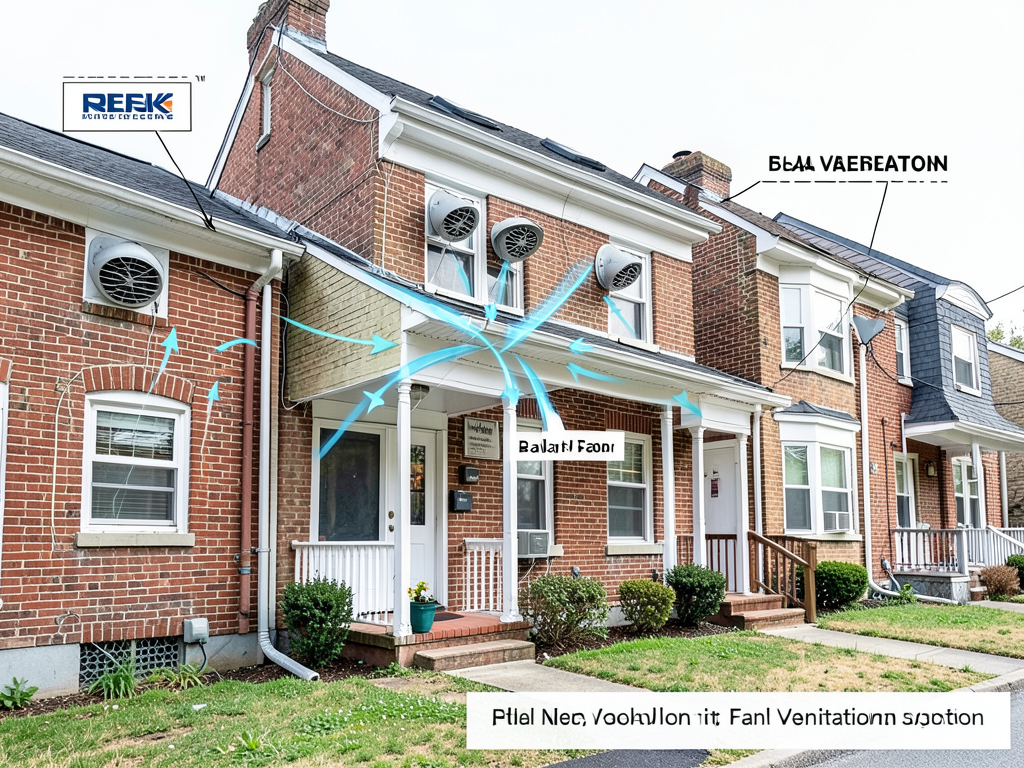
Traditional ventilation systems rely on a continuous flow of air from soffit intake to ridge exhaust. Baltimore rowhouses don’t have soffits. Many have flat or low-slope roofs with parapet walls that block airflow. Some have butterfly roofs where the center drains to a valley. These architectural features make cross-ventilation impossible.
The problem gets worse with party walls. When you share walls with neighbors on both sides, there’s no way for air to move laterally through the building envelope. Heat and moisture get trapped in the attic space, creating the perfect conditions for mold growth and premature roof failure.. Read more about Why Attic Condensation Often Looks Like a Roof Leak for Laurel Homeowners.
According to the Baltimore City Department of Planning, over 60% of the city’s housing stock consists of rowhouses built before 1950. Many of these buildings have minimal or no attic ventilation, making them particularly vulnerable to the moisture problems that plague our humid climate.
Common Signs Your Rowhouse Needs Better Ventilation
Roof ventilation problems show up in ways that might surprise you. Here are the warning signs that your rowhouse ventilation system isn’t working:
- Ice dams forming along the front edge of your roof during winter freezes
- Peeling paint or wallpaper on upper floors, especially in corners
- Musty odors in second-floor closets or attic spaces
- Dramatically higher cooling bills compared to similar-sized homes
- Curling or buckling shingles on the top floor ceiling
- Condensation on windows during temperature swings
The “oven effect” is particularly common in Baltimore rowhouses. During summer months, upper floors can be 10-15 degrees hotter than the rest of the house. This happens because heat from the roof has nowhere to escape, so it radiates down through the ceiling.
Top Ventilation Solutions for Flat and Low-Slope Roofs
Solving Baltimore’s rowhouse ventilation challenge requires a combination of active and passive systems. Here are the most effective solutions we’ve found for local conditions:
Solar-Powered Attic Fans
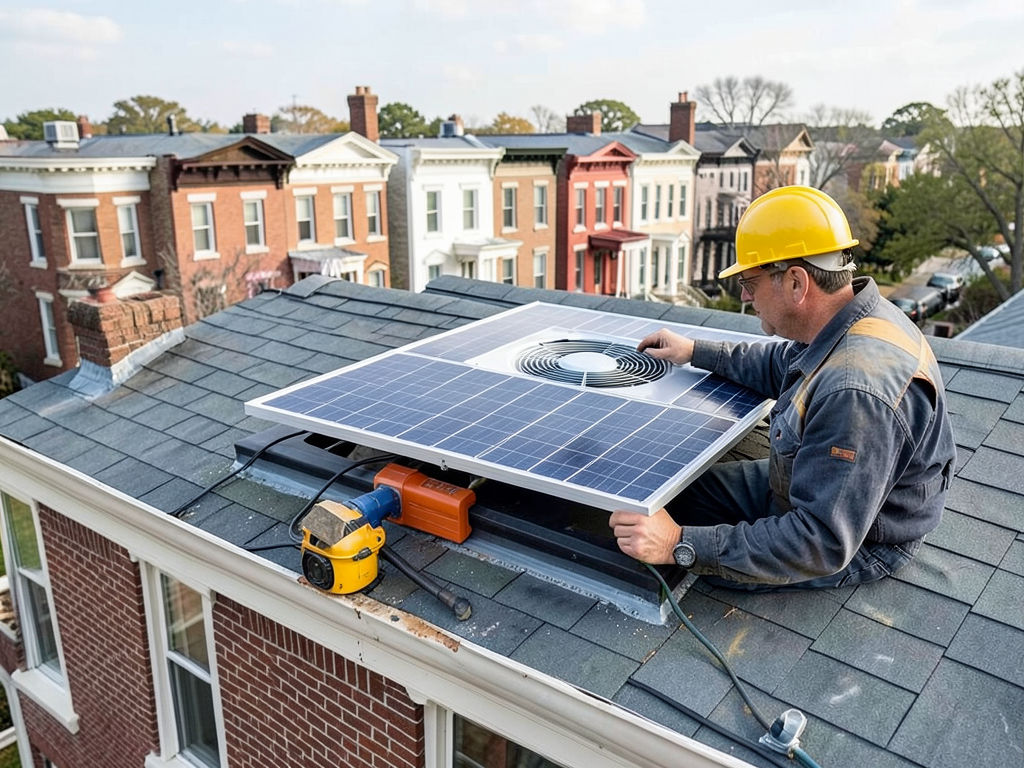
Solar attic fans provide the most dramatic improvement for Baltimore rowhouses. These units mount directly on the roof surface and use solar panels to power exhaust fans. They’re particularly effective because they don’t require electrical wiring and work hardest when you need them most – during sunny summer days.
A properly sized solar fan can move 800-1200 cubic feet per minute of air, which is enough to completely exchange the air in a typical rowhouse attic every 3-5 minutes. This constant airflow prevents heat buildup and moisture accumulation.
Mushroom Vents and Pop-Up Vents
These static vents, also called “box vents” or “turtle vents,” work well on flat roofs where there’s no ridge to install traditional ridge vents. They rely on wind and thermal convection to move air. While not as powerful as solar fans, they provide continuous passive ventilation without any moving parts.
For Baltimore’s climate, we recommend installing multiple mushroom vents spaced evenly across the roof surface. The exact number depends on your roof’s square footage – typically one vent per 150-300 square feet of roof area. Installing a Metal Roof in Columbia — Is It Worth the Investment?.
Breather Vents and Vapor Barriers
Breather vents are specialized products designed for flat roofs. They allow moisture vapor to escape while preventing liquid water from entering. These work best when installed under the roofing membrane during a roof replacement. Industrial Roof Replacement.
Vapor barriers are essential in Baltimore’s humid climate. Without them, moisture from the living space can migrate up through the ceiling and get trapped in the roof assembly. This leads to rot, mold, and structural damage.
Ridge Vents for Pitched Fronts
Some Baltimore rowhouses have pitched fronts with flat or low-slope sections behind. In these cases, ridge vents can be installed along the front pitch to provide exhaust ventilation. The key is ensuring there’s adequate intake ventilation somewhere else on the roof.
According to the National Roofing Contractors Association, ridge vents should provide at least 1 square foot of net free area for every 300 square feet of attic floor space. In Baltimore’s humid climate, we recommend increasing this to 1:150 for better moisture control. National Roofing Contractors Association.
The Impact of Historic District Requirements (CHAP)
Baltimore’s Commission for Historical and Architectural Preservation (CHAP) regulates modifications to buildings in historic districts. This includes roof ventilation upgrades. The good news is that most ventilation improvements can be done while maintaining historic character.
CHAP guidelines prioritize preserving the building’s original appearance. This means visible vents must be low-profile and historically appropriate. Solar fans can be installed on rear-facing slopes where they’re less visible from the street. Mushroom vents can be painted to match the roof color.
In Federal Hill, Fells Point, and other historic districts, CHAP approval is required for any visible roof modifications. However, they generally approve ventilation improvements that address moisture problems and prevent structural damage. The key is working with contractors who understand CHAP requirements and can provide detailed drawings showing how the proposed work maintains historic character. Why Your Federal Hill Flat Roof is Leaking and How to Fix It for Good.
Cost vs. ROI for Ventilation Upgrades
Investing in proper roof ventilation pays for itself through energy savings and extended roof life. Here’s a breakdown of typical costs and benefits: How Much a New Roof Costs in Towson (2026 Estimates).
| Ventilation System | Initial Cost | Annual Energy Savings | Extended Roof Life | Payback Period |
|---|---|---|---|---|
| Solar Attic Fan | $800 – $1,200 | $150 – $300 | 5-8 years | 3-4 years |
| Mushroom Vents (3-4 units) | $600 – $900 | $100 – $200 | 3-5 years | 4-5 years |
| Complete Ventilation System | $1,500 – $2,500 | $250 – $400 | 8-12 years | 2-3 years |
The extended roof life is where most homeowners see the biggest return. A properly ventilated roof in Baltimore typically lasts 20-25 years. Without adequate ventilation, that drops to 12-15 years. At current roofing costs of $8-12 per square foot, extending your roof’s life by even 5 years represents a $4,000-6,000 savings.
Beyond the numbers, proper ventilation prevents the costly repairs that come from moisture damage – rotted decking, mold remediation, and interior water damage. These repairs can easily run $5,000-15,000, making ventilation one of the smartest investments you can make in your rowhouse.
Installation Best Practices for Baltimore Rowhouses
Proper installation is crucial for ventilation systems to work effectively. Here are the key considerations for Baltimore rowhouses:
Roof pitch matters. Baltimore rowhouses have varying roof pitches, from flat to 4:12. The steeper the pitch, the more effective natural convection will be. For flat roofs, active ventilation becomes essential.
Moisture barriers should be installed on the warm side of the insulation. In Baltimore’s climate, this means placing the vapor barrier between the living space and the roof deck. This prevents moisture from the humid interior air from condensing in the roof assembly.
Intake and exhaust balance is critical. For every cubic foot of air exhausted, you need to bring in a cubic foot of fresh air. This is often the missing piece in Baltimore rowhouse ventilation – homeowners install exhaust fans but forget about intake vents.
According to the Maryland Building Performance Standards, ventilation systems must provide at least 1 CFM (cubic foot per minute) of ventilation per 150 square feet of attic space. In Baltimore’s humid climate, we recommend doubling this to 1 CFM per 75 square feet for optimal moisture control.
Maintaining Your Ventilation System
Like any mechanical system, roof ventilation requires regular maintenance to perform effectively. Here’s what to check annually:
- Clear debris from all vents and fan grilles
- Test solar fans to ensure they spin freely
- Check for signs of moisture damage around vent penetrations
- Inspect flashing around vents for cracks or gaps
- Verify that intake vents aren’t blocked by insulation
Most ventilation problems in Baltimore rowhouses stem from blocked or inadequate intake vents. During our inspections, we frequently find that homeowners have installed exhaust fans but the intake vents are covered by insulation or debris.
The best time for maintenance is spring, before the heavy cooling season begins. This gives you a chance to address any issues before they impact your summer energy bills.
Energy Efficiency and Building Codes
Maryland’s building codes have evolved to require better roof ventilation, especially for new construction and major renovations. The International Residential Code (IRC) Section R806 mandates minimum ventilation requirements based on attic floor area and climate zone.
Baltimore falls in Climate Zone 4A, which means we need to balance both heating and cooling considerations. The code requires a minimum net free ventilation area equal to 1/150 of the vented space. However, there’s a compliance path that allows 1/300 if a vapor retarder is installed on the warm-in-winter side of the ceiling.
The Maryland Energy Code also includes requirements for duct insulation and air sealing that affect ventilation performance. Leaky ducts in unconditioned spaces can draw in humid air and overwhelm even the best ventilation system.
For historic properties, CHAP may grant variances from modern code requirements if the proposed work maintains the building’s historic character. However, they generally support improvements that prevent moisture damage and extend building life.
Frequently Asked Questions
Can I install roof ventilation myself?
Basic maintenance like cleaning vents is fine for DIY, but installing new ventilation systems requires roofing expertise. Improper installation can lead to leaks, code violations, and ineffective ventilation. Professional installation ensures proper flashing, sealing, and code compliance.
How do I know if my rowhouse has enough ventilation?
Signs of inadequate ventilation include hot upper floors in summer, ice dams in winter, and moisture problems like peeling paint or musty odors. A professional inspection can measure actual airflow and identify ventilation deficiencies specific to your roof configuration.
Will ventilation improvements affect my home’s historic character?
Most ventilation improvements can be done discreetly. Solar fans can be installed on rear-facing slopes, and low-profile vents can be painted to match your roof. For historic districts, working with contractors familiar with CHAP requirements ensures your improvements maintain your home’s character.
How long does it take to install a complete ventilation system?
Most rowhouse ventilation projects take 1-2 days to complete. Solar fan installation typically takes 4-6 hours. A complete system with multiple vents and moisture barriers may take 1-2 days depending on roof access and weather conditions.
What’s the difference between intake and exhaust ventilation?
Exhaust vents (like ridge vents or solar fans) remove hot, moist air from the attic. Intake vents (like soffit vents or edge vents) bring in fresh air to replace it. Both are essential – without proper intake, exhaust vents can create negative pressure that pulls conditioned air from your living space.
Ready to Improve Your Rowhouse Ventilation?
Don’t let Baltimore’s heat and humidity damage your rowhouse roof. Proper ventilation isn’t just about comfort – it’s about protecting your investment and preventing costly repairs down the road.
Call (443) 455-9099 today to schedule your free ventilation assessment. Our Baltimore-based team understands the unique challenges of rowhouse ventilation and can recommend solutions that work with your home’s architecture and your budget.
Pick up the phone and call (443) 455-9099 before the next heat wave hits. Your roof – and your energy bills – will thank you.
You may also find this helpful. Why Clogged Scuppers are Secretly Rotting Your Rowhouse Roof in Fells Point.
You may also find this helpful. The Hidden Danger of Crumbling Parapet Walls on Baltimore Rowhouses.
[IMAGE_PLACEHOLDER_3>
{
“@context”: “https://schema.org”,
“@type”: “BlogPosting”,
“headline”: “The Best Way to Handle Roof Ventilation for Rowhouses with No Overhangs”,
“description”: “Baltimore rowhouses need special ventilation solutions. Learn how to keep your flat roof cool and dry with solar fans, breather vents, and moisture barriers.”,
“wordCount”: 1988,
“datePublished”: “2026-05-31T10:05:00.000Z”,
“dateModified”: “2026-05-31T10:05:00.000Z”,
“inLanguage”: “en-US”,
“mainEntityOfPage”: {
“@type”: “WebPage”,
“@id”: “https://aplusroofingbaltimore.com”
},
“publisher”: {
“@type”: “LocalBusiness”,
“name”: “A Plus Roofing Baltimore”,
“url”: “https://aplusroofingbaltimore.com”
},
“author”: {
“@type”: “Organization”,
“name”: “A Plus Roofing Baltimore”,
“url”: “https://aplusroofingbaltimore.com”
},
“image”: {
“@type”: “ImageObject”,
“url”: “https://aplusroofingbaltimore.com/wp-content/uploads/2026/03/the-best-way-to-handle-roof-ventilation-for-rowhou-1.png”
}
}
{
“@context”: “https://schema.org”,
“@type”: “RoofingContractor”,
“name”: “A Plus Roofing Baltimore”,
“url”: “https://aplusroofingbaltimore.com”,
“address”: {
“@type”: “PostalAddress”,
“addressLocality”: “Baltimore”
},
“areaServed”: {
“@type”: “City”,
“name”: “Baltimore”
}
}
{
“@context”: “https://schema.org”,
“@type”: “FAQPage”,
“mainEntity”: [
{
“@type”: “Question”,
“name”: “Can I install roof ventilation myself?”,
“acceptedAnswer”: {
“@type”: “Answer”,
“text”: “Basic maintenance like cleaning vents is fine for DIY, but installing new ventilation systems requires roofing expertise. Improper installation can lead to leaks, code violations, and ineffective ventilation. Professional installation ensures proper flashing, sealing, and code compliance.”
}
},
{
“@type”: “Question”,
“name”: “How do I know if my rowhouse has enough ventilation?”,
“acceptedAnswer”: {
“@type”: “Answer”,
“text”: “Signs of inadequate ventilation include hot upper floors in summer, ice dams in winter, and moisture problems like peeling paint or musty odors. A professional inspection can measure actual airflow and identify ventilation deficiencies specific to your roof configuration.”
}
},
{
“@type”: “Question”,
“name”: “Will ventilation improvements affect my home’s historic character?”,
“acceptedAnswer”: {
“@type”: “Answer”,
“text”: “Most ventilation improvements can be done discreetly. Solar fans can be installed on rear-facing slopes, and low-profile vents can be painted to match your roof. For historic districts, working with contractors familiar with CHAP requirements ensures your improvements maintain your home’s character.”
}
},
{
“@type”: “Question”,
“name”: “How long does it take to install a complete ventilation system?”,
“acceptedAnswer”: {
“@type”: “Answer”,
“text”: “Most rowhouse ventilation projects take 1-2 days to complete. Solar fan installation typically takes 4-6 hours. A complete system with multiple vents and moisture barriers may take 1-2 days depending on roof access and weather conditions.”
}
},
{
“@type”: “Question”,
“name”: “What’s the difference between intake and exhaust ventilation?”,
“acceptedAnswer”: {
“@type”: “Answer”,
“text”: “Exhaust vents (like ridge vents or solar fans) remove hot, moist air from the attic. Intake vents (like soffit vents or edge vents) bring in fresh air to replace it. Both are essential – without proper intake, exhaust vents can create negative pressure that pulls conditioned air from your living space.”
}
},
{
“@type”: “Question”,
“name”: “Ready to Improve Your Rowhouse Ventilation?”,
“acceptedAnswer”: {
“@type”: “Answer”,
“text”: “Don’t let Baltimore’s heat and humidity damage your rowhouse roof. Proper ventilation isn’t just about comfort – it’s about protecting your investment and preventing costly repairs down the road.”
}
}
]
}
{
“@context”: “https://schema.org”,
“@type”: “BreadcrumbList”,
“itemListElement”: [
{
“@type”: “ListItem”,
“position”: 1,
“name”: “Home”,
“item”: “https://aplusroofingbaltimore.com”
},
{
“@type”: “ListItem”,
“position”: 2,
“name”: “Blog”,
“item”: “https://aplusroofingbaltimore.com/blog”
},
{
“@type”: “ListItem”,
“position”: 3,
“name”: “The Best Way to Handle Roof Ventilation for Rowhouses with No Overhangs”
}
]
}
{
“@context”: “https://schema.org”,
“@type”: “Service”,
“serviceType”: “Roofing”,
“provider”: {
“@type”: “LocalBusiness”,
“name”: “A Plus Roofing Baltimore”,
“url”: “https://aplusroofingbaltimore.com”
},
“areaServed”: {
“@type”: “City”,
“name”: “Baltimore”
},
“description”: “Baltimore rowhouses need special ventilation solutions. Learn how to keep your flat roof cool and dry with solar fans, breather vents, and moisture barriers.”
}